
 E-Paper



Home makeover: 5 tips to achieve harmony in interior design

 Prefer HTon Google


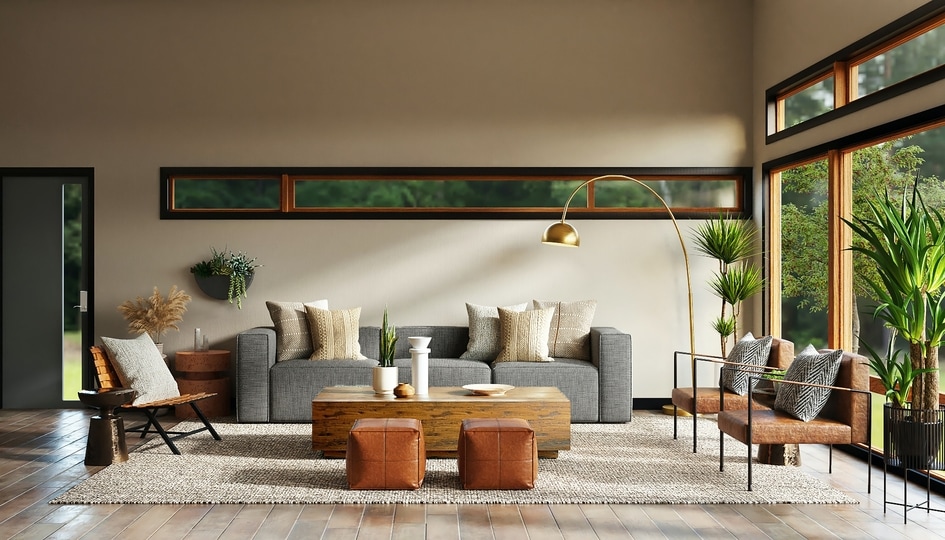
Embarking on the journey of interior design? Discover the art of achieving perfect harmony in your home with these five expert tips.
Harmony stands as a cornerstone principle in the realm of interior design, acting as the guiding force that empowers designers to craft well-balanced and visually pleasing spaces. There are some fundamental steps necessary to achieve harmony in your interiors, with a special emphasis on incorporating false ceilings, soffit ceilings, and other design elements to create a cohesive whole. Your entire home will feel calmer when the many parts of your interior design come together. Learning to achieve visual harmony is one of the most important skills for designing a fantastic interior design scheme. Varun Poddar, Founder, VOX India shared with HT Lifestyle five practical tips to achieve harmony in interior design. (Also read: Top 10 laminate trends for 2024: Colourful expressions, textural marvels, biophilic designs and more )
Tips to Infuse Harmony into Your Interior Design
1. Establish a Clear Theme
Embarking on the journey to harmony within a space starts with the establishment of a clear theme and concept. This theme serves as the bedrock for all design decisions, answering essential questions about the desired mood and style. Whether it's choosing a specific colour scheme or drawing inspiration from a particular era, having a well-defined theme ensures consistent decision-making, allowing all elements to seamlessly come together for an aesthetically pleasing environment.
2. Unifying Element Selection
Choosing a unifying element is a strategic move to infuse harmony into a space. Consider a dominant furniture piece, like a large sofa in a specific colour, as the anchor. Extend this colour scheme to other elements in the space, such as curtains, chairs, and even false ceilings. Adding other elements to the space – such as curtains, chairs, wall facades and false ceilings – in the same colour scheme ensures visual unity. This creates visual unity, offering a strong foundation upon which secondary elements can be introduced in complementary colours, patterns, or textures.
3. Introduce Contrasting Features
Incorporating contrasting elements, including colours, patterns, textures or materials, adds some variety to the design of your interiors. It stimulates visual interest by breaking the monotony and adding depth to the space. Smooth and sleek surfaces paired with textured accents, or the combination of bold patterns, are examples of the effective interplay of contrasting elements. It’s important to moderate the use of contrasting elements, however, as excessive contrast creates visual dissonance and makes your space look busy and chaotic. Selecting one or two accent colours for accessories, that do not contrast with your central colour scheme, can help you strike the right balance.
4. Reinforce Consistency through Repetition
Repetition emerges as a powerful technique for instilling harmony in interior decor. Consistency is achieved by incorporating the same elements throughout the design scheme. Utilize similar colours, textures, or patterns across various elements like furniture, false ceilings, and even SPC flooring. This repetition ensures visual connectivity, creating a cohesive and harmonious environment.
5. Consider the Space as a Whole
In the planning phase, prioritize the overall look of the space rather than getting lost in individual elements. Keep your aesthetic vision at the forefront while making decisions about lighting, furniture, and, notably, false ceilings. This holistic approach lays a robust foundation for unity and harmony, ensuring that every detail contributes to the cohesive whole.
Achieving harmony in design demands thoughtful consideration of core concepts and a nuanced understanding of complementary and contrasting elements. By following these five steps, tailored to incorporate false ceilings, soffit ceilings, and other specific design elements, you will be equipped with a clear roadmap to create harmonious, balanced, and visually stunning interiors.


