E-Paper



Quote of the day by Rabindranath Tagore: ‘Purity, they imagined, was only becoming in those on whom fortune…'

 Prefer HTon Google


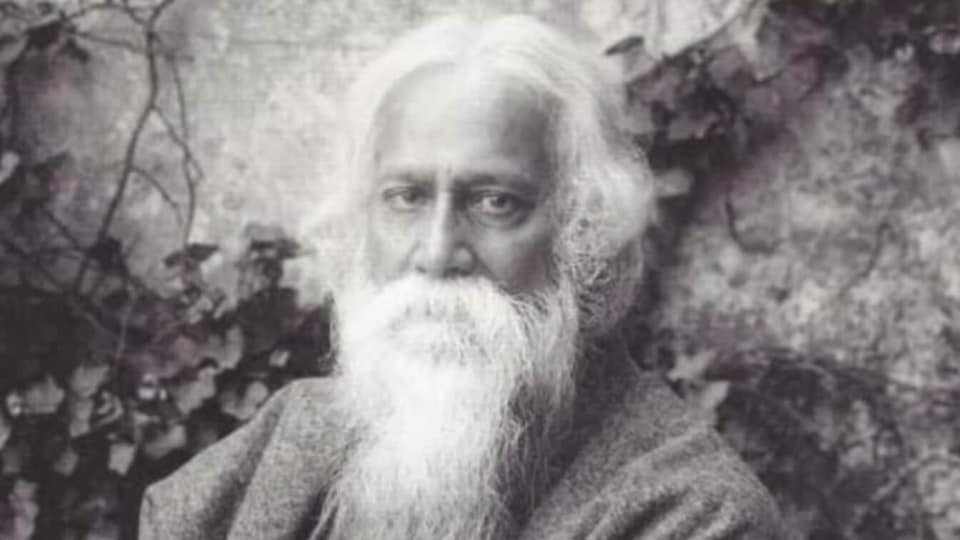
Tagore's quote remind us that a person's socio-economic position influences the way they are judged; it is the unfortunate whose flaws are more highlighted.
Rabindranath Tagore needs no introduction, which is a good thing because one can hardly begin to introduce him when words are limited. It can be said that Rabindranath was a Bengali polymath who lived from 1861 to 1941.
He was a poet, writer, playwright, composer, philosopher, social reformer and painter. But his influence extended far beyond these spheres. One of the most prominent leaders of the Bengali Renaissance, he reshaped the society in Bengal as a whole.
In 1913, Rabindranath became the first Asian to win a Nobel Prize in any category, and also the first lyricist and non-European to win the Nobel Prize in Literature for his book Gitanjali (which can be translated as song offerings). Two of his compositions have been made national anthems of India and Bangladesh.
Today’s quote of the day is from his novel Ghare Baire (translated to The Home and the World). It reads: “Purity, they imagined, was only becoming in those on whom fortune had not smiled. It is the moon which has room or stains, not the stars.”
What is the meaning of Rabindranath Tagore’s quote?
Rabindranath Tagore was a citizen of the world and a progressive thinker. He presented a unique analysis of humans as individuals and as part of a society through his words. His aforementioned quote expresses one such observation.

The quote suggests that people often believe that purity, be it moral or otherwise, is a necessity only for the poor and the downtrodden, that is, for people on whom “fortune has not smiled.” The wealthy and the powerful class need not abide by such niceties to be respectable in the eyes of society. In other words, the better you dress, the worse you can behave.
While the first part of the quote highlights the stark class difference that exists in society, which in itself negates the idea that social equality has already been established. The second part of the quote paints a better picture of the message.
Rabindranath compared the poor to the moon, which is closer to Earth, shines brightest at night, but whose face is marked with “stains,” flaws that are judged by the “stars,” or the elites that are further away from the ground and twinkle in the sky like jewels in the sea of darkness. For the latter group, the lapses in personality are irrelevant or justified by their high status.
Why is Rabindranath Tagore’s quote relevant today?
The class division that Rabindranath Tagore highlighted in this quote has failed to become irrelevant even after more than six decades since his demise. While the constitution of our country guarantees equality for all citizens, the ground reality shows that we have a long way to go to make it a reality.
Thus, the quote serves as a reminder to see people for who they are: simply fellow human beings with merits and flaws that are unique on one hand, and completely commonplace on the other. It also reminds us to take off the rose-tinted glasses while looking at people that society considers to be privileged and judge them by the same standards as everyone else.