
 E-Paper



World Cup final: A history-making game for Rohit Sharma

 Prefer HTon Google


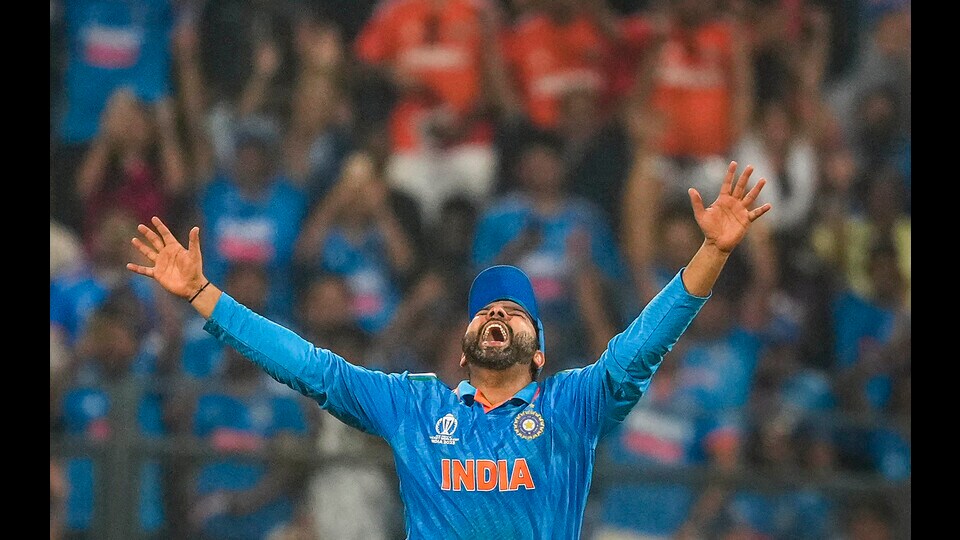
After Kapil, Dhoni, could he be next? It’s the captain who is remembered, blamed. At stake today: a place in history for a star of Mumbai's school of batting.
Kapil Dev’s toothy grin at the Lord’s balcony and MS Dhoni’s game-clinching six over long on at the Wankhede Stadium are moments freeze-framed in our collective consciousness. These were events 28 years apart and in very different contexts, but simply by virtue of leading India to World Cup glory, Kapil and Dhoni belong to an exalted club of two. Of course, a World Cup campaign cannot be won on the efforts of a single individual, even if that entity is a force of nature who can bat, bowl and field like Kapil, or a calm and calculated leader with all the moves mapped out like Dhoni – both among the greatest cricketers this country has produced.
In 1983, Mohinder Amarnath, Sandeep Patil, Yashpal Sharma, Balwinder Singh Sandhu, Kris Srikkanth, Roger Binny and Madan Lal made vital contributions, even as Kapil played the knock of the World Cup and claimed the catch of the final. In 2011, Dhoni relied on senior pros Sachin Tendulkar, Virender Sehwag, Yuvraj Singh, Gautam Gambhir, Zaheer Khan and Harbhajan Singh to lead the charge, before coming to the party in grand fashion on the evening of the final.
And yet if Kapil and Dhoni’s deeds seem to tower over the rest — and some of their teammates may deem that unfair — it’s because the captain holds centre stage in this game. From Clive Lloyd in 1975 to Eoin Morgan in 2019, all in charge of a distinguished array of players, it’s the leader who enjoys an immediate yet lasting association with a victorious campaign.
Rohit Sharma stands on the cusp of joining that exclusive group on Sunday. He has, of course, benefitted from the run-hungry appetite of Virat Kohli, the spunk of Shubman Gill and Shreyas Iyer, the nerveless execution of Jasprit Bumrah and the wicket-taking potency of Mohammed Shami. But if India get past Australia in Ahmedabad for their third World Cup victory, Sharma will inhabit a place of privilege hitherto granted only to Kapil and Dhoni.
And he will be deserving of the honour, for he has led from the front, literally and figuratively, over the past six weeks. As opening batter, Sharma’s tally is fifth-highest in this World Cup, with 550 runs in 10 matches at an average of 55. More importantly, he is almost single-handedly responsible for the uninhibited approach of India’s players in this World Cup. With the team having been cagey in their batting method in recent years, which contributed to the absence of an ICC title since winning the Champions Trophy in 2013, Sharma vowed to change things when he took over as captain a couple of years ago. And he has walked the talk at this World Cup, exemplified by his strike rate of 124.15 — the highest among the top 10 run-getters of the tournament.
He has set the tone in nearly every game, ensuring an average run rate of 6.87 in the opening powerplay for India in this World Cup. The litmus test was supposed to come against New Zealand in the semi-final — India had stumbled against the same opponent at the same stage four years ago — but Sharma obliterated the prospect of nerves jangling in the dressing room by sauntering to 47 off 29 balls within the first 10 overs. It didn’t matter whether it was Trent Boult’s left-arm swing or Mitchell Santner’s left-arm spin, Sharma went at them with the same vigour. Though the overt aggression probably led to his downfall in the ninth over of the innings, he has been uncompromising in his decision to attack, right through this campaign.
It is much harder, of course, to measure Sharma’s influence as captain when India’s bowlers are in operation. You can go by a bowling change that paid off — for instance, he brought on Ravindra Jadeja earlier than usual, to dismiss Temba Bavuma at Eden Gardens — or by a tweak in the field that yielded a breakthrough, but there isn’t really a quantifiable metric beyond the number of wins and losses (which has its limitations) to guide our assessment of a cricketer’s captaincy skills. Even former players tend to go by results rather than reason in their evaluation. Sharma seems to know this all too well.
“I mean, look, you read the situation, you see where the game is going, you see what the right move is in a particular situation. You try and analyse all those things and you try and make a move. Sometimes it works, sometimes it doesn’t work. So, you’ve got to be prepared for that,” Sharma said, earlier in the tournament. “When things look good, everything looks good, everything works well. I know how this whole thing works. I’m quite aware of... one game here and there, I know suddenly I’ll be a bad captain. I know how it works. I try and do what is necessary from the team’s perspective and be sure of that.”
If Kapil and Dhoni grew into larger-than-life personas in Indian cricket, that is also down to where they came from and what they meant to a wide range of people. Kapil came from Chandigarh and spurred youngsters from smaller cities and towns to believe they could also take up this game at a time when most others came from metropolises. Dhoni, a couple of decades later, took that a step further, coming as he did from the cricketing backwater of Ranchi.
Sharma was hailed as the poster boy of Mumbai’s famed school of batting almost as soon as he arrived on the scene, but he has fought his battles too. His languid elegance and ability to look unhurried against pace gave the impression in his early years that he was wasting his talent when he wasn’t a regular member of the Indian team. His omission from the 2011 World Cup was also a big setback, which means he hasn’t yet won a World Cup despite making his debut before Kohli and R Ashwin.
From there to embellishing his reputation by leading India to the final on the back of a 10-game winning run, Sharma has come a long way. But if he is to imprint his legacy on this World Cup campaign in the manner that Kapil did in 1983 and Dhoni in 2011, he will have to lift that trophy on Sunday night.


