
 E-Paper



Humour by Rehana Munir: I can’t adult today

 Prefer HTon Google


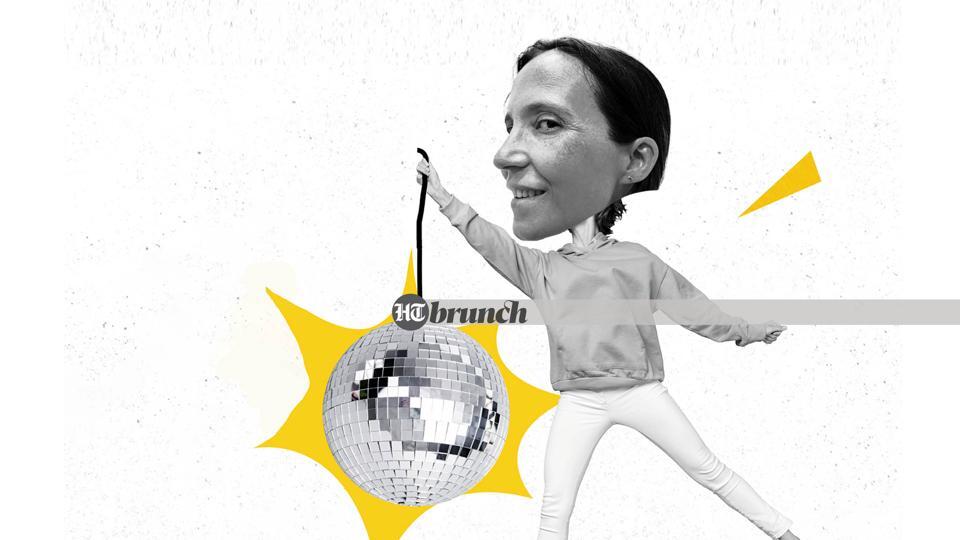
A generation tries to draw the line between being regressive and investing in self-care. Where do you stand?
It’s been a hard morning. I discovered that The Namers Of All Things have put me in an indefensible category. “Elder millennial” (EM) is like that label you want to immediately tear off the back of your new shirt because it chafes the nape of your neck. The same article, in The Guardian, no less, claims that the 40s are one’s saddest decade, especially in the case of elder millennials. They list sleep deprivation due to having small kids, and a lack of time for leisure activities, as reasons for unhappiness in one’s fourth decade. Ever the outlier, I suffer from neither of these afflictions. I am, however, increasingly drawn towards the changing definition of adulthood from the slightly hazy prism of my early 40s.
The Tao of cuteness
Love is a verb, they say. So is adulthood, these days. The sheltering oak of adulthood—a sprawling stage of life that was generally used to describe any age over 18—has been violently uprooted. What we have, instead, are saplings of responsible behaviour that we plant and tend to every now and then, in a process we cutely call “adulting”. (Being cute is a full-time job these days, in the way that being charming was a pre-occupation with our predecessors.)
“I can’t adult today” is a regular refrain on social media feeds. “Adulting” usually implies all those onerous activities that need to be regularly undertaken to prevent one from dying of malnourishment, being evicted by the landlord or expelled from social groups. When one says they can’t adult that day, expect them to be bingeing on House of the Dragon and brownies while dressed in a tracksuit to combat the too-cold AC while constantly updating their Insta with near-spoilers. While previous generations would brand this kind of behaviour as regressive, we validate it as self-care. Elder millennials might sound like medieval monks, but we have the thick skin and thin morals of reality TV contestants.
To meme or not to meme?
You can see it in our WhatsApp chats. No emoji is too expressive or obscure to escape our nifty fingers. There is a perverse joy in littering a chat with a fellow EM with eclectic emojis, from a freakishly realistic fly to a sheepish grinner with a hand over their mouth. Going by these transcripts, we’re all pre-teens with insufficient verbal skills to name complex emotions. My reading is that we’ve found a safe outlet to perform our easily-triggered emotions. A scarlet heart, or three, covers all manner of situations, whether it is a friend who’s just found the perfect pair of sneakers or the relative who regularly reports his deep sense of loneliness. I’m alarmed at how emoji-reliant my own observations and confessions have become. *inserts monkey-hiding-face emoji + girl-slapping-forehead emoji*
Then there are the memes. I recently read an article about Hamlet, for whom the figurative use of language, especially the defence mechanism of humour, was a defining characteristic. He would’ve loved memes, the writer suggests. This literary endorsement boosts my own predilection towards bilingual memes. Sample this from GoT: “Accha chalta hoon,” says Jon Snow in a speech bubble. “Bua hoon main, yaad rakhna,” replies Daenerys. Conversational gold in EM chats.
Stop behaving like an adult!
“People change, but there really are limits. One thing you discover in psychoanalytic treatment is the limits of what you can change about yourself or your life. We are children for a very long time,” says psychoanalyst and literary essayist Adam Phillips. “The Child is father of the Man,” wrote Wordsworth, while Gulzar put it this way in a song from Ishqiya (2010): “Dil toh baccha hai ji.” In the OTT drama Masaba Masaba, we see the younger version of the protagonist hang around the older one as a physical presence. Childhood is a state that never quite leaves us, just like adulthood is one that never really settles in very deeply.
So, is adulting a cross to be grudgingly borne or duty to be stoically performed? “You’re behaving like a child!” used to be a serious accusation coming from our parents’ generation. “Stop behaving like an adult!” is the EM version of the slur. Whether we’re suffering from Peter Pan syndrome or are brave champions of the free spirit, our successors will no doubt decide. Meanwhile, I’m returning to my brownies and emojis.
ṣFollow @rehana_munir on Twitter and Instagram
From HT Brunch, September 3, 2022
Follow us on twitter.com/HTBrunch
Connect with us on facebook.com/hindustantimesbrunch


