
 E-Paper



Do you get a warm sensation down your back after cracking your neck? UK physician explains the health risks

 Prefer HTon Google


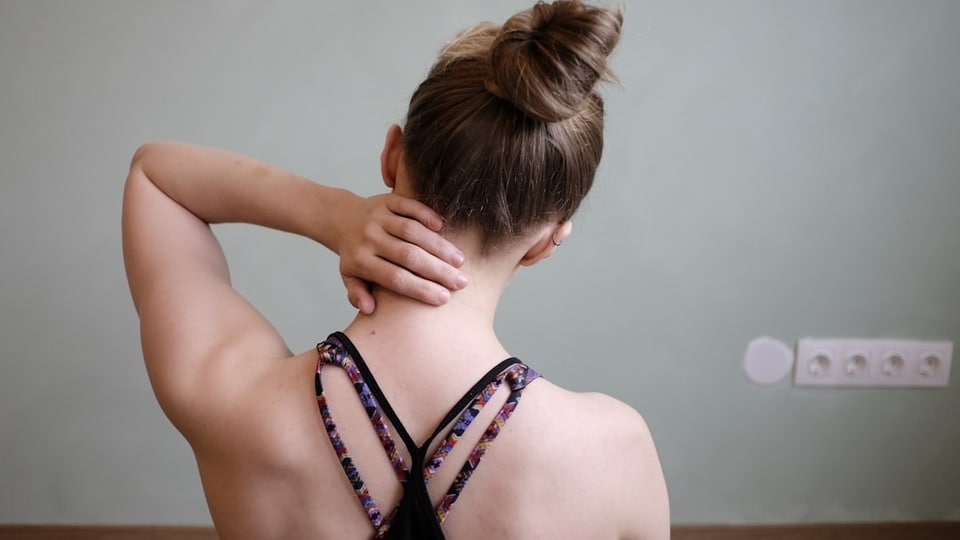
Neck cracking can offer a sense of relief, but it can pose health risks when it becomes a habit. Dr Mezher explains what actually happens to your neck muscles.
That satisfying pop, followed by a warm, almost soothing sensation running down your back, can make neck cracking feel like instant tension relief. For many, it becomes a reflex - a quick fix during long hours at a desk or moments of stiffness. But while it may seem harmless, repeatedly cracking your neck could carry risks that go far beyond temporary discomfort.
Also Read | Did you know heartbreak can actually physically hurt you? Physician shares 3 fascinating neuroscience facts
Dr Sermed Mezher, a family medicine physician and health content creator based in England with over 15 years of experience, is unpacking the physiological repercussions of repeatedly cracking your neck - a practice that is not as harmless as many believe. In an Instagram video shared on February 11, the physician breaks down the potential neurological and vascular risks associated with neck cracking, while also explaining what may be behind the warm sensation that sometimes travels down the back afterwards.
Neck cracking: Harmless relief or hidden risk?
According to Dr Mezher, the pop sound heard after cracking your neck can offer a sense of temporary relief from built up tension, it can often be a counterproductive habit that can contribute to long-term joint instability. The cracking sound occurs when gas bubbles rapidly collapse within the synovial fluid of the joint - a process that can briefly trigger the release of endorphins, contributing to that satisfying sense of relief.
However, the physician warns that this may become a “hypermobility trap”. Repeatedly stretching the surrounding ligaments can cause them to gradually lose their elasticity, potentially leaving them permanently elongated and unstable over time.
Dr Mezher explains, “That sound is typically caused by cavitation, where the sudden change in joint pressure causes gas bubbles to form and collapse within the synovial fluid. While this can temporarily release endorphins and stretch the joint capsule, it often creates a ‘hypermobility’ trap. By repeatedly stretching the ligaments to achieve that pop, you can cause them to become permanently elongated and loose. This laxity forces the surrounding muscles to work harder to stabilise the head, often resulting in a chronic cycle of muscle tension and the persistent urge to crack the neck again to find relief.”
Neurological and vascular implications
Dr Mezher highlights that beyond the physiological consequences like joint looseness, habitual neck cracking also carries the risk of severe neurological and vascular complications. This is because the neck contains vital vertebral arteries that carry blood to the brain, making forceful or improper manipulation particularly risky.
He explains, “The neck houses the vertebral arteries, which thread through the bony structures of the cervical spine to supply blood to the brain. Forceful, high-velocity rotation can, in rare cases, cause a vertebral artery dissection, which is a small tear in the artery lining that can lead to a stroke.”
The physician further notes that habitual cracking may accelerate wear and tear on the intervertebral discs. Over time, this added strain can contribute to the formation of bone spurs, which may compress nearby nerves.
Dr Mezher emphasises, “Repeated self-manipulation can accelerate the wear and tear on intervertebral discs, potentially leading to herniation or the development of bone spurs that pinch nearby nerves. Because the neck is such a delicate conduit for vital nerves and blood vessels, most clinicians advise against self-cracking, recommending instead that individuals address the underlying tension through postural correction or professional physical therapy.”
What does the warm sensation indicate?
According to the physician, that warm sensation travelling down your back after cracking your neck is not always harmless. It may signal underlying nerve irritation or inflammation. In some cases, it can also be linked to a slipped disc, muscle strain or spasms in the trapezius - the large superficial muscle that stretches across the neck, shoulders and upper back and plays a key role in movement and stability.
He notes, “I would never advise someone to crack their neck. But if you do it and get that warm sensation running down your back, then what does that mean? Well, firstly, it could signal nerve irritation or inflammation, like if you had a slipped disc, yes, in the neck, it would signal pains to the arms, but in the thoracic spine, it could be behind the shoulder blade. But with that distribution, it could also be a sign of muscle strain or spasm as the trapezius does match that description fairly perfectly.”
However, Dr Mezher emphasises that such symptoms must always be viewed in the context of a person’s recent events and medical history, including any accidents or injuries. Accompanying signs such as visual disturbances or headaches can be particularly significant, as a thorough clinical history plays a crucial role in reaching an accurate diagnosis.
He explains, “It's frequently stated that in medicine, 90 percent of the diagnosis is taking a good and thorough history. So there are other questions I'd want to ask, like has there been a recent accident? Are there any other symptoms like visual changes or headache that might signal migraine for which abnormal sensations can also occur?”
The physician adds that physiotherapy may be recommended in cases involving the trapezius, as targeted exercises and guided rehabilitation can help address muscular imbalance and strain. However, he stresses that any intervention must first rule out underlying nerve compression to ensure the approach is safe and appropriate. Notably, he cautions that the last place he would advise seeking treatment is a chiropractor.
Note to readers: This article is for informational purposes only and not a substitute for professional medical advice. It is based on user-generated content from social media. HT.com has not independently verified the claims and does not endorse them.


Catch your daily dose of Fashion, Taylor Swift, Health, Festivals, Travel, Relationship, Recipe and all the other Latest Lifestyle News on Hindustan Times Website and APPs.


