
 E-Paper



Expert says taking microbreaks during work plays a big role in improving your mental health. Here's how to take them

 Prefer HTon Google


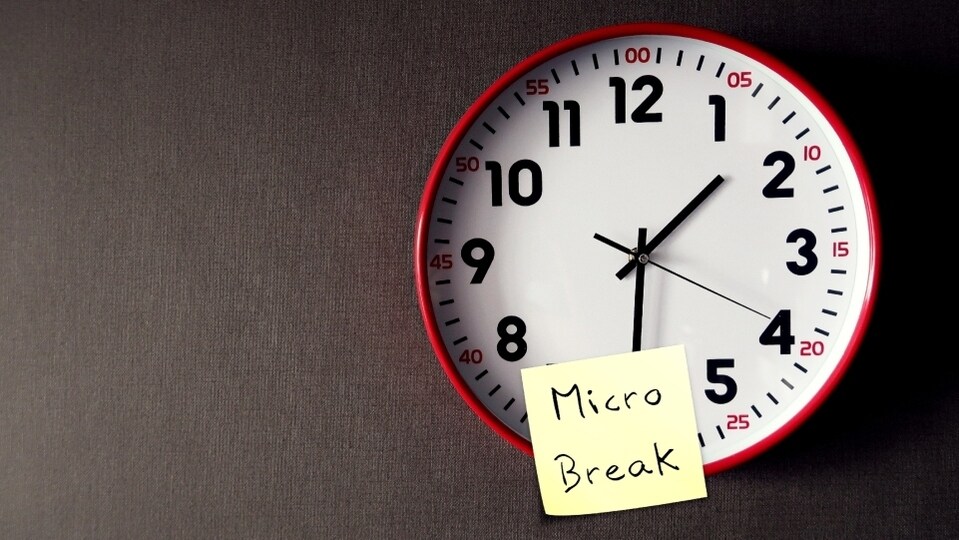
Expert says microbreaks promote relaxation, enhance productivity, help maintain creativity and focus, and ultimately improving job satisfaction.
April 28 is marked as World Day for Safety and Health at Work. It raises awareness about making work safe and healthy, and stresses the prevention of accidents and diseases at work. Mental health is also an important aspect of a fulfilling work life. It allows you to effectively function at your workplace, and taking breaks is an essential part of it.
In an interview with HT Lifestyle, Shreya Iyer, habit coach and ACE Personal Trainer at Alyve Health, stressed the importance of microbreaks. She explained, “Microbreaks, as the name suggests, are small breaks that can be taken during the work day, ranging from a few seconds to several minutes. These breaks help to adjust your physical and mental health as well as enhance productivity and performance. However, what you do during the break is important, as activities can either be disruptive or facilitative.”
An exercise for a mental health pause
However, before we delve deeper into why microbreaks are essential, their benefits, and how to take them, here's a mental health pause you need to take, as suggested by Shreya. "Take a pause. Narrow your attention to the blank space below:
Breathe.
Notice your inhale.
Notice your exhale.
Smile."
She explained, “If you wholeheartedly do this exercise and gave yourself permission to take a mindful pause, you will notice a small but tangible shift in your nervous system. Perhaps transient, but enough to realise that when you shift from ‘doing’ to just ‘being’ - it can positively impact your brain and body.”

How to take optimal microbreaks
Here are some tips Shreya Iyer suggested:
1. Be intentional
Don’t let your micro-breaks fall to chance. Plan your breaks in advance using tools such as calendar reminders or a timer. Set up a 5-minute break every 90 minutes on your calendar. You can also stack the breaks with a pre-existing habit. For example: Every time I complete a task off my list, I will stand & stretch.
2. Move your body
Sitting for long periods of time increases the chances of stiffness, reduces the range of motion, and increases the risk of injuries. In your scheduled break, be sure to move your body. It can be as simple as neck, shoulder and wrist movements at your desk, getting up and doing full body stretches such as the cat-cow, pigeon pose and hip flexor stretch, or a mini 5-minute walk.
4. Take a nap
Contrary to popular belief, it is actually encouraged to catch a short nap during your workday. The ideal length for an afternoon nap is 10-20 minutes, and in early afternoon hours, such as between 1-3 pm. Small snoozes can help you feel alert, refreshed and cognitively recharged.
5. Change your environment:
Change your scenery to help your brain and body switch gears. While even switching your room/cabin can be helpful, connecting with nature has an added benefit. Go to the terrace, balcony, or better yet, for a walk around the neighbourhood.
6. Mindfulness practices
Connecting to the present moment through mindfulness practices is a powerful way to pause and feel grounded. Some practices you can try are:
a) Breathing exercises such as alternate nostril breathing or box breathing.
b) Art-based practices such as tracing your breath through art, doodling, and mandala art.
c) Grounding exercises such as the 5 senses exercise and expressing gratitude.
7. Avoid mind-draining activities
Choose your activities wisely. Spending time on social media, engaging in stressful conversations or attending to low-effort errands during these breaks defeats its purpose.

Top 3 mental health benefits of small pauses:
Shreya explained, “Chronic stress and activation of our nervous systems throughout the day can lead to mental health issues such as anxiety and burnout. By offering moments of relaxation and decompression, micro-breaks offset the probability of mental and physical health issues.”
She added, “Our focus, productivity, and creativity are mind-muscles that fatigue over time. With well-timed breaks, our brain can reset its cognitive capabilities, ensuring quality work, speed, creativity and problem-solving skills.”
Lastly, the habit coach stressed that microbreaks can help us feel more in control of our day and a sense of agency over our schedules. This helps increase job satisfaction and commitment.
So, the next time you feel caught in the rush, remember: a few mindful moments can make all the difference. Pause. Breathe. Begin again.
Note to readers: This article is for informational purposes only and not a substitute for professional medical advice. Always seek the advice of your doctor with any questions about a medical condition.


Catch your daily dose of Fashion, Taylor Swift, Health, Festivals, Travel, Relationship, Recipe and all the other Latest Lifestyle News on Hindustan Times Website and APPs.


