
 E-Paper



Psychologist shares 6 gentle ways to tell your parents you want to go to therapy: Here's what to avoid and what to say

 Prefer HTon Google


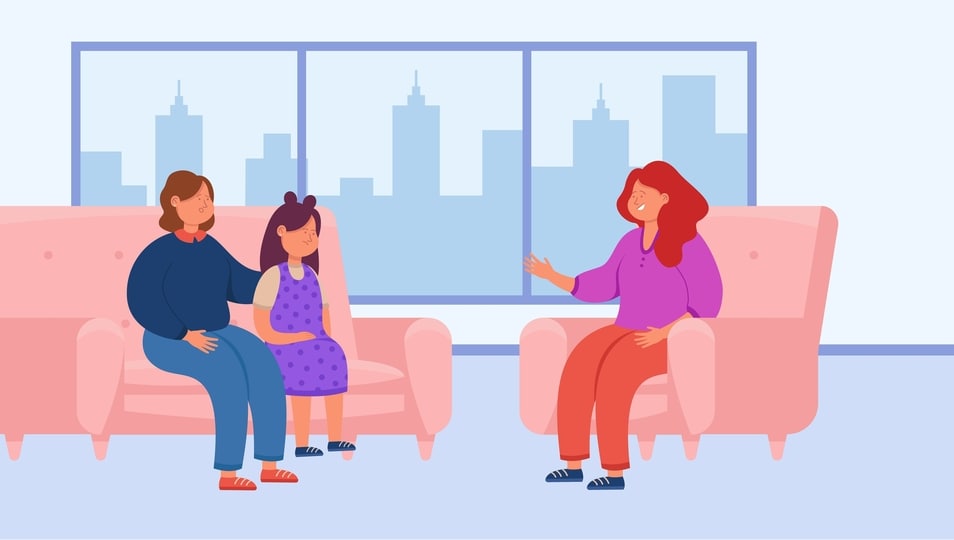
Therapy can help with everyday stress, but some Indian parents associate it with serious illness, weakness, or family failure.
Therapy is still a taboo topic in many Indian households. It is hard to bring up without feeling emotionally cornered or ridiculed. A common misconception about therapy is that it is only relevant when someone experiences severe mental or emotional distress. But it can also help you manage everyday stressors, from work pressure to relationship difficulties, especially when they repeatedly interfere with your daily functioning.
We asked an expert why some parents hesitate to consider therapy for their children. Even if teenagers or adult children show initiative, what makes them so reticent and dismissive of its value? You need to approach the conversation by debunking their misconceptions and highlighting your needs.
Why do parents hesitate when it comes to therapy?
Rita Aggarwal, consulting psychologist and chair of the Rotary Action Group on Mental Health Initiatives, walked us through parents' perspective and the misunderstandings behind it.
“For many Indian parents, therapy is still associated with something being seriously wrong with a person, weakness, or ‘mental illness.’ Culturally, there is a fear of social judgement: ‘What will people say?” she said, drawing attention to the fundamental reason why parents may hesitate to seek counselling for their children. Her insights suggest that this reluctance may stem from concerns about family and social judgement.
And this is true: often parents get defensive, thinking that there is something wrong. In fact, the psychologist also addressed the tendency to present a picture of perfection and view talking about problems with a therapist as a sign that they have done something wrong. They make it about themselves or reject the problems, believing that spiritual practices, such as praying to God, or physical activities, such as going for runs, will resolve the mental distress.
She further reinforced the point with some common examples: “Indian parents like to present a picture of perfection, and if there is something wrong with your physical and mental health, they will discourage their children from talking about it in public. ‘Don’t tell anyone you have asthma from childhood, nobody will marry you’, advises a mother to a young 10-year-old girl. ‘Never tell anyone you have dyslexia, or that you stammer or that you have anger issues’. The list is long.”
But the caveat is that when the problem is brushed aside, it only worsens, contrary to the belief held by some parents, as the expert noted, that it will go away with time.
How to convince your parents you need therapy?

You may encounter negative comments or jokes when you first bring up therapy. It may make you want to give up considering therapy altogether. But finding a way to explain your need and address your parents' misconception may make them more receptive to the idea.
The psychologist shared these tips to help you start the conversation:
1. Change how you introduce therapy
- Avoid saying ‘I need psychological help.’
- Instead say, ‘I have been finding it difficult to manage stress in college, and I would like to speak to a counsellor who works with students.’
2. Ask them to take the first step with you
- If parents are hesitant, invite them to accompany you to meet the counsellor.
- You could say, ‘Can we attend an initial session together to understand how counselling could help me?’
3. Explain that therapy does not automatically mean mental disorders or medications
- Mild and moderate categories of emotional disturbances are not part of severe mental disorders.
- Can be taken care of by counselling and talking
- No psychiatric medicines are required all the time.
4. Share examples of celebrities who sought help
- Mention people who have spoken openly about benefiting from therapy, such as Deepika Padukone and Aamir Khan.
- This makes your parents more comfortable with the idea.
5. Highlight the role of counselling in schools
- Make them aware that the Central Government, including the school education boards, has made counselling services mandatory in schools.
6. Compare therapy with other forms of professional guidance:
- Compare therapy with seeing a doctor, tutor, or coach.
- Seeking professional guidance is a sign of responsibility, not weakness.
Note to readers: This article is for informational purposes only and not a substitute for professional medical advice. Always seek the advice of your doctor with any questions about a medical condition.


Catch your daily dose of Fashion, Taylor Swift, Health, Festivals, Travel, Relationship, Recipe and all the other Latest Lifestyle News on Hindustan Times Website and APPs.


