
 E-Paper



‘Oppn politicising air strikes, Rafale’: Rajyavardhan Rathore
The minister, who is also an Olympian and a former army colonel is vehement that it is not the government, but the Opposition that has politicised the attacks carried out by the Indian Air Force (IAF) against terror outfits in Pakistan.

 Prefer HTon Google


The hallmarks of the Narendra Modi government’s five-year tenure at the Centre are strengthening governance mechanisms, ensuring delivery of schemes to people at the margins and setting in motion transformation in all sectors, Rajyavardhan Rathore, the minister of state (independent charge) for information and broadcasting and youth affairs and sports said in an interview to Hindustan Times earlier this week. And the biggest achievement of this government is rekindling the faith of people in the country’s leadership, he added.
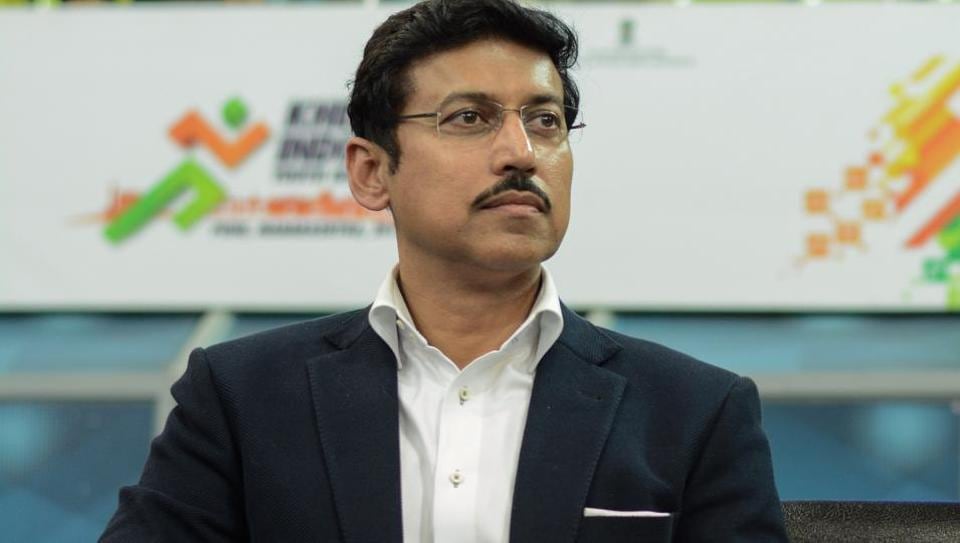
The minister, who is also an Olympian and a former army colonel is vehement that it is not the government, but the Opposition that has politicised the attacks carried out by the Indian Air Force (IAF) against terror outfits in Pakistan. Edited excerpts:
Q. This government has been accused of politicising the strikes against terror camps, first after Uri and now after Pulwama. You’ve also been a man in uniform, how do you react to these allegations?
A. You have it exactly 180° wrong. It is the opposition that is politicising military issues - be it Rafale, surgical strikes or the recent air strikes.
One politician asked for the proof of surgical strikes. Another has actively tried to sabotage the Rafale deal. Yet another one chose to believe Pakistan and foreign media over the Indian government on the issue of recent air strikes. Who really is politicising the armed forces here, then?
As a former officer of the Army, it is deeply disappointing when politicians raise questions about our capabilities for political mileage, which is what the opposition has been doing.
Q. The government has also been accused of withholding information on issues such as the impact of demonetisation, and the details about job creation. What is your explanation?
A. I would disagree with this. Take the specific case of jobs data, for example. It has been the consistent view of our government that the current method of computing job growth is simply inadequate. It does not capture the new realities of India; it does not capture the jobs created largely in the informal sector because of initiatives like Mudra. It does not capture the gig economy and freelance work which has seen an increasing trend among the youth.
Instead of presenting an incomplete data set to the people of India, we would prefer to come out with a comprehensive data set that accurately depicts where we are with respect to jobs growth.
Q. What do you count as accomplishments of this government at the end of your five-year tenure?
This government has taken several unprecedented initiatives. Be it Ujjwala, which takes clean cooking fuel to the last mile; or Mudra, which turns our youth from job seekers to job creators; or Ayushman Bharat, the largest healthcare scheme in the world; or Swachh Bharat, which has increased rural sanitation from 38 % to 96% in five years -- there are many firsts.
However, in my opinion, the biggest achievement of this government is rekindling the faith of people in the country’s leadership.
In the UPA-II era, words like policy paralysis and leadership crisis were associated with India. Today, not just every Indian but everyone in the world knows that India has a strong, decisive leadership. This rekindled faith is our biggest achievement by far.
Q. Are there areas that you would have wanted to give more attention to that could not be done for varied reasons?
We have only begun. We have kick-started the process of India’s transformation in every sector, but the work is not yet completed. From roads and houses to sanitation and financial inclusion, every aspect of the nation is changing.
In our next term, you will see these changes take root and India’s transformation will become even more prominent.
Q. The electoral setback in three Hindi heartland states was seen as a precursor to the big election. How well is the BJP equipped to take on a collective Opposition?
The “collective” opposition is simply a bunch of unprincipled opportunistic parties that have realised that individually they are no match for the BJP. In their desperation, they have put aside their petty bickering and come together in the impossible hope of defeating BJP.
However, they are underestimating the Indian voter. The Indian voter knows that this “Maha thug bandhan” (great grouping of thugs a play on Mahagathbandhan or grand alliance) has no common manifesto or no record of development to offer. Everyone knows of the amount of work done by the Government over the last five years. The opposition parties are fooling nobody but themselves.
As for how well we are equipped, we simply have to take our development record in front of the people -- 98% sanitation, 80 million gas connections, world’s largest health coverage scheme and 100% village electrification, among other things -- I would say we are quite well equipped.
Q. Another charge against this government is that it’s muzzled free speech. Your comment.
A. This is a blatant lie spread by the opposition because they have nothing else to attack our government with. If we had indeed stifled free speech, would Mr Kapil Sibal have gone to London to discredit our electoral system? Would Mr Digvijay Singh and Mr Mani Shankar Aiyar have used the language that they did for the Prime Minister? The truth is that it is the opposition that has abused the right to free speech. It is through this abuse that they belittle this right.
Q. Following the Pulwama attack, there have been incidents of violence against Kashmiri Muslims and there is a growing animosity between communities.
A. We have been categorical that our fight is against terrorism and not Kashmiris. Any violence, even an iota of it, against any citizen of Jammu and Kashmir needs to be addressed by the law enforcement agencies and strict action will be taken against those who misbehave.
Q. Fight against corruption was the mainstay of the BJP’s campaign in 2014; now as we draw close to elections, the opposition is belligerent on the issue of defence deals. How will the party take this is up with the electorate?
A. Not “deals”. Just Rafale. One wonders why a particular opposition party has continuously tried to sabotage that deal. The electorate knows full well that from the Jeep Scandal in the 50s to Bofors in the 90s and AgustaWestland chopper scam in 2013, one party has been at the forefront of Defence corruption in India. That party is not the BJP.
Q. BJP set the bar high with its innovative and out of the box campaign in 2014; how will the 2019 canvassing pan out? What can the electorate look out for?
A. There is a quote of Ram Prasad Bismil that fits this question: Waqt aane de, bata denge tujhe ae aasman, hum abhi se kya batayein kya humare dil mein hai [When the time comes, we will tell the skies, for why should we disclose, what lurks in our hearts].
Q. You’ve been a sportsperson, an Olympian, now as the sports minister do you think the gap between what it takes to nurture a sport and the proverbial red tape of the government has been reduced if not eradicated?
A. You’re asking me to be the judge of my own Ministry’s work! I can’t judge myself. However, we have certainly tried our best to reduce the distance between the athlete and the official, and the results speak for themselves. 2018 was one of the most successful years for Indian sports, with fantastic achievement in Commonwealth Games and the Asian Games.
Since its inception, Khelo India has given us some world class stars who have a very bright future ahead of them. We have tried to put a system in place that will find, nurture and train sporting talent and make India a sports powerhouse.


