
 E-Paper



Mumbaiwale: Surprises in Raja’s realm
How did Lalbaug get its name? The answer involves a Muslim dargah, a Parsi mansion, and a Jain temple

 Prefer HTon Google


“Of course, we’re proud of Lalbaugcha Raja, he’s the pride of Mumbai,” says Aniket S Tawale 32, Lalbaug resident, son of a mill worker and manager at an electronics store not too far from his home. “But people outside this neighbourhood don’t see anything more than the mills and the Marathi connection. They don’t know that the very name of the area actually has Muslim roots.”
He’s only partly right. Heritage tour guides and local historians love mentioning that Lalbaug gets its name from a tiny dargah built in 1783, and dedicated to the mystic Syed Lal Shah Baz Qalandar.
Down a winding alley full of new middle-class constructions (windows pre-grilled, no balconies) in Tawripada, only a few lanes away from the seat of Lalbaugcha Raja, Lal Shah Sahib’s dargah still stands. The domed, one-room structure is attached to a well and holds the grave of Lal Shah. It was damaged in the 1992 riots but was rebuilt sometime in the last decade.
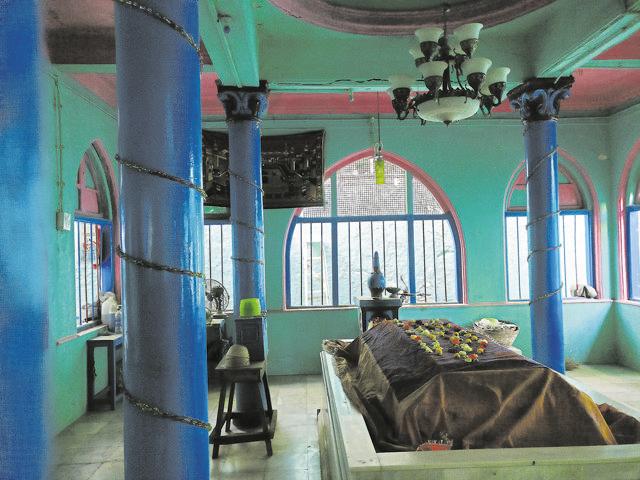
It’s well tended to. Sheikh Mohammad Haroun and his family live right across and keep the area clean and the garlands fresh. “We honour his death anniversary with a celebration on February 22, and have already started preparations,” says Haroun, pointing to tubs of wall paint at the entrance.
Lal Shah may have nothing to do with Lal Baug or Red Palace, a mansion that once stood only a few metres from the dargah. The Lal Baug was the home of the Wadia shipbuilding family, and one of the city’s poshest addresses in the 1800s. It was one of the first private residences to be illuminated by gas lights.
Lal Baug was replaced by Nowroz Baug, a housing colony for Parsis, in 1908. But it’s possible that the neighbourhood was then called something else entirely.
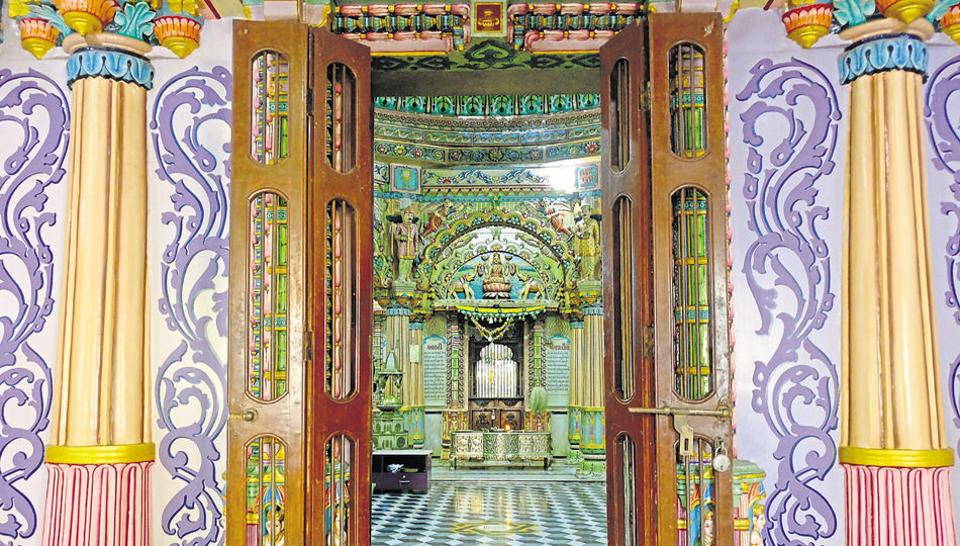
Across the Road from Nowroz Baug stands the Shri Cutchhi Visa Osval Deravasi Jain Mahajan temple, a gorgeous multi-coloured sanctum built in 1926.
Entry is restricted but you may pass muster if your arms, legs and head are covered and if you ask nicely. The inside is breathtaking: pastel-hued frescoes, murals, carvings, statues and intricate motifs cover every inch of space, from floor to pillar to lintel to ceiling.
Take in the idols of women devotees, their saris cinched in with modern belts (one lady at the exterior even holds a handbag). See how the chandelier in the inner sanctum catches the light. Pause to admire the elephants in the lower panels figuratively holding up the structure. But don’t leave without reading the plaque by the door. It refers to the location as Lalwadi – a name that never caught on.
Rachel.Lopez@htlive.com


