
 E-Paper



Students make green Ganpati idols
Around 200 eco-friendly idols were made using mud from the Powai lake and Mithi river.


Bringing in the festive season early, school students gathered at Powai last week to make 200 eco-friendly idols using mud from the Powai lake and Mithi river.
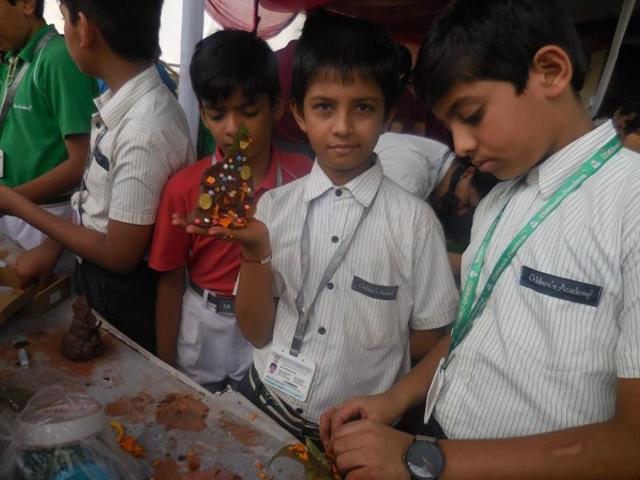
The students — from Children’s Academy in Malad, Powai English School, Hiranandani Foundation School in Powai and others — gathered at a hotel to make mud idols that dissolve easily, causing less damage to aquatic ecosystems. They said their families will use these idols instead of buying new ones for Ganeshotsav, which will be celebrated next month.
“The idea was to inform students of the environmental damage caused by Plaster of Paris (PoP) and thermocol idols immersed every year at Mumbai’s beaches,” said Elsie Gabriel, founder of the non-governmental organisation Young Environmentalists Programme (YEP) that organised the event. “Making clay idols is an ancient craft, which should be revived.”
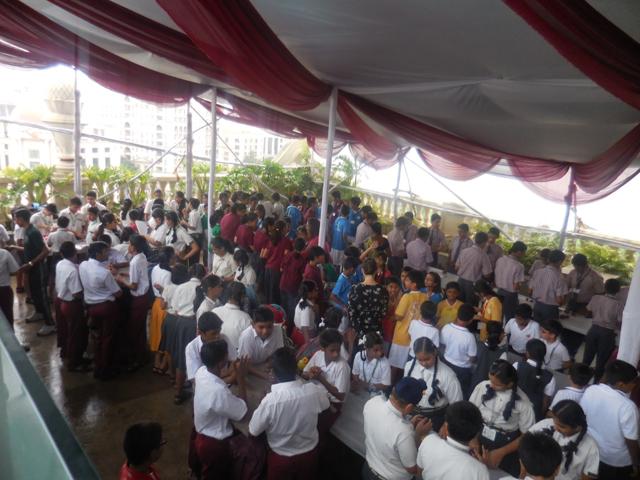
Gabriel said they collected about 40kg silt from the Powai lake and Mithi river. It was sieved, cured and mixed with garden clay before being moulded into idols. “It was a therapeutic experience and an expression of art for these young environmentalists,” said Ravi Arora, a Powai resident, whose son attended the event.
Ganeshotsav puts a lot of strain on Mumbai’s coastal seas and inland water bodies. Last year, over two lakh idols were immersed, leaving 3,059 metric tons of waste on the city’s beaches — roughly the amount of garbage sent to the Deonar dumping ground daily.
The children learnt to make idols in seven simple steps. They were first asked to mould the torso, followed by the head with the mukut (crown), one hand holding the modak (sweet) and the other raised in blessing.
“The children were asked to embed the idols with seeds so that they could be immersed at [makeshift ponds] in gardens and plants could be grown,” said Tanya Satish, director, YEP. “They used only eco-friendly decorations such as flowers and wood shavings.”
Later, students took part in a competition to select the best idol. “I made a small idol, which will have less impact on water bodies,” said Preetham Jain, 12, student at Children’s Academy who won the competition.
After Ganeshotsav, Powai residents will collect all the nirmalaya (flower waste) for recycling through composting from the immersion site at Powai lake.
For an eco-friendly Ganeshotsav
• Choose idols that cause less damage to the ecology: The immersed idols should dissolve within a short span of time. They should not pollute the water body or leave residual material that could harm the aquatic ecosystem
• Opt for one idol per community: This will lead to fewer idols being immersed in the city’s water bodies
• Use natural materials for decorations: Natural colours such as turmeric, henna and rice powder, can be used to create rangolis. These materials do not pose a threat to human health or adversely affect the environment. Wood, paper or cloth are better alternatives to thermocol or plastic foam
• Compost organic material: Offerings comprising flowers and garlands can be converted into manure at a compost pit/drum and used for gardening
• Conduct immersions at home: Instead of immersing idols in a water body, it can be symbolically immersed at home. The same idol can be worshipped the following year. The idol can even be taken to an artificial water body, immersed and brought back home.
According to the civic body, more than two lakh Ganesh idols are immersed during the 10-day festival in 71 natural and 27 artificial ponds across Mumbai. Devotees largely use two types of idols — those made of white clay and those of made of Plaster of Paris (PoP), which are cheaper. However, while clay takes three weeks to completely dissolve, PoP takes months.
What is Shadu clay?
Shadu clay is a type of clay made of fine particles of silt, whitish in colour and smooth to the touch when soaked for a long time. This clay is traditionally used for making idols. Idols made with this clay have a smooth finish, become hard after moulding and drying and can easily be painted upon
Shadu clay is transported in Mumbai region from areas near Bhavnagar in Gujarat or from mines in Rajasthan. Unconfirmed reports estimate that Mumbai uses almost 350 truckloads of Shadu clay during Ganeshotsav, which is brought in from these areas
(Source: Maharashtra Nature Park Society)
Authorities Say
“It is encouraging to see different age groups come together to protect the environment in their own way. Mumbaikars need to come together to spread awareness about environmental conservation,” said a senior official from the Brihanmumbai Municipal Corporation.
Stay updated with all the Breaking News and Latest News from Mumbai. Click here for comprehensive coverage of top Cities including Bengaluru, Delhi, Hyderabad, and more across India along with Stay informed on the latest happenings in World News.


