
 E-Paper



Watch out Mumbai, your plastic waste may end up on your food plate
The guts of more than a third of all edible prawns, shrimp and crabs found in the waters off Maharashtra and Gujarat’s coasts and studied by marine scientists, are choked with plastic.


Still looking for a reason to reduce the amount of plastic you use and throw every day? Consider this the next time you order a lobster at a your favourite restaurant: the guts of more than a third of all edible prawns, shrimp and crabs found in the waters off Maharashtra and Gujarat’s coasts and studied by marine scientists, are choked with plastic.
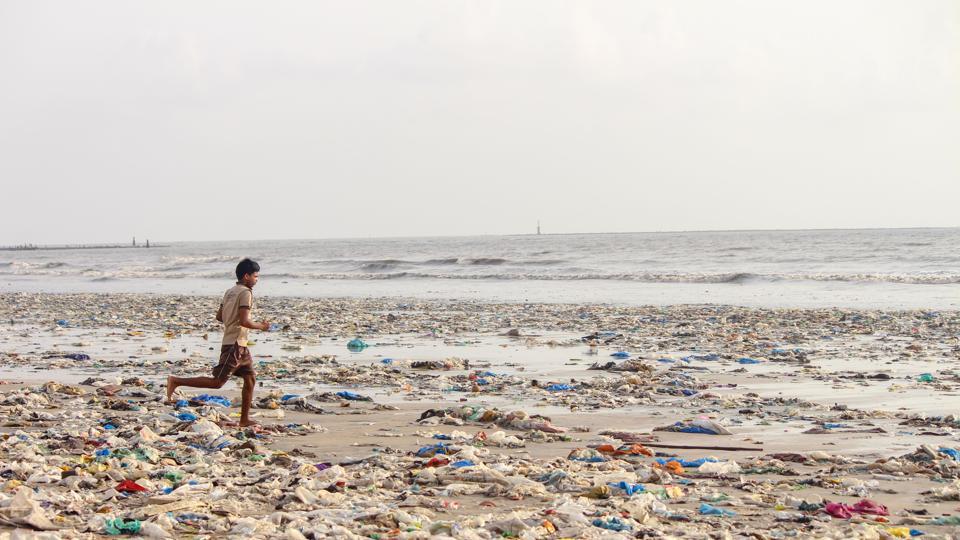
The Indian Council of Agricultural Research-Central Marine Fisheries Research Institute’s Veraval Regional Centre in Gujarat studied crustaceans that are caught in these waters, and their preliminary findings show large quantities of microscopic plastic fibres in the guts of these animals.
The researchers said seawater off India’s north-west coast was perhaps the most vulnerable to plastic contamination as it lies close two of the most developed Indian states.
Earlier studies have shown that around 70% of the litter in the oceans are plastic items. These large plastic debris degrade and turn into microplastics that are smaller than 5mm — the size of a sesame seed.
This is dangerous as they are small enough to enter the food chain when marine life ingest them. Microplastics include microbeads from washing products.
For this study, an eight-member team from the institute looked at 1,267 guts of 12 species of crustaceans that are widely consumed in the country. Only 372 of them were free of plastic. Of the remaining 895 guts, 44.9% or 402 contained microplastic fibres. In some of the crustaceans, the researchers found just single strands, measuring between 9.8 micrometer (um) to 35.40um, but in others, they found more than 100 strands in a single gut (width and length ranging from 1.2 millimetre to 5.96 mm).
“Although the cepahalothorax — the head and thorax of prawns — are not eaten, the incidence of plastics ingestion should not be taken lightly,” said Rajan Kumar, scientist, and lead investigator. Kumar said microfibres may move from the animal’s gastro-intestinal system to the nearby tissues that are finally consumed by humans. “The health of scavengers like crustaceans can be indicative of the health of benthic marine ecosystem — the bottom of the sea.”
Deepak Apte, a marine biologist and director at the Bombay Natural History Society, who was not involved in the study, said microplastic fibres in the guts of such animals was a cause of concern . Apte pointed out that plastic ingestion in the animals was not similar to the accumulation of metal or pesticides, as these can transfer from lower organisms to higher ones, but added, “It will certainly kill marine animals if they get accumulated in their guts.” Apte said, “While we continue to focus on collecting and disposing of plastic, it’s time to look at the issue of microplastic and microplastic fibres in our seas seriously, before it reaches epic proportions.”
So far, researchers from the Central Marine Fisheries Research Institute (CMFRI) have recorded plastics in other organisms like sardine, mackerel, anchovy, ribbon fishes, dolphin-fish, tunas and several other fish caught from almost all states along the southwest and southeast coasts. Plastic pieces have also been found in the carcasses of sea birds and stranded whales.
“Crustaceans are considered a delicacy. As a scavenger in nature and inhabiting sandy and muddy regions of coastal waters, the crustaceans possibly have higher chances of plastic ingestion, especially microplastics,” the study said. The study also recorded a higher presence of microfibre plastic among species caught closer to the coast. Larger specimens, especially the giant tiger prawns and larger shrimps, for instance, showed lower incidence of plastic ingestion as they are caught in deeper waters.
The maximum presence of microplastic fibres was found in 62 samples of Parapenaeopsis stylifera, or kiddi shrimp, followed by 51 samples of the Metapenaeus Monoceros, or the speckled shrimp, and 49 samples of Metapenaeus affinis, the jinga shrimp.
The extent of the microplastic fibres varied from 25.41% in Solenocera crassicornis (mud shrimp) to 62.22 % in Parapenaeopsis hardwickii (spear shrimp). Among other marine crustaceans, 61.67% gut samples of Portunus sanguinolentus (blood-spotted swimming crab) were found to be positive followed by 59.62% in Penaeus monodon (giant tiger prawn that is widely reared for food) and 41.07% in Panilurus polyphagus (mud spiny lobster).
.


Stay updated with all the Breaking News and Latest News from Mumbai. Click here for comprehensive coverage of top Cities including Bengaluru, Delhi, Hyderabad, and more across India along with Stay informed on the latest happenings in World News.


