
 E-Paper



A parliamentary push to the BRICS agenda
Four thematic pillars — resilience, innovation, cooperation, and sustainability — guide the 12th BRICS Parliamentary Forum

 Prefer HTon Google


In the two decades since its inception, BRICS has evolved into an influential anchor of the Global South and a driving force for reforming the multilateral architecture. Today, it accounts for approximately 49.5% of the world’s population, nearly 40% of its GDP, and 26% of international trade. As India assumed the BRICS Chairship in 2026 under the theme “Building for Resilience, Innovation, Cooperation and Sustainability,” it underlined the ethos of vasudhaiva kutumbakam (the world is one family), anchoring the multilateral agenda in a “humanity first” development framework. The growing engagement among BRICS countries has also strengthened its parliamentary dimension through the BRICS Parliamentary Forum (BRICS-PF).
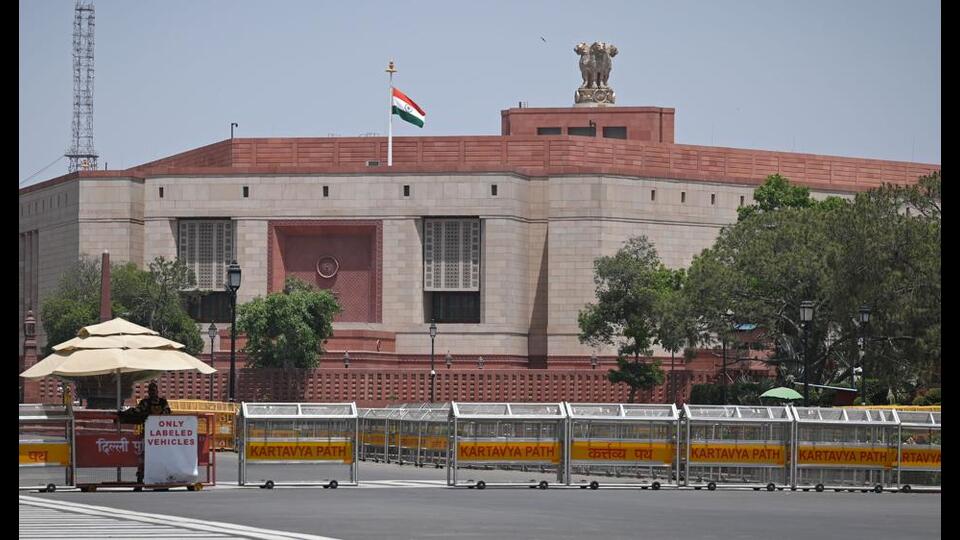
The 12th BRICS Parliamentary Forum, being hosted by the Parliament of India in New Delhi under the theme “Fostering Parliaments for People-centric Development”, seeks to build on this legacy and further strengthen parliamentary dialogue, cooperation and collective action among BRICS member and partner countries.
The four thematic pillars guiding the 12th BRICS Parliamentary Forum — resilience, innovation, cooperation, and sustainability — are closely intertwined with the overarching agenda of India’s 2026 BRICS chairship. The New Delhi Declaration, adopted at the 18th BRICS Summit in New Delhi in September 2026, provides the strategic framework for collective action around these priorities. While the Summit articulates shared commitments at the level of international cooperation, the 12th BRICS Parliamentary Forum focuses on the legislative mechanisms needed to translate these commitments into action. Through four dedicated plenary sessions, the Forum examines how parliaments can contribute through legislation, budgetary approvals, executive oversight and parliamentary cooperation to translate the Summit’s consensus into domestic policies and programmes.
The first theme, institutional resilience, underscores the importance of strong, accountable, and adaptable institutions in sustaining democratic governance and responding effectively to an increasingly complex global environment. The global governance architecture is increasingly struggling to address contemporary geopolitical shifts, strategic rivalries, economic uncertainties and emerging transnational challenges. Its limitations are evident in the gap between global development commitments and their implementation. According to the UN Sustainable Development Goals (SDG) Report 2026, only 36% of SDG targets are on track, while developing countries face an annual SDG investment gap of approximately $4 trillion. In contrast, global military expenditure reached a record $2.8 trillion in 2025. These realities underscore the need to reform multilateral institutions.
BRICS advocates comprehensive reform of global institutions, including the UN and the Bretton Woods institutions, to make them more inclusive, representative, transparent and effective. This commitment was reflected in the New Delhi Declaration, adopted at the 13th BRICS Summit in New Delhi in 2021, which included a landmark Joint Statement on Strengthening and Reforming the Multilateral System. Strengthening institutional resilience requires enabling existing structures to adapt to emerging challenges, build trust, and deliver meaningful outcomes through international cooperation. India’s experience highlights the role of Parliament in strengthening institutional resilience through legislation, deliberation, financial scrutiny and oversight. Parliamentary Committees further reinforce this framework through detailed scrutiny of government policies, programmes and expenditure.
The second pillar, innovation, recognises that we are in the midst of an unprecedented technological revolution. Globally, parliaments are tasked with crafting regulations that encourage technological advancement while protecting fundamental rights.
India’s approach to this challenge is both pragmatic and human-centric. It adopts a principle-based AI governance framework anchored in seven sutras to enable safe, trusted, and inclusive AI innovation across sectors. This commitment was recently seen at the AI Impact Summit 2026, which concluded with the adoption of the New Delhi Declaration on AI Impact. India’s Parliament has also embraced digital transformation to enhance its own accessibility. Through the Digital Sansad initiative, we have transitioned to a unified, secure, and paperless ecosystem. We are also preserving our rich institutional memory by using AI to digitise historical Lok Sabha and Rajya Sabha debates.
Now, on to the third pillar: cooperation. Today, the Global South accounts for more than 60% of the global economy in purchasing power parity terms and contributes nearly 80% to global economic growth. These shifts highlight the growing importance of ensuring that international decision-making reflects diverse perspectives and development priorities. BRICS, representing major emerging economies and developing countries, offers an important platform for strengthening South-South cooperation, building consensus and advancing shared priorities. Parliaments have a vital role in this endeavour by facilitating dialogue across countries, building political consensus, scrutinising international commitments and ensuring that global cooperation remains responsive to the aspirations of their people.
Within the BRICS framework, cooperation has led to the establishment of the New Development Bank (NDB), which operates without a unilateral veto and has approved $43 billion for 139 projects globally. These initiatives demonstrate how multilateral cooperation can translate shared priorities into tangible development outcomes. Parliaments, in this context, become particularly important where reforms to international financial arrangements, trade agreements, and multilateral frameworks require domestic legislative action.
Finally, we turn to sustainability. The transition to a green economy must be inclusive, ensuring that climate action does not compromise poverty alleviation or create restrictive trade barriers. India’s development trajectory is a shining example that economic growth and environmental stewardship can be seamlessly integrated. Between 2013-14 and 2022-23, an unprecedented 248.2 million people were lifted out of multidimensional poverty. Our green transition, too, has been historic. India’s total power capacity reached approximately 552 GW in July 2026. Non-fossil sources now account for over 54% of this. Parliament has been instrumental in this journey, enacting transformative laws to foster a sustainable future.
BRICS parliaments are moral frameworks for governance that guide the democratic ethos of the people. The 12th BRICS Parliamentary Forum is an opportunity to assert that global governance must belong to every citizen of this world, irrespective of region or developmental stage. As we strive to build a more just, equitable, and progressive international order, let us honour the trust placed in us by our people, committing ourselves to upholding the principles of resilience, innovation, cooperation, and sustainability that lie at the core of our shared future.
Om Birla is Speaker, Lok Sabha. The views expressed are personal


