
 E-Paper



Apec must resist retreat from interdependence amid rising security concerns
How are member economies reconciling their economic interests with national security concerns; & what does this mean for Apec’s ability to sustain cooperation?


Notwithstanding continuing debates over globalisation, governments remain invested in the benefits of economic interdependence. Access to markets, technology, investment, and international production networks remains central to economic growth. Yet globalisation has also exposed countries to vulnerabilities arising from concentrated dependencies, supply-chain disruptions, and competition over critical technologies. Growing national and economic security concerns have consequently prompted governments to reassess how they balance economic openness against its associated risks. This dilemma assumes particular significance for Asia Pacific Economic Cooperation (Apec), where national security considerations increasingly shape the economic priorities of its member economies. The recent Apec summit in Shenzhen, therefore, raised two interrelated questions: How are member economies reconciling their economic interests with national security concerns; and what does this mean for Apec’s ability to sustain regional cooperation through consensus?
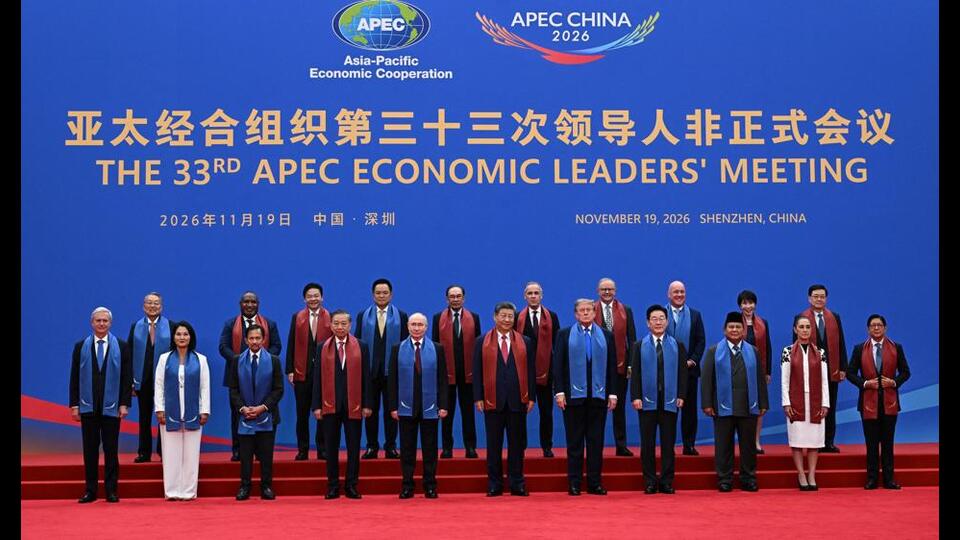
The Shenzhen summit brought these questions into focus as participating governments endorsed a common agenda of openness, innovation and cooperation, despite pursuing different economic-security priorities. The approaches of four Apec economies are particularly illustrative: China seeks to preserve economic openness while strengthening indigenous technological capabilities; Japan aims to maintain economic engagement with China while reducing strategicdependencies; Canada is diversifying beyond its heavy reliance on the US; and Malaysia, reflecting Asean’s preference for avoiding exclusive alignment, seeks to maintain economic ties with competing major powers.
As host, China sought to position Apec as a platform for sustaining economic openness while expanding cooperation in strategically important sectors. Xi Jinping announced a $20 million contribution to Apec cooperation, proposed a Centre for Asia-Pacific Community Studies in Shenzhen, and outlined initiatives covering digital technology, cross-border data flows, clean energy and smaller enterprises. These proposals reflected Beijing’s broader economic-security priorities: preserving access to international markets and production networks while strengthening indigenous technological capabilities in response to external restrictions. Yet Apec economies differ in their assessments of the opportunities and strategic vulnerabilities associated with closer economic engagement with China. Such differences could complicate the implementation of the 2026 Apec Leaders’ Shenzhen Outlook, adopted through consensus at the summit.
China’s central position in regional manufacturing and supply chains makes reducing strategic dependence difficult for many Apec economies. While governments seek to diversify suppliers, strengthen domestic capabilities and develop alternative production networks, they cannot easily disengage from China. This presents a dilemma for Apec: Member economies may agree on the importance of supply-chain resilience while differing considerably over how it should be achieved.
Japan’s experience at Shenzhen exposed the practical difficulties of managing such strategic vulnerabilities. Relations with China had deteriorated following Prime Minister (PM) Sanae Takaichi’s remarks on Taiwan, while Chinese restrictions on dual-use exports and disruptions in critical-mineral supplies exposed Japan’s economic vulnerabilities. Ahead of the summit, Tokyo reportedly sought assurances that Takaichi would receive customary diplomatic courtesies. Although Xi and Takaichi exchanged handshakes, no formal bilateral meeting took place. Nevertheless, Takaichi emphasised the importance of dialogue with China, reflecting Japan’s need to preserve economic engagement despite security concerns. The episode demonstrated how bilateral security tensions could complicate economic cooperation even within Apec’s consensus-based framework.
Canada’s experience at Shenzhen revealed a different dimension of economic dependence and national security. Seeking to reduce its reliance on the American market, PM Mark Carney pursued renewed economic engagement with China, including improved access for Canadian exports, while continuing trade discussions with Washington. Yet diversification did not mean abandoning Ottawa’s security commitments. Canada joined Australia and New Zealand in acknowledging China’s Apec chairmanship while condemning Russia’s war in Ukraine and its implications for regional security. Ottawa’s approach illustrated how governments could broaden their economic partnerships while maintaining distinct national security priorities.
Malaysia offered a different response, reflecting Asean’s preference for maintaining engagement with competing major powers. At Shenzhen, PM Anwar Ibrahim defended Malaysia’s policy of neutrality, emphasising the importance of trade and investment ties with both China and the US. For Malaysia, economic openness and diplomatic flexibility are mutually reinforcing, allowing it to attract investment without committing exclusively to either power. Yet such an approach also depends on preserving room for manoeuvre as US–China competition increasingly shapes trade, technology and investment decisions.
These contrasting approaches have implications for India, even though it is not an Apec member. With its 21-member economies accounting for 61% of global GDP and 46% of global trade in goods and commercial services, Apec influences the regional production networks in which India seeks a greater role. Expanding manufacturing requires access to international markets, technology and intermediate goods, including those from China. Yet excessive dependence in critical sectors creates strategic vulnerabilities. India must, therefore, strengthen domestic capabilities, diversify critical supply chains and deepen international partnerships without sacrificing the benefits of economic openness. Strategic autonomy requires managing interdependence, not retreating into economic isolation.
The Shenzhen summit underscored both the resilience and the limitations of regional economic cooperation. Despite differing national security priorities, Apec economies continue to recognise the benefits of economic interdependence. The challenge is whether their consensus on openness can translate into practical cooperation when governments differ over the vulnerabilities they are prepared to accept and the measures needed to address them.
G Venkat Raman is professor, Humanities and Social Sciences, Indian Institute of Management, Indore. The views expressed are personal


