
 E-Paper



Beijing-Islamabad tango in West Asia mediation
It seems China is attempting to create, to borrow its own words, a “win-win” proposition for itself in the whole ordeal.

 Prefer HTon Google


At the recent ASEAN Post-Ministerial Conference in Manila, the foreign ministers of the ten ASEAN countries and China signed a joint statement on the West Asia crisis. While maritime security or supply chain disruptions could have dominated the statement, its most interesting facet was Beijing getting ASEAN to back Pakistan-led mediation in West Asia.
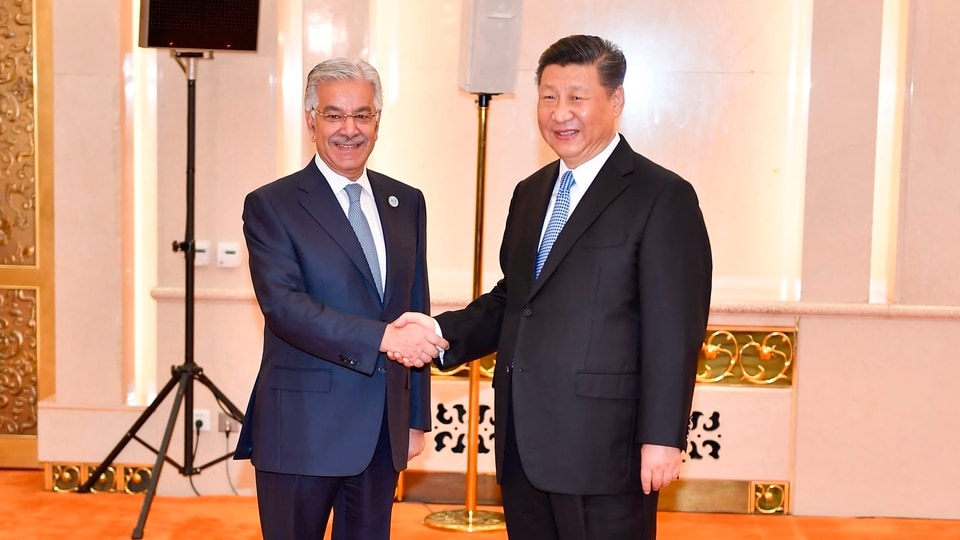
The very first operative assertion of the statement declared ASEAN’s support for peace efforts “mediated by the Islamic Republic of Pakistan and the State of Qatar,” even as lip service was paid to “China’s effort in putting forth [a] four-point proposal” on peace in the region. This alignment in China and Pakistan’s diplomatic language on the war, proudly displayed across many multilateral forums, is something India must watch for at the Shanghai Cooperation Organisation (SCO) Leaders’ Summit that is around the corner.
What does Beijing stand to get from promoting the canonisation of Islamabad’s mediation efforts? Why put President Xi Jinping’s own flagship proposal second, even as it is touted as the way to go in most Chinese foreign ministry briefings?
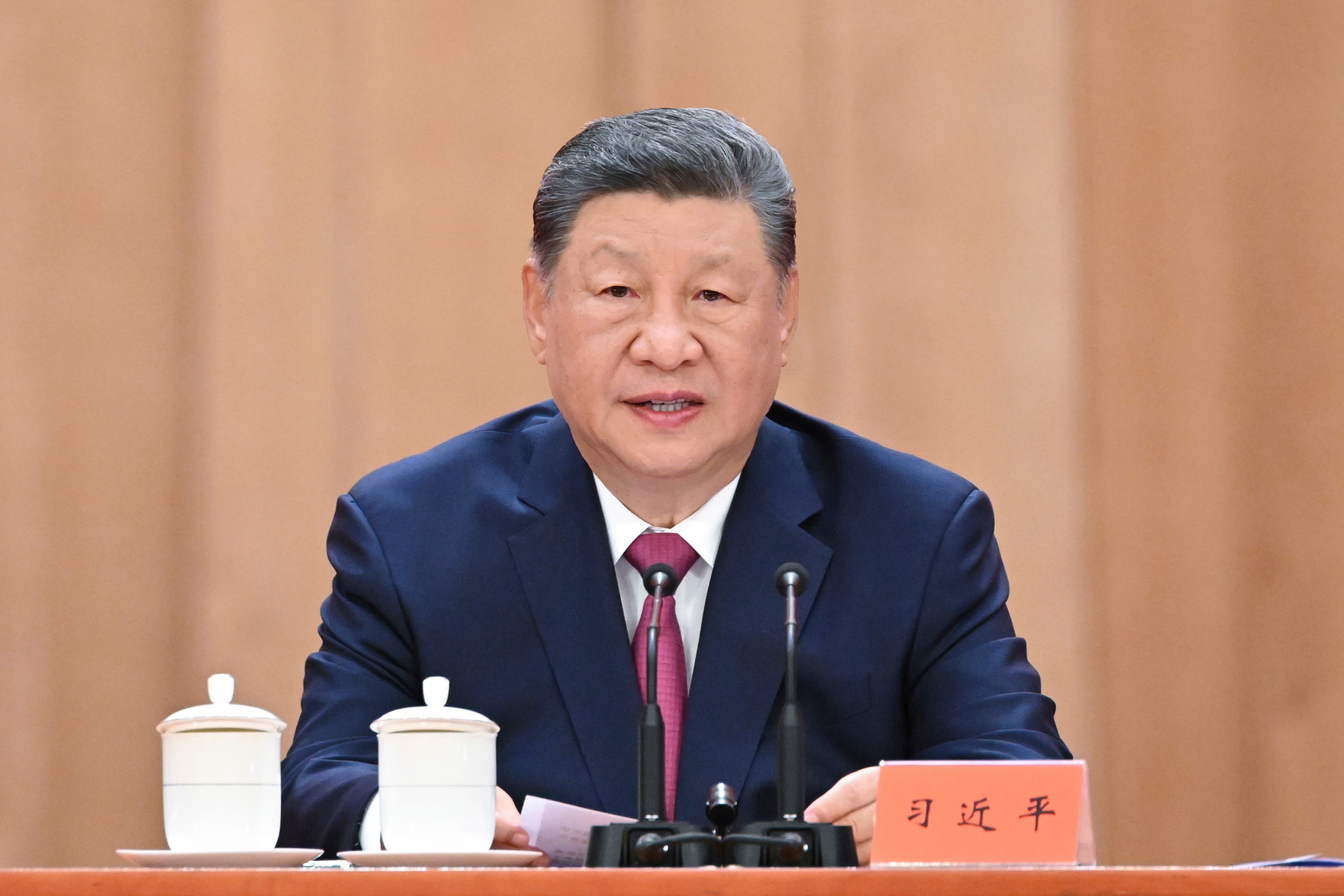
Broadly, it seems China is attempting to create, to borrow its own words, a “win-win” proposition for itself in the whole ordeal. If a front-and-centre Pakistan remains accountable at every step, the failures will be its own. If it succeeds — which initially seemed to be the case before the conflict restarted after a short pause — the paper trail created both by Beijing and Islamabad ensures the success can be jointly claimed. In essence, for China, Pakistan becomes useful because it is exposed to the consequences of failure.
Also Read | The US must shed its Pakistan-China bifocals
The first thing China did regarding the US and Israeli strikes, when Iran gained momentum in March, was to quickly attach itself to Pakistan’s diplomatic effort. On March 31, Pakistan’s deputy prime minister, Ishaq Dar, flew to Beijing, where the two countries issued a five-point plan to restore peace in the Gulf.
Subsequently, Pakistan provided a framework for a 45-day ceasefire on April 5, while Xi unveiled his own four-point proposal shortly after. When Chinese foreign minister Wang Yi called his counterpart Dar on April 13, he commended Pakistan for facilitating the temporary ceasefire and for hosting the talks in its capital, praising its “fair and balanced” mediating role. The inflection point came in June, when the US and Iranian presidents signed the Islamabad Memorandum of Understanding, giving both sides 60 days to finalise a pact ending the war. Thereafter, Pakistan left no stone unturned in expressing gratitude to Beijing for its “key role” in facilitating the MoU — including at the SCO Member States’ meeting in Kyrgyzstan.
For Beijing, this diplomatic investment creates an incentive structure too good to pass up. Washington and Tehran resumed strikes even as Iranian interior minister Eskandar Momeni arrived in Islamabad to meet with mediators. The conflict has since been marked by episodes of escalation and de-escalation, with Washington most recently announcing secondary sanctions that could have devastating economic consequences for Tehran. In the interim, Saudi Arabia joined the US in striking militant groups in Iraq, and the UAE cut all economic ties with Iran. Momeni, soon after the Saudi strikes, visited Islamabad again, indicating its diplomatic corridors to be a preferred floor for mediation.
Ever since, Pakistan, along with Qatar, has kept absorbing accountability while the war continues. Should the mediation continue oscillating or tend towards collapse, the failures will be Islamabad’s and Doha’s, given that they convened the talks and oversaw the signatures. Beijing’s contributions, by contrast, will likely be viewed as principle-based exhortations around sovereignty, dialogue, and peaceful coexistence. And should another ceasefire somehow materialise, Beijing has ensured enough co-authoring to claim stake and prestige.
Also Read | An awkward dance of the dragon and the elephant
But if the design were in place, why would the developments in Manila matter? It is likely that Beijing steering the ASEAN into a joint statement that names Pakistan-Qatar mediation and China’s four-point proposal in the same breath — and then pivoting to energy cooperation under Xi’s flagship Global Development and Belt and Road Initiatives — gets China to both further its mediatory ambitions and embed its preferred language in an important multilateral consensus document. The fact that conversations among Southeast Asian nations are currently also dominated by tensions between Beijing and the Philippines over the South China Sea almost makes the joint statement a worrying win for the former.
This is not to say Pakistan is merely Beijing’s pawn. Islamabad extracted its own gains by expending its mediatory capital. Its leaders seem to have gained some leverage in Washington; its image is now popularised as a Versailles in this conflict, and its diplomatic standing has been revitalised just a year after Operation Sindoor. In the same way, China’s interest isn’t purely reputational as well, given the implications of a closed Strait of Hormuz on its economy and energy mix.
Nonetheless, there are three important takeaways for India. The first is the fact that both its large neighbours and key adversaries are inexplicably tied on all fronts, and Pakistan’s image as a State sponsor of terrorism, in particular, is being whitewashed with Beijing’s support. The second is what Beijing has achieved vis-à-vis ASEAN: the fact that it is perfecting a carrots-and-sticks template across multilateral groupings, including the SCO and BRICS, can hurt Delhi’s own agenda-shaping abilities at these platforms. The third is that even if Pakistan fails as a mediator, India’s absence from region-wide diplomacy and peacebuilding processes in West Asia is noticeable and may not play well with actors on whom it depends for much of its energy needs.
Anushka Saxena is associate fellow, The Takshashila Institution. The views expressed are personal


