
 E-Paper



Can hope trump hate this time in Israeli polls?
Israel’s election will test whether fear and resentment outweigh hopes for change and coexistence, as Arab parties could help determine the next coalition.

 Prefer HTon Google


On October 27, Israel will hold its first general elections since the October 7, 2023, massacre, in which Hamas murdered many Israelis (Jews and Arabs) and foreign nationals. After three years of war, Israel has lost soldiers in Gaza and along the Lebanese border, while Israeli military operations have devastated Gaza, killing tens of thousands of civilians and leaving hundreds of thousands wounded, hungry, and homeless. Israel has also been through two major rounds of war with Iran, while the situation in the West Bank continues to deteriorate, with Jewish settlers carrying out daily acts of violence against Palestinians.
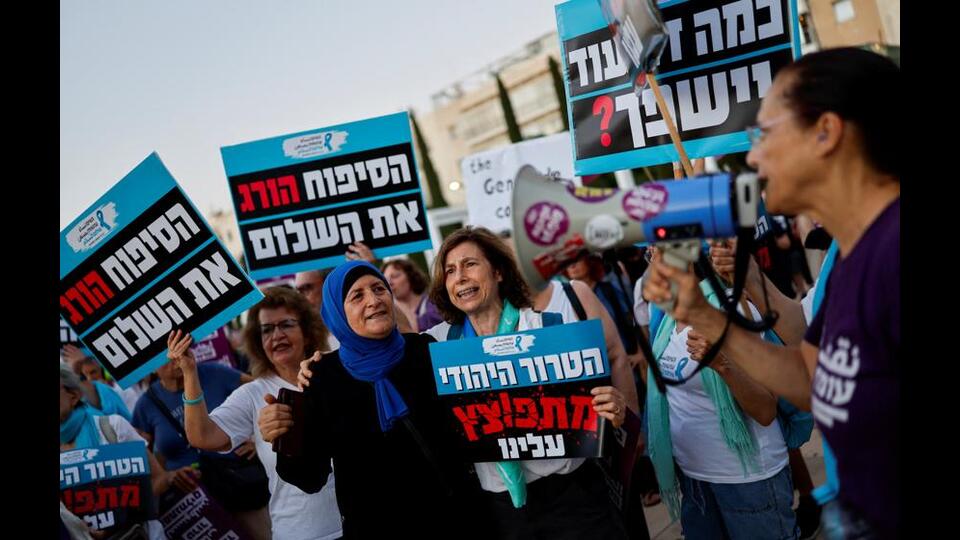
Voting is not as rational an act as we would like to believe. In Israel’s upcoming elections, we will discover which emotion holds greater sway over Israeli society: fear and hatred, or hope for a different, shared future.
So, what are the upcoming elections really about? What factors will determine Israel’s future?
Several political and emotional divides will shape these elections. The first divide is the old and familiar pro-Bibi versus anyone-but-Bibi split. For many Israelis, their feelings towards Benjamin Netanyahu (nicknamed Bibi), the incumbent Prime Minister (PM), may matter more than traditional ideological divisions. Netanyahu has been in power almost uninterrupted since 2009 — he was out of office between June 2021 and December 2022 — and has spent recent years on trial for bribery, fraud, and breach of trust. He has become a deeply hated figure for many, who associate him with corruption, social divisions, and the rise of the fundamentalist settler far-Right.
His controversial overhaul of the judiciary sparked months of mass protests across Israel in early 2023. The country’s politics is increasingly divided between two blocs: the “Bibi bloc”, comprising parties willing to serve under his leadership, and the “Change bloc”, which seeks a new PM. In Israel today, the political Left has almost disappeared, leaving the political landscape dominated by Right-wing and centrist parties.
The second divide is rooted in fear and hatred of Palestinians and Muslims among many Jewish Israelis. Since the October 7 massacre, Israel has been locked in the longest war in its history. For many Israelis, it began as a war for survival, evoking nothing less than the memory of the Holocaust under Nazi Germany.
After three years of war and incitement, many Israelis may vote for far-Right parties, not out of love for Netanyahu or any particular political leader, but out of hatred towards Palestinians and Muslims. For them, any talk of peace or a two-State solution is futile. They believe that Palestinians and Muslims (often seen as interchangeable) want a State “from the river to the sea”, which they interpret as a call to eliminate all Jews. From this perspective, perpetual war and continued occupation are the only options.
The third divide concerns resentment towards the ultra-Orthodox Jews (Haredim). In Israel, where military service is compulsory for most Jewish men and women, the Haredim have historically enjoyed broad exemptions from military service while receiving State funding for religious study. After three years of war, a growing number of Israelis are demanding an end to these privileges and calling for the immediate conscription of Haredi men.
For many, resentment towards the Haredim has become a decisive political factor. Some Israelis refuse to vote for Right-wing parties that do not promise to end the exemptions, turning instead to centrist parties that call for greater equality in military service.
So, what will determine the Israeli vote? It will perhaps boil down to one thing: Whom do the Israelis hate the most — Netanyahu, the Arabs, or the Haredim?
Now let’s talk about hope: the challenge of forming a coalition. As things stand, neither the Bibi bloc nor the Change bloc appears to have a clear path to the 61 seats needed for a majority in the 120-member Knesset. This is because around 20% of Israel’s citizens are Arabs — Muslims, Christians, and Druze — with full voting rights, even if they are often ignored, marginalised, or denied adequate public funding. They are doctors, nurses, teachers, lawyers, engineers — all citizens. (Palestinians living in the occupied territories are not Israeli citizens and do not have the right to vote in Israeli elections.) Yet, driven by racism and hostility, many Israeli politicians, Netanyahu and his allies among the most vocal, insist on “no coalition with the Arabs”, portraying cooperation with Arab parties, whose representatives are democratically elected Israeli citizens, as a betrayal of the nation.
Yet, despite historically low voter turnout among Arab citizens, recent polls suggest that Arab parties could win 13-15 of the Knesset’s 120 seats. With the two main blocs polling close to each other, cooperation with Arab parties could prove decisive in forming the next government.
And it is precisely in this political vacuum that an Arab-Israeli party called Ra’am has emerged — a party that, in my view, represents the future of Israel. Led by Mansour Abbas, who seeks meaningful change for Arab citizens of Israel, Ra’am has recently been joined by Yoav Segalovich, a Jewish Israeli, former deputy minister of public security and retired senior police officer.
According to recent polls, Ra’am could win around five seats — potentially decisive in determining whether the Change bloc can form a coalition. Interestingly, Gadi Eisenkot, Netanyahu’s main challenger for premiership, is of Moroccan Jewish descent. If elected PM, he would be the first Mizrahi to hold the office, after a long line of Ashkenazi (European Jewish) leaders. Perhaps this, too, could be an opportunity for Israel to recognise what it so often forgets: That it is part of West Asia, and that many of us, myself included, come from Jewish communities rooted in the Arab world.
For many Israelis, the current government is the worst in the country’s history. In just four years, it has plunged Israel into a constitutional crisis, presided over the greatest security failure in the country’s history, and failed across nearly every sphere — security, the economy, education, health care, welfare, and even transportation.
I believe most Israelis recognise these failures. But they are afraid to ask for alternatives, and many are filled with hatred. Can the collective emotion shift from revenge to hope and change?
At a music festival last weekend, thousands of young Israelis sang Shir LaShalom (Song for Peace), a song of hope forever associated with the 1995 assassination of PM Yitzhak Rabin and, with him, the collapse of the Oslo peace process. These young Israelis are either serving soldiers or have only recently completed their military service. They are the ones who have witnessed death, violence, and destruction. And yet, there they were, singing Song for Peace at the top of their lungs, dancing in ecstasy, calling on us to choose life over death and land. I want to believe, difficult as it may be, that these elections can mark a turning point, that hope for peace and coexistence is still possible, and that the cycle of violence and bloodshed can still be stopped.
Michal Erlich is an associate professor at the Jindal School of International Affairs and director, Jindal India Institute, OP Jindal Global University. The views expressed are personal


