
 E-Paper



For their own survival, young people must join public life | Opinion
Without getting into the merits of CAA, suffice to say that student movements have force but lack focus. In coming years, a lot will happen that will affect the young. Attention is needed.


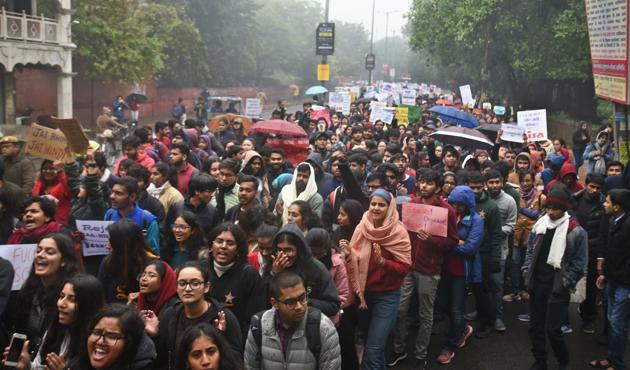
Students from over 20 Universities have been tangled in the anti- CAA agitations involving violence and destruction of public property. Surprisingly, cerebrally endowed universities have been a part of these uprisings – the Indian Institute of Science and the IITs — institutions that had until now stayed aloof from public dissent. Without getting into the merits of CAA, suffice to say that student movements have force but lack focus. Uncertainty about what lies ahead is real but what is certain is that most young people, save for a small fraction, will continue to remain in India. This article is aimed at advising them to create and sustain an independent sense of leadership and not become dupes for those who sense an opportunity to ride the groundswell of student protest. In coming years, a lot will happen that will affect the young. Attention is needed.
The demographic profile is opening the flood gates for rural-urban migration. Working age men and later their families will throng in larger numbers to cities seeking livelihoods. But cities have not made plans for migrant settlement. Basic human needs— clean air, water and habitation —have already become scarce in the Metros and many million-plus cities. Their carrying capacity will burst. The impending catastrophe will not be confronted unless the youth participates in the political process and demand change.
Elections to the state and municipal bodies is the time to demand that senior political leaders take a public stand on why a third of the population of a city like Delhi consists of unauthorised colonies, urban villages and slums completely ungoverned by basic municipal laws, impacting everyone’s quality of life. Urban governance demands that before habitation can take place, the public authorities ensure that sewage, water supply, roads and drainage are provided.
In India, the Constitution has been used as a fig leaf to facilitate the real purpose of allowing disorganised migrant settlement—which is to build voter constituencies in the name of the poor. Spanning three decades, some 140 million migrants in the country and some 10 million in Delhi alone have settled down in squalid conditions. Studies show that almost half the male out-migrants in India have been 15-29 years old and on arrival they gravitate to the slums or unauthorised colonies which have been built mostly on publicly owned land with the connivance of politicians, bureaucrats, police and municipal agencies. Any officer who has raised a flag has been kicked out.
Besides living in sub-human conditions, the older settlers and new migrants both contribute to running illegal and even dangerous household industries. The human and industrial effluent they produce gets discharged into storm water drains, water bodies and end up polluting the ground water. By now, over 350 river stretches across the country have become highly polluted. A policy on migration based on the carrying capacity of the city is a must and the youth have the most to gain or lose. Only they can ring alarm bells if the voter trap is to be resolved.
Today in Delhi, some 2300 Resident Welfare Associations (RWAs) administer their neighbourhoods at the basic level of self-governance. However, RWAs are run by retired, elderly people without participation from young residents. Unless young people participate actively in managing their neighbourhoods, nothing will change. Younger residents of organised colonies need to stand for RWA elections, question the municipal councillors and MLAs and get involved— directly and visibly.
Indeed, the continuing political apathy among the educated youth concerning their basic well-being issues is a matter for unease. The stranglehold of dynastic leaders, money and muscle power seen in so many situations will continue. If after gaining an education and hopefully a job, if good environment, clean air and peaceful surroundings can’t be enjoyed, life becomes unendurable. “Eternal vigilance is the price of liberty” is a truism. There is no better time for young people to act on it than now.
(The writer was former Secretary Government of India and Chief Secretary Delhi.)


