
 E-Paper



Friends & foes in an uncertain, shifting world
India must turn the tariff threat from the US into an opportunity and pursue the path to be the power it wants to be

 Prefer HTon Google


President Donald Trump’s coercive tariffs on India and indulgence of Pakistan have turned euphoria about India-US partnership under his leadership into bewildered dismay and rage. The sequence and the corrosive language suggest that tariffs are a manifestation and expression of problems beyond trade. It also betrays our lack of economic leverage unlike China’s. Various reasons have been attributed to his decisions that do not bear repeating here. There is politicisation of the relationship in the US not seen in the past three decades, with the White House deputy chief of staff Stephen Miller, a Make America Great Again (MAGA) ideologue, joining the chorus of criticism on India’s purchase of Russian oil.
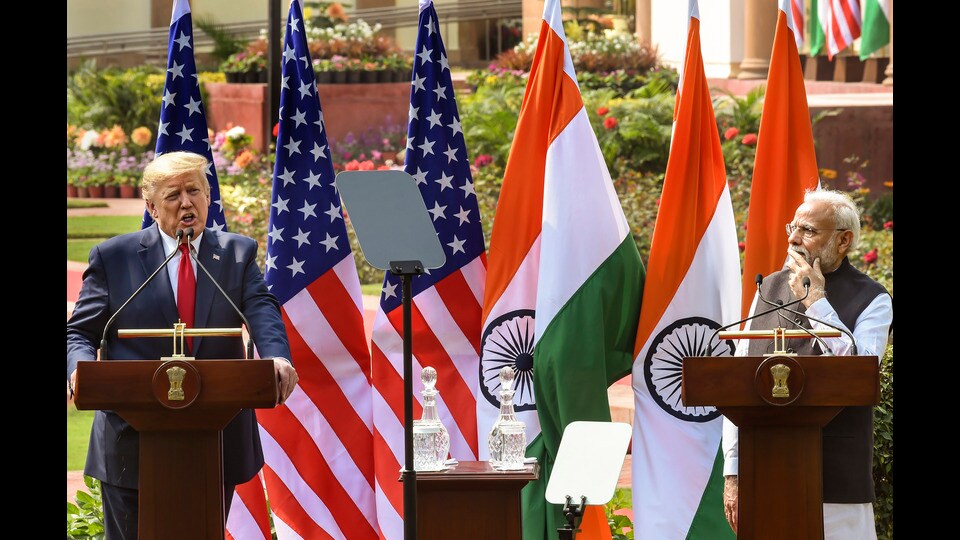
In India, there is domestic political impact due to the huge investment in the relationship; geopolitical ramifications because of the strategic bets we made in a shifting global environment; and, economic consequences from setback to exports and foreign direct investment (FDI) flows. Of equal concern is Pakistan. There have been multiple short-lived U-turns in the US-Pakistan relations that do not end well for either. But, every time US-Pakistan relations improve, Pakistan is emboldened in its military adventurism and terrorism against India. Pakistan also hopes to capitalise on President Trump’s obsession with peace-making to inveigle him into mediating the ‘Kashmir issue’.
The government has been rightly firm on red lines for its sensitive sectors and sovereign choices, yet restrained in statements and open to negotiations. For a number of reasons, this is not a 1998 moment, but there are lessons from it. Amidst an absolute freeze then, India chose engagement over hostility. As then, this crisis is an opportunity to renegotiate the relationship with clarity and strength. Since the transformation of India-US relations began in 2000, there have been differences, including on ties with Russia, Iran, Afghanistan and Pakistan, that both sides have navigated. The challenge, perhaps, is that we are dealing with a president with no precedence. Engagement with the US must continue and a way forward is found, without compromising our national interests. The relationship has substance, multiple dimensions and strong institutional mechanisms to provide resilience.
However, beyond the vulnerabilities arising from the vicissitudes of the relationship, broad global trends require an appraisal of our policies. The transformation of India-US relations started in an era of unipolar US power reinforced by a strong transatlantic partnership. China was still not a major power and considered amenable to integration into the western order. The US–Russia relationship had not reached the present level of hostility. That geopolitical space which allowed multidirectional relationships is shrinking. There is also the expectations gap, more visible in the mature state than in the period of courtship, between a less self-assured US with unipolar ambitions and neat allies-adversaries dichotomy, and a rising India of strategic autonomy and multipolar inclinations.
The fissures were beginning to appear during the Biden era. But it was papered over because of the overriding objective of containing China based on the classic American foreign policy goals and strategy of both direct containment and involvement of formal and informal alliances that necessitated accommodation of differences. President Trump will deal directly with China and pursue a different set of goals with a range of possible outcomes. With allies, the relationships will be on independent tracks based on perceived grievances and extractive possibilities, as Japan, Korea, Australia and the EU have seen or Taiwan may experience. More broadly, he has diluted or dismantled the instruments of US engagement — trade, technology, investment, aid, education, mobility, soft power, institutional reinforcement, guarantees and commitments. Even as countries are trying to negotiate a least cost agreement in the short-term, there will be the inevitable hedging, diversification and regionalisation that will diminish American power and influence, including in the Indo Pacific. China has overtaken the US in influence and power in the Asean region. Russia has weathered the worst over the past three years. Europe, buffeted by three powers, is in search of strategic influence. Trump is accelerating the erosion of West-built global institutions. Brics today evokes more interest than western institutions. Multipolarity is a rising tide.
In this world of change, India’s pursuit of strategic autonomy is a stronger imperative. So, as we rebuild ties with the US, we must do so on realistic foundations. At the same time, we must reinvigorate and restructure our broader global engagement, including with Russia, China and Europe, beginning with our home that is Asia and the Indian Ocean. Consistent with our values, our position must also carry the moral weight of principles, as for example on the tragedy unfolding in Gaza, which will also increase our standing in the Global South.
In trade, we must do all we can to ensure competitive access to the US market, but also hasten the pursuit of other destinations that together account for over 80% of India’s exports. If India is to increase exports on scale, we must pursue major economic reforms at home; invest in people, innovation and technology; and integrate more into the global value chains (GFCs). There is strong correlation between high-quality free trade agreements and global value chains, which account for 50-70% of global trade. Potential critical and bottleneck products account for around 20% in global trade, with almost 66% of the share of the exports in these products originating from East Asia-Pacific. Global trade is transitioning from multilateralism to regionalism and bilateralism, accelerated by US policies since 2008. We are on that path, too. The scope and coverage of the UK comprehensive economic and trade agreement and our EU proposal reflect our new ambitions. We must also revisit our agreements with Asian powers and find a modus vivendi with China.
The government’s emphasis on energy security through renewable, hydrogen and nuclear sources and on digital sovereignty is the right course. Defence capabilities and indigenisation, already a high priority, need a stronger boost. Foreign collaborations must take into partners’ history, policies and geopolitical positions, and create genuine capabilities in India, not technological dependencies. For India, this crisis is an opportunity to build its future and pursue the path to be the power we wish to be.
Jawed Ashraf is a former Indian ambassador. The views expressed are personal.


