
 E-Paper



How India can bag its next hockey World Cup
Modern hockey demands complete focus on every second spent on the pitch, and its demands have changed with every passing step.

 Prefer HTon Google


The Indian men’s hockey team has won successive bronze medals at the last two Olympics — and that’s definitely a matter of pride. But we failed to replicate that performance at the recently concluded World Cup. What matters now is that each player understands the value of these big tournaments, which come only once every four years. At the World Cup, we knew we had to beat Argentina by a margin of two goals to reach the semis. Instead, we conceded in just 40 seconds. We’ll have to work on these things.
Modern hockey demands complete focus on every second spent on the pitch, and its demands have changed with every passing step. So, two or three players might win you a match, but to win a tournament, all 18 need the same mindset and the same aim. The players receive proper training and full support from Hockey India (HI) and the government. They need to recognise and value that.
Today, there’s very little separating the world’s top six or seven teams. It comes down to how much effort you put in on the day — and we need to be a step ahead of them. In some areas, like defence, some teams are already two steps ahead of us.
In modern hockey, the forward line serves as the first line of defence. From there, we must maintain our position and structure for all 60 minutes — from the first pushback to the final whistle. We also need disciplined hockey. We can’t win with 10 players. We also need to communicate better.
Also Read | India’s hockey reality check: Defensive frailties, tactical predictability extend World Cup medal wait
Today’s hockey is all about touch play. Because the game moves so fast, you can only hold the ball for a few seconds — the rest of the time, you’re running back and forth, which is why communication is so critical. You don’t have time to lift your head and look for your teammate; the connection has to happen through eye contact — like pressing a Bluetooth button to get connected.
We spend so much time in national camps, away from home, preparing for four years — but small errors like these cost us these tournaments. We have a good team, but we can’t be 100% in the first quarter and only 70-80% in the second.
Our target is to win the Asian Games now. After that, we’ll have two years to prepare for the 2028 LA Olympics. We should focus more on video analysis to identify where we’re going wrong, and train accordingly. The harder we train, the easier matches will become. That mindset should start today if we want to upgrade our medal from bronze to gold.
Also Read | India women's hockey team rewarded with ₹50 lakh after stunning World Cup campaign, best finish in 52 years
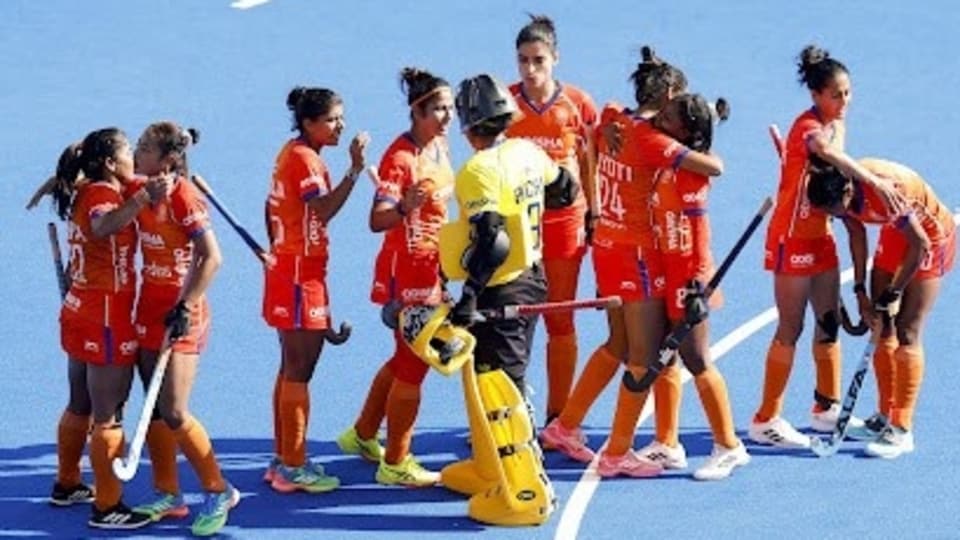
I’ve been thoroughly impressed by the women’s team’s performance. The team fought hard at the World Cup, whether they won, lost or drew. Their discipline, ball movement, fearlessness and commitment were commendable — even under heavy physical challenge from opponents, they kept fighting back.
This showed that the players had studied their opponents well — their strengths, weaknesses, penalty-corner tactics and defensive patterns. The lesson here is that doing your homework matters.
If the women’s team takes care of the small things, matching the best in the world won’t be difficult. They should treat hockey like a school subject — English or Hindi — analysing their strengths as well as areas for improvement to sharpen their basics. Their basics are already strong, as the World Cup showed. They need to improve slightly on defence and be more proactive to consistently match the best.
If we fix these small things, I don’t think anyone can touch us. The women’s team has shown remarkable improvement over the last decade, but we need to work harder to reach the top.
Building an India A team as a backup is essential — having upcoming players train alongside the seniors will create healthy competition. If someone is not performing in the senior group, that player can be demoted to India A and vice versa. In addition, the India A players should get more exposure tours. We also need to strengthen our domestic structure. The transition from domestic to international hockey takes too long to adapt to, because the domestic game is far slower.
In domestic hockey, if you stop the ball, you have all the time in the world to make a good pass, with no pressure. In international hockey, teams constantly close you down, leaving you no time to even lift your head. How you handle that pressure reveals your true strength.
Hopefully, the World Cup was a valuable lesson for both teams as they prepare for the Asian Games. We are strong tactically. We’ve good coaching staff. Some ingredients of a win are already there. We need to now add the others that are needed.
Sardar Singh is a former India captain and a Khel Ratna awardee. The views expressed are personal


