
 E-Paper



Keeping up with UP: Time to revive students’ unions after Gen Z protests?
Before the ban, students' unions played significant roles in the country’s freedom struggle and other public movements

 Prefer HTon Google


The demand for reintroducing student politics on campuses is getting louder after the Gen Z pressure protest at Jantar Mantar. The students want to be heard on issues of their concern. The critical question is this: is it time to revive student unions in the country including in Uttar Pradesh?
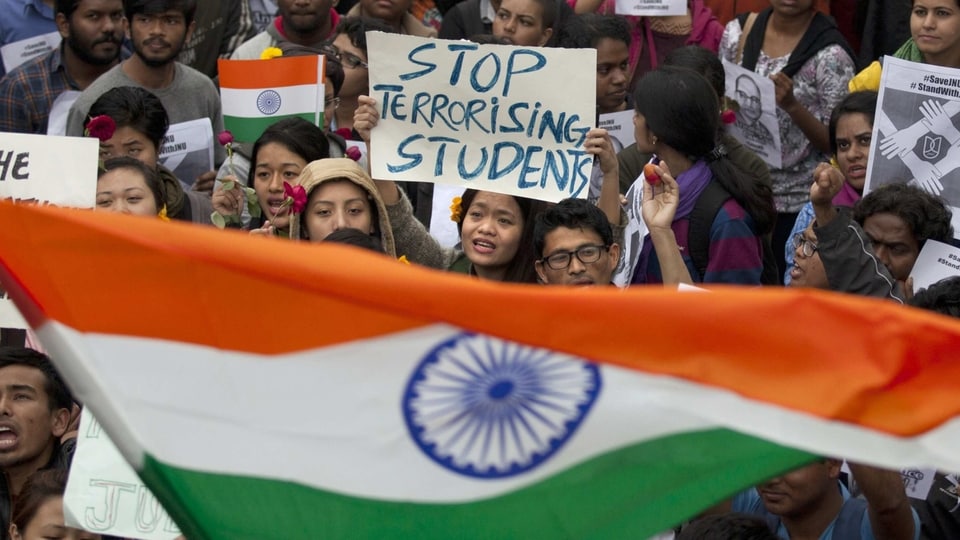
The volcanic display of frustration by the youth in Delhi and other states has also alerted the political class, which is now deliberating on two key issues—the need for young leadership within their systems and a forum for engaging with the youth before their anger reaches the streets.
Students’ unions, formed before independence, provided them platforms to raise issues of concern. Violence gradually crept in, leading to the banning of direct elections across many Indian universities in the late 1980s and early 1990s to curb criminalisation, caste conflicts and political factionalism.
The political parties had by then entered campuses to build their strategic base. The ban on direct elections, or their replacement by a council, has not helped reduce political activities on campus, as various student bodies have remained active. However, some view that the academic atmosphere has improved and anarchy has been contained.
Before the ban, students' unions played significant roles in the country’s freedom struggle and other public movements, such as JP’s ‘Sampoorna Kranti Andolan’ in the 1970s and the movement against the introduction of quotas for OBCs recommended by the Mandal Commission in 1990. There was no social media at the time; communication links like telex, telegram and pagers were used to spread messages.
Thereafter also, students had joined the anti-corruption campaign of Anna Hazare and the protests after the Nirbhaya gang-rape case, in which social media had played a key role in mobilising or consolidating support. University unions, with or without the social media, provided students a platform to ventilate their grievances and also hold all-India protests, if needed.
Barring some big movements, the protests, by and large, were limited to campuses, rarely spilling onto the streets at the national or state level, despite divergent opinions among the three prominent student unions - National Students’ Union of India (NSUI), Akhil Bharatiya Vidyarthi Parishad (ABVP) and the Students’ Federation of India (SFI). The issues were resolved by the authorities under pressure or fear.
Student unions groomed in the democratic process produced leaders of merit. The student unions were safety valves, believes Yogesh Tiwari, former president of Allahabad University Teachers’ Association. The Jantar Mantar protest has amplified the need to fill the existing gap, as students are more aware of their rights and better connected via social media.
In fact, Anil Singh, former president of the Lucknow University Students’ Union, says the Jantar Mantar protest would not have happened if the students had a platform like unions.
Vikas Malik, historian and Delhi University professor, believes that student representatives should be part of committees, especially on issues that directly affect them. They bring a valuable perspective, and can improve communication between students and administration. Like in the National Education Policy, both teachers and students are facing serious issues. Many feel that in today’s time, there is no way voices could be suppressed or facts concealed.
The state of university elections across states
Were student elections banned in India? Some experts, however, say the unions simply died down. How and why is a matter of probe as the over 96-year-old legacy of students has ended with the discontinuation of direct elections in Allahabad. Though all political parties vow to revive them, they avoid elections when in power.
In December 2022, Samajwadi Party MLA Atul Pradhan demanded in the Uttar Pradesh assembly that the state government allow universities and colleges to hold students’ union elections. In response, higher education minister Yogendra Upadhyay had said the government had no objection and believed the students’ unions were the nursery of politics and they had played an active role in several movements.
When another SP MLA Manoj Pandey asked the minister if the state government was willing to ask the universities to hold polls, the minister reiterated that the government had no such role in conducting elections and would take action against VCs and principals who are finding excuses. They were free to hold elections as per the recommendations of the JM Lyngdoh committee and the state had communicated thrice to them since 2016 about having no objection to elections.
A six-member committee, headed by former chief election commissioner JM Lyngdoh, looked into the criminalisation of students' union elections, financial transparency and expenditure, eligibility criteria of candidates (including the maximum age limit and minimum standard of academic performance) based on Supreme Court recommendations. The concerns included a broken academic atmosphere, indiscipline, and divisions based on political beliefs and the use of money and muscle power.
Going beyond its mandate, the committee had explored balancing the interest in the students' democracy and political education while maintaining the academic atmosphere on campuses.
The report was submitted in 2006. Lucknow University was conducting students’ union elections that year as per the recommendations of the committee but the polls were called off following large-scale vandalism by student leaders over age restrictions. No students’ union elections have been held at LU since then.
Elections were last held in Allahabad University in 2017 and at BHU in 1998. They have been demanding revival of student unions. Several students had joined the Jantar Mantar protests.
The Congress government in Karnataka has decided to lift a 37-year ban on students’ union polls, imposed by another Congress government in 1989 following the murder of a first-year student.
Maharashtra has not held student union elections in more than three decades. Thousands had taken to the streets in support of the Cockroach Janata Party, and were detained. They have now reopened their demand for direct elections and offline-online enrolments are ongoing.
The choked pipeline
It is a well-known fact that students’ unions produced some brilliant leaders and parliamentarians. People still recall names like Shyam Lal Vajpyee, Mohan Singh, Janeshwar Mishra, Chandrashekhar, Ravinder Singh, Satya Pal Yadav, Balram Yadav who entered the assemblies or Parliament from UP. In Maharashtra, current chief minister Devendra Fadnavis, Union minister Nitin Gadkari and NCP patriarch Sharad Pawar started their training as student leaders.
Experts believe there was no dearth of talent as unions groomed and produced leaders of merit and mettle but now the pipeline is choked. The ban on unions skewed the profile of new entrants with parties turning to businessmen, Bollywood and political families for candidates.
Following the Jantar Mantar protest that led to a Union minister's resignation, youth leadership is in demand. The question is: where will it come from?


