
 E-Paper


Rajasthan should get the next NIMHANS. Here’s why that isn’t special pleading
Rajasthan is the largest state in India by area, with over 80 million people. It is not short of medical colleges. On paper, the state looks provided for

 Prefer HTon Google


The Union budget for 2026-27 committed the government to a second campus of the National Institute of Mental Health and Neurosciences somewhere in north India, citing the region’s total lack of a national mental health institute. Jaipur has the strongest claim, and the usual arguments made on its behalf are weak.
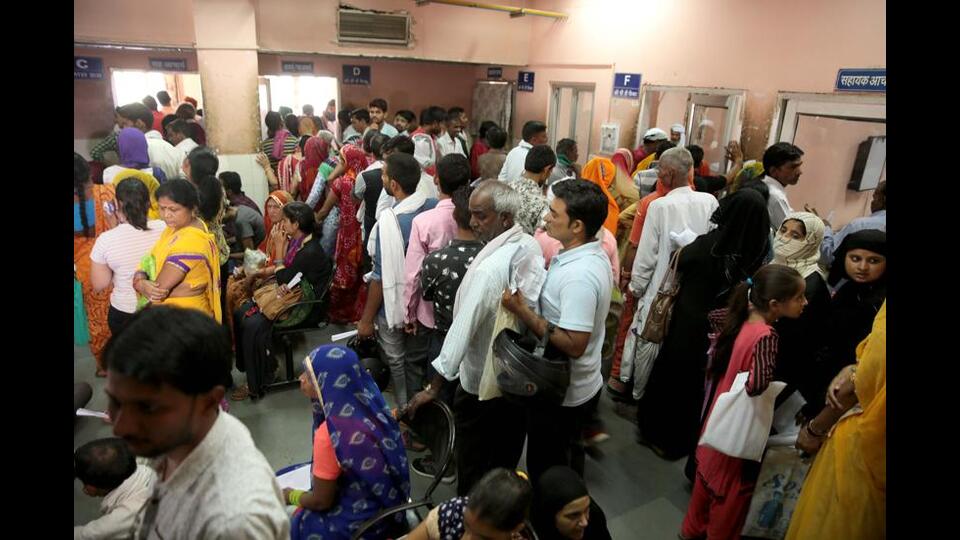
The National Mental Health Survey put India’s treatment gap for mental disorders at 84.5%. Fewer than one in six people with a diagnosable condition receives care of any kind. For depression and anxiety it runs past 85%. There are 0.75 psychiatrists per 100,000 Indians against a WHO recommendation of at least three. Suicide kills more Indians aged 15-29 than anything else.
The conventional next move is to reach for Rajasthan’s own ratios. For this state, the ratios are the wrong instrument. Their wrongness is part of why the gap has gone unnoticed.
A per-capita ratio counts specialists against population. It says nothing about where they are. It quietly assumes a patient and a hospital in the same state can reach each other. In a compact state that assumption is harmless. Kerala is roughly a ninth of Rajasthan’s area. Establish a few tertiary centres in it and the state is covered.
Rajasthan is the largest state in India by area, with over 80 million people. It is not short of medical colleges. Jaipur, Jodhpur, Bikaner, Udaipur, Ajmer and Kota all have neurology and neurosurgery services of some description. Kota runs dedicated epilepsy and movement disorder clinics. On paper the state looks reasonably provided for.
However, the ground reality is different. A neurology outpatient department is one thing, and an interventional stroke service is another. Mechanical thrombectomy, epilepsy surgery, a neuro-intensive care unit, round the clock neuroradiology, all of it clusters in Jaipur and Jodhpur, thinning out rapidly beyond them.
And the western districts are far from even the thinnest of these. Barmer is 220 kilometres from Jodhpur. Jaisalmer is 285. Sri Ganganagar sits a similar distance from Bikaner, where the advanced capacity is not. For most of medicine, those distances are trivial. Here they decide outcomes, because coverage in a state this shape depends on centres against distance. A respectable per-capita ratio can sit on top of genuinely poor access across a third of the territory.
Distance would matter less if these illnesses waited. In most specialties a shortage produces a queue. You wait longer, you are seen eventually and the outcome is roughly what it would have been. A stroke is not like that. Thrombolysis works inside four-and-a-half hours and does little after. Head injury, which is what kills people on Rajasthan’s highways, has its golden hour. Status epilepticus does not wait for the train to Delhi.
Now, to the objection I would raise from inside the ministry: Granted the geography, but why an institute? Why not fund neurology and psychiatry at the district hospitals, and spread the money rather than concentrate it on one campus?
Brain illness does not usually arrive labelled. It arrives as confusion, a collapse, a fit, a personality that has changed over three weeks. The workup exists precisely to identify the required specialty. The doctor seeing her first has to pick one before any of it has been done. The doctor picks sometimes on the strongest symptom, sometimes on which department has a free bed. The patient’s route through the system is fixed from that moment.
The costs are ordinary and constant. Autoimmune encephalitis presents as sudden psychosis in a young person who was well the previous month. If nobody with neurological training examines her, she is admitted to a psychiatric ward for a disease that needs immunotherapy, and the error can run for months. Depression in the elderly reads as dementia and gets managed as decline.
Around a third of epilepsy patients stop responding to drugs and become surgical candidates, yet the handoff from medical neurology to surgical evaluation is among the most difficult referrals in medicine to ever make, particularly when the two specialties occupy different buildings under different administrations.
The interfaces are where the case volume lives. Delirium and dementia sit between neurology and psychiatry. Epilepsy sits between neurology and neurosurgery. Head injury generates behavioural consequences that outlast the surgery by decades. Addiction sits between psychiatry and general medicine. Build the specialties apart and you get a system that handles its rarest problems well and its most common ones badly.
And it does not stop with one generation. A DM candidate in neurology spends three years seeing whatever comes through her department’s door. If psychosis cases are being admitted elsewhere in the city, she finishes training having never worked one up. She will practise for 30 years with that gap in her hands and teach the registrars under her.
Bengaluru works because of how the campus is laid out. A patient who arrives confused gets seen by whoever needs to see her, in whatever order the case demands, without anyone filling out a transfer. Rajasthan has nothing like it and neither does anywhere in north India, which is the government’s own stated reason for building the second campus.
Jaipur also has a wider catchment than the state boundary suggests. The Psychiatric Centre there has described its catchment as the whole of Rajasthan together with adjoining parts of Uttar Pradesh, Madhya Pradesh, Haryana, Punjab and Delhi. That matters because a national institute is difficult to justify if its usefulness ends at a state border.
Also, putting specialist capacity in one place does not mean expecting every patient to travel there. NIMHANS itself offers the better answer to that objection. The Bellary model developed with NIMHANS helped lay the foundation for the District Mental Health Programme. The institute now supports care well beyond Bengaluru through training, tele-mental health services and other forms of outreach.
The patient with depression in Barmer should not have to travel to Jaipur. An apex institute does more than treat the patients who arrive at its gates. It trains the doctors who will work elsewhere, develops clinical practice and provides a destination for cases that no district hospital can reasonably be expected to manage. Strengthening district level care and building a national institute are, therefore, not competing ideas.
These failures leave no trace. The woman who spent four months in a psychiatric ward with an autoimmune disease appears in no register of anything. The stroke patient who arrived too late is recorded as a stroke death, which is true and tells you nothing. Nobody is ever held to account for an institute that was not built, which is why the case for building one is so easy to set aside.
Karnataka has had NIMHANS since 1974 and stopped finding it remarkable decades ago. That is what a working institution looks like after 50 years.
Siddharth Goenka is a trustee of the Jhunjhunu Dharmada Trust and an advocate for stronger public policy in education and health care. The views expressed are personal
(This is a Hindustan Times digital exclusive)


