
 E-Paper



Simultaneous general and assembly polls: Five articles you must read
The BJP has been pushing for simultaneous polls to assemblies and Lok Sabha but not all political parties are on board. Here are five articles from the Hindustan Times archives that argue for or against the idea.

 Prefer HTon Google


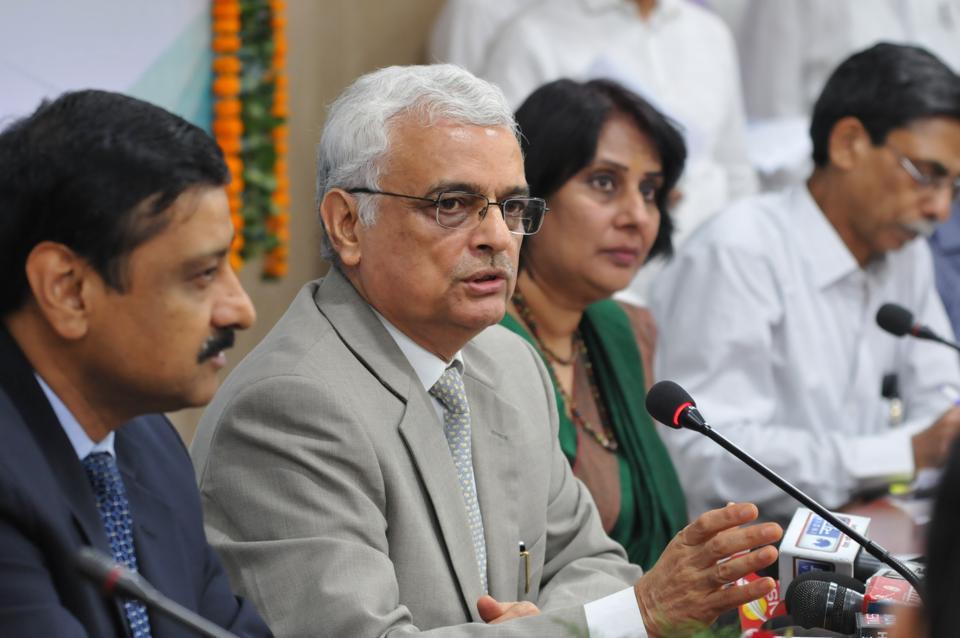
On Wednesday election commissioner OP Rawat said that the Election Commission would be ready to hold assembly and Lok Sabha elections simultaneously after September next year. While parliamentary polls are scheduled for 2019, assembly elections will be due in eight states September 2018. Polls in Mizoram, Madhya Pradesh, Chhattisgarh and Rajasthan are slated for the end of 2018 and early 2019. Elections for the remaining four states are slated to be held with the general elections.The BJP has been pushing for simultaneous polls to assemblies and Lok Sabha but not all political parties are on board. Here are five articles from the Hindustan Times archives that argue for or against the idea.
1. Simultaneous elections arguments are as flawed as the assumptions Rajesh Mahapatra
The Niti Aayog recently circulated a discussion paper on how Lok Sabha and assembly elections in the country can be held simultaneously. The paper suggests that the states scheduled to hold elections between 2018 and 2021 can go to the polls in 2019, along with the Lok Sabha elections, by reducing or extending their assembly tenures by three to 15 months. The rest can be taken up with the 2024 Lok Sabha elections in the same way. The idea may look good on paper, but is not workable. It is based on flawed arguments and assumptions. More importantly, it is not in keeping with the spirit of Indian democracy.
2. PM Modi’s reasoning for simultaneous elections stands on weak ground Praveen Chakravarty
There is clear empirical evidence that a majority of voters tend to choose the same party when elections are held simultaneously to both the Centre and the state. Further, why should a voter not be given the right to express her choice once more within a span of five years than restricting her to vote just once in a simultaneous election every five years? It is evident that the potential ramifications of simultaneous elections in terms of true federalism, impact on voter behaviour and denying a voter to cast her choice at least once more in a five-year period are not worth an annual estimated savings of Rs 1,000 crore every year or a disingenuous claim of policy paralysis.
3. It’s time to hold simultaneous elections for Lok Sabha and state assemblies M Venkaiah Naidu
Simultaneous elections would also help in keeping down expenditure for both the government and the political parties. It would make political parties come out with distinct strategies for addressing national and local issues, making it easier for the voter to choose suitable candidates. The switch will also help leaders to devote time and energy towards good governance and development instead of bothering too much about electoral strategies.
It will be a huge task in terms of numbers and logistics. But there would not be a need to deploy security and election personnel time and again. Similarly, the need for duplication would be avoided when it comes to transporting polling material, EVMs and setting up polling booths, if the elections are held simultaneously.
4. Do not stagger elections, hold them together CP Bhambhri
It has often been observed that governments in states change when there is the same government at the Centre, and vice versa. This causes renegotiations in funds transfer, thus upsetting the structure of financial federalism. The model code of conduct paralyses governments during elections as it happened in the case of Jammu & Kashmir. The state government there is unable to take care of the families displaced by the recent floods. Hence there is a need for restoring the pre-1971 electoral system, which allowed for simultaneous polls.
5. One India, One election an interesting concept but its benefits not clear yet
Writing in a national daily, former election commissioner SY Quraishi said that while simultaneous elections to panchayat, assembly and Lok Sabha may be desirable, they are not feasible. While admitting that normal work comes to a standstill, he said that the cost can be brought under control by ensuring that the legal cap on expenditure of candidates is followed by all parties which outsmart the election commission by spending before the model code of conduct comes into play. The normal election routine, the former CEC wrote, also keeps the politicians on their toes and enhances accountability, and more importantly, local and national issues don’t get mixed up to distort priorities. If the duration of elections has to be cut, then the EC must be given more security forces and administrative staff.


