
 E-Paper



The Art Of A Good Unicorn | A transformation is brewing in India’s EdTech sector
If a young child has only studied online and, in an alternative world, a child has only studied in a school, which one is better off?

 Prefer HTon Google


It appears that the world has entered a new period marked by resilience, adaptability and transformation in the wake of the unprecedented Covid-19 pandemic. A dramatic revolution also seems to be taking place in India's ever-evolving EdTech ecosystem, challenging the basic foundation of conventional teaching. Not too long ago when the pandemic was at its worst, online education in India was heralded as a revolutionary force that was ready to upend traditional brick-and-mortar classrooms. However, this exhilaration is now tempered down by a complex reality.
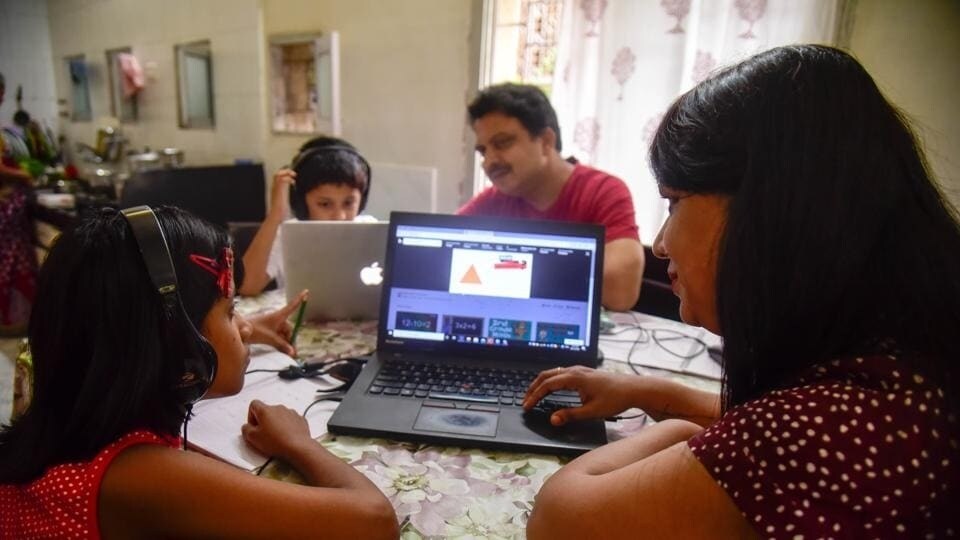
A crucial question has arisen: Is the pure-play online education paradigm on the verge of extinction, or are we seeing the emergence of a new and harmonious hybrid approach? Could this be the thing that finally changes the country’s educational environment?
Though the Indian EdTech landscape first emerged in 2004, it only gained its traction during the pandemic, when schools were shut for protracted periods of time to maintain the spread of the fast-mutating virus.
It was convenient and offered flexibility, but it was also a struggle to offer social interactions, group discussions and direct teacher-student engagement. It brought to the fore the digital divide between the haves and the have-nots, in the country. Younger students especially would have missed the interactive and collaborative aspects of in-person learning. Peer collaborations and face-to-face interactions with teachers create a dynamic learning environment that online platforms cannot replicate. There may have also been some doubts about the effectiveness of fully online education and how they could deliver the same depth of learning and skills development, compared to traditional methods. If a young child has only studied online and, in an alternative world, a child has only studied in a school, which one is better off? Can there be a best-of-both-worlds?
Hybrid model
Online education has become like an e-commerce model, where you have to burn cash to acquire every new customer. There are new and interesting models emerging. There are profitable education hybrid models, where you partner with existing infrastructure, so, there’s no significant CapEx, but there’s more OpEx cost. To reduce those costs, partnering with existing education infrastructure to make sure you impart quality education is fast gaining ground.
"Post-COVID, the learning and teaching behaviour reversed partially to the traditional models with reduced involvement of technology. We sensed the shift at the end of 2021 and started focusing on building a hybrid delivery model, which was the perfect product-market fit. This allowed us to continue the improved tech adoption by students and teachers effectively,” said Vivek Varshney, founder of SpeEdLabs. The AI-based hybrid EdTech platform recently raised funding from 35 North India Discovery Fund alongside Mumbai Angels, LetsVenture, Ecosystem Ventures, Ah Ventures, SucSeed Ventures and a few family offices. The funds will be utilised to grow the company's presence and strengthen its infrastructure.
Varshney said that the Covid-induced surge for ed-tech companies was at best temporary in nature.
“The COVID-induced temporary surge in pure online learning models may have been a forced choice. But, this really unlocked the huge potential of EdTech and triggered the shift towards the future of education with tech. Educational institutions have embraced technology in ways they hadn't before and this may influence teaching approaches, curriculum design, personalised learning, analytics, blended learning models and improved resource allocation,” he added.
"Offline-online blended model offers a dynamic learning experience by merging real-time interactions from in-person classes with the flexibility of digital resources. This synthesis allows students to learn at their own pace, transcending time and place constraints. For SpeEdLabs, personalisation takes centre stage, with data analytics tailoring content to individual needs, boosting engagement and learning outcomes. It democratises quality learning and empowers learners in semi-urban and rural areas. For India, blended learning will be the way forward over the next decade as the New Education Policy encourages diverse courses, skill programs and new age experiential learning outcomes,” Varshney said.
The in-person impact
Hybrid learning blends online access to educational content with the flexibility to accommodate varied schedules and limited physical classroom access. It employs adaptive technology and personalised platforms to tailor learning to individual styles, addressing the constraints of traditional education. In-person sessions offer interaction opportunities with peers and teachers.
However, hybrid learning can also function without physical presence, combining online and offline elements. Interactions, activities, assessments and resources are shared digitally through virtual classrooms, video conferencing, discussion boards, online assessments and simulations. Students engage with course content and peers through virtual channels, eliminating the need for physical gatherings.
“SpeEdLabs is aiming to become operationally profitable in H2 FY24. Education is a large sector and needs capital to unlock the potential of new-age profitable models, as the 100+ students in K12 segments would need EdTech adoption over the next 5 years,” Varshney said.
In an honest admission, Varshney admits that SpeEdLabs saw a major improvement in numbers during Covid-19, but the enrolments reduced once Covid-19 seemed to subside. However, that doesn't necessarily reflect the inherent potential of online education in India, as it was more circumstances-driven.
In the last 18 months, SpeEdLabs has started to work with “a large school network to create integrated programs for test prep and foundation courses,” he said.
The hybrid spread
SpeEdLabs has, recently, taken over five buildings in Indore. It has also partnered with LEAD School to provide quality education in tier-II and tier-III cities, as well as in Delhi and Mumbai. This way, there’s a centralised classroom and there’s live teaching. In this model, the only investment is in content creation and teachers. For upstarts and startups, this can be a good model to save costs. The CapEx is very low, because there’s no physical school and there’s no need to buy land. Compare this to a traditional EdTech business model which, according to at least one report, was one of the sectors that saw the highest cash burn in 2022 due to the goal of rapid expansion. Paying for CAC (Customer Acquisition Cost) is an additional cost.
What does the Dad of EdTech think about a hybrid model?
Salman Khan of Khan Academy, who cracked the Ed Tech game (at one point, billionaire Bill Gates’ children also used this platform) also feels hybrid learning is important. He has no doubt that there will be a push either toward hybrid models, where one moves around the globe while staying engaged in classes, or even towards all-virtual modes.
What’s more exciting is the use of AI for education. Khan spoke about a new chatbot that's moderated by a second AI in a TED Talk and said: "It does not tell you the answer, it is not a cheating tool. When the student says, ‘Tell me the answer’, it says, 'I'm your tutor. What do you think is the next step for solving the problem?'. If a student makes a mistake....it asks the student to explain their reasoning...it's able to divine what is probably the misconception in that student's mind".
“I think we're at the cusp of using AI for probably the biggest positive transformation that education has ever seen. And the way we're going to do that is by giving every student on the planet an artificially intelligent but amazing personal tutor. And we're going to give every teacher on the planet an amazing, artificially intelligent teaching assistant,” he said.
So, as complex and diverse as education is, pure-play online education may not stay that way. It seems like in this post-pandemic world, there seems to be a complete failure of online education in India. In a world where people live, talk and work, purely online education may not work. Maybe, online education could be a supplementary force. VCs may have claimed it could replace traditional education, but it is unlikely to be the primary way.
Indian education landscape
The National Education Policy 2020 seems to have ushered in a transformative era for education in India by embracing a technology-driven and learner-centric approach. Among the pivotal outcomes of this policy is the endorsement and advancement of hybrid learning.
“EdTech would grow 5x from the current $3 billion market, as the adoption would get deeper at all levels, schools, students, teachers and parents. Improved income levels, higher device and internet penetration and improved awareness about the EdTech benefits would continuously grow EdTech over the next decade", Varshney said.
According to the IBEF (India Brand Equity Foundation, a government body), the education market in India is expected to hit about $225 billion by FY25, with Indian EdTech startups receiving a collective investment of about $3.94 billion across 155 deals in FY22. On a global scale, digitization has remarkably transformed industries like healthcare, manufacturing and education in recent years. The evolution of learning methodologies beyond conventional norms may have spurred a heightened appetite for both online and offline educational pathways or maybe, a cross between the two.
So, is blended the new online? Does it make more sense in the new normal? And is pure-play online education, now, the old normal?
Shrija Agrawal is a business journalist who has covered startups and private capital markets before it was considered cool in India.
The views expressed are personal


