In the hinterlands of Bihar where I grew up, autumn weekends were pregnant with excitement. With Chhath round the corner and a nip in the air, our village would gather at the playground for naach, a unique folk tradition where performers present plays through the night, interspersed with short bursts of singing and comedy. Performances spill over into the morning, crowds shuffle in and out — my friends and I would be sent home, only for the more daring of us to sneak back into the crowd — and the performers take turns to entertain the audience. Most plays would be based on social issues written by the famous Bihari playwright, Bhikhari Thakur, with migration, dowry, rights of the girl child and rural distress as common themes. Naach kaanch hai, baat sach hai (naach is a mirror and reflects the truth) was a common refrain of the village elders.
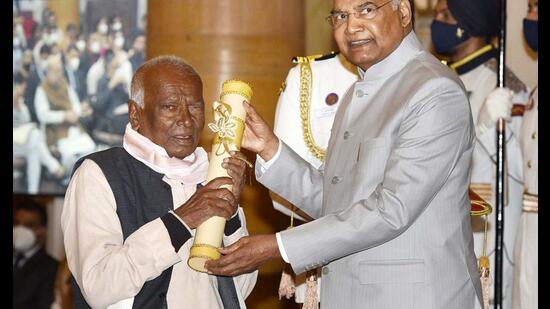
In a state where caste biases often decided what got recognised as classical art and what was derided as mere tamasha, the denial of recognition to Manjhi was corrected only in the last decade of his life, when he received in quick succession, accolades from the Sangeet Natak Akademi, Bihar government’s lifetime achievement award and the Padma Shri. (ANI)
Like other folk traditions, when naach was gaining hold in the 19th century in the Purvanchal region, women were banned from the stage. Men dressed in sarees, therefore, took their spot, starting a venerable tradition of female impersonators that cut across ages, regions and communities and gave naach its prefix launda (male). In Bihar, naach was performed largely by lower-caste and Dalit actors, thereby separating it from other traditions such as jatra in Bengal that also employed female impersonators. This fast-diminishing community of impersonators who comprise a unique cultural heritage of India lost arguably its seniormost member last week, the Padma award recipient Ramchandra Manjhi. He was 98.
An illiterate man born in the Dusadh community in Chhapra, Manjhi formed the core of the golden era of naach. Though he had almost retired when I met him in 2010, he never tired of telling me how he started performing as a teenager and travelled the length of the country even as the advent of television and the internet transformed the craft in fundamental ways. His most famous roles — as Rakhelan in Bidesiya (on a young man who migrates from Bihar to erstwhile Calcutta for work) and Hajamin in Beti Bechwa (the notorious tradition of parents selling their young daughters to older men for marriage) — inspired not only a generation, but also singers, dancers and younger Bhojpuri cinema artists. He would often be the opening act before political rallies by Jawaharlal Nehru, Indira Gandhi, Jagjivan Ram and Lalu Prasad, among others. Despite being arguably the tallest folk artist in the state, recognition for his talent had eluded him for the majority of his life. In a state where caste biases often decided what got recognised as classical art and what was derided as mere tamasha, the denial of recognition to Manjhi was corrected only in the last decade of his life, when he received in quick succession, accolades from the Sangeet Natak Akademi, Bihar government’s lifetime achievement award and the Padma Shri. In his life, he presented a rare paradox of caste and gender, one that often flummoxed the many researchers who’d flock to him — as a female impersonator, he was clear about the lines dividing stage and life, femininity as a performance and being a man as his identity, and marking a distinction between imitating femininity and being a woman. His grace and quiet presence lent dignity to the art he gave his life to, and the country is the poorer in his departure.
Jainendra Kumar Dost is director, Bhikhari Thakur Repertory Training and Research Centre, Bihar.The views expressed are personal.

 E-Paper