
 E-Paper



The growing footprint of geography on strategy
A foreign policy that takes the brutal realities of physical geography seriously should create an inventory of critical routes

 Prefer HTon Google


On October 20, external affairs minister S Jaishankar met US secretary of State Marco Rubio and UAE foreign minister Sheikh Abdullah bin Zayed in Mumbai for a quiet trilateral on energy and connectivity. On October 22, Poland Prime Minister Donald Tusk was in New Delhi to talk defence, space, and nuclear energy. And by the end of last week, Jaishankar arrived in Baku — marking the first bilateral visit by an Indian foreign minister to Azerbaijan in eight years. But why the Caucasus, and why now?
For a country that showed little interest towards Central Europe in recent years, this is remarkable and perhaps indicative of important changes in New Delhi’s view of how the Iran war is altering the strategic geography around it.
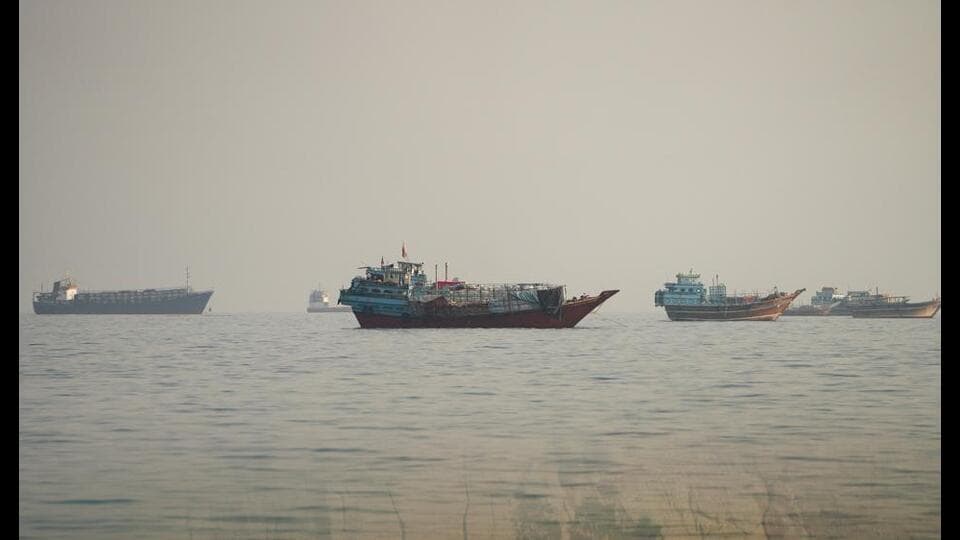
When the Iran war closed the Strait of Hormuz, India was faced with an uncomfortable truth: Its economy runs almost entirely on routes — the Hormuz and the Suez — it has little control or leverage over. Perhaps not even Malacca in a decisive manner. And the only land path linking India to Russia and Central Asia goes through Iran — that too is as vulnerable as the others.
We knew this was vulnerable geography but it didn’t register much in our strategic calculations because the great powers and great power consensus underwrote the safety of the global sea lanes. The Iran war, American reticence about global order, and the weakening of the idea of global commons have made the strategic geography around India far more uncertain and dangerous.
The war in Ukraine highlighted how domestic grain and gas prices could be affected by faraway wars. The Iran war reinforces that realisation.
It’s increasingly becoming open season on global commons. The Houthis have effectively closed the Red Sea for two years now. No one expected Washington to revive its 19th-century rhetoric about Panama and Greenland. Undersea data cables have become targets. In this litany of attacks, the chokehold on Hormuz is merely the latest wakeup call: The power to shutter a route matters just as much as the firepower to win a war. This is strategic geography 101.
Beijing has been building the Belt and Road with power and purpose. Moscow relies on the International North-South Transport Corridor (INSTC) through Iran down to the Gulf and India. Türkiye and Kazakhstan are focused on the Middle Corridor across the Caspian to bypass Russia. Even Washington, having abandoned overseas infrastructure building decades ago, is back in the game — first promoting the India-Middle East-Europe Corridor (IMEC), and now attaching Donald Trump’s name to a road-and-rail corridor across southern Armenia.
That is why India needs to take a look at the strategic geography around it closely. That is also why Jaishankar’s visit to Baku is important.
Partition disrupted its land connectivity to the West forever; the high Himalayas and China closed off the North. So by default, India transformed into an insular maritime nation, and the Eurasian geography went to its rivals. After the 1991 reforms, India took comfort in the liberal wisdom that globalisation would keep trade corridors perpetually open.
Not that New Delhi did not try to deal with geography as it presented itself. But Chabahar and the INSTC are, at best, half-built after two decades. That is one reason the diplomacy of the past week looks like a coordinated pivot, even if Delhi has not labelled it as such.
The Mumbai trilateral can be read as an attempt to securing non-Hormuz energy supplies and transit routes across the Gulf, backed by India’s formidable refining capacity. Warsaw is the European terminus, busy redirecting its supply lines away from Russia, whose joint statement with Delhi spoke of supply chains and IMEC to defence production.
The Caucasus, where Jaishankar was last week, is where these overland arteries intersect. The INSTC that Delhi would want with Moscow and Tehran, and the East-West routes championed by Beijing and Ankara cut directly through Azerbaijan on the western shore of the Caspian. Kazakhstan controls the eastern shore; Azerbaijan oversees the western exit toward Europe and the Gulf. So Delhi had to go to Baku.
For several years, Delhi stayed away from Baku because Azerbaijan backed Pakistan, not least during Operation Sindoor. Our South Caucasus diplomacy was unfortunately reduced to a derivative of our Pakistan challenge. Even our relationship Armenia is, at least partially, a function of Azerbaijan shaking hands with Islamabad.
So Jaishankar’s Baku visit suggests New Delhi is finally breaking that reflex to see the region for what it is: the epicentre of a new strategic geography. It must deepen its partnership with Armenia without avoiding Baku. In fact, it should follow this logic further west towards Ankara — the one place Delhi remains most reluctant to engage. Türkiye is an important middle power, an important transit point and a key player in the region.
Pragmatism is catching up more than ever. Trump waived the sanctions that previously threatened Indian purchases of Russian crude, and Washington wants Russian diesel. Vladimir Putin is pushing for a trilateral summit with Trump and Xi Jinping in Shenzhen next month. Moscow is moving away from Yerevan and aggressively courting Baku. Beijing is present in pretty much every transit corridor in the region, one way or another.
India has little presence of leverage in any of these corridors. IMEC goes through a burning Persian Gulf; INSTC goes through an embattled Iran; The Middle Corridor relies on Chinese goods; the Trump Route for International Peace and Prosperity, well, depends on Trump’s notorious attention span.
New Delhi has now mastered the art of showing up in important forums. It must now acquire real equity. The point is to focus on the equity, no matter what.
A foreign policy that takes the brutal realities of physical geography seriously should create an inventory of critical routes, fully or partially financed, and backed by Indian public or private stakes in the ports, rail lines, and refineries along the way. It would also require building resilient diplomatic capital in these capitals that can withstand the next Pakistani provocation.
There is only so long can we hitch a ride on other nations’ infrastructure because the age of free rides is over. So New Delhi must make policies to address what geography brings with it.
Happymon Jacob is the author of India After Nonalignment (Penguin-Viking and Georgetown University Press, 2026), and editor, INDIA’S WORLD magazine. The views expressed are personal


