Word Bank President hopefuls

Updated On Apr 07, 2012 07:21 pm IST
1 / 8
Indra Nooyi, Chairman and CEO of PepsiCo attends a session at the World Economic Forum (WEF) in Davos. REUTERS/Christian Hartmann expand-icon View Photos in a new improved layout
Updated on Apr 07, 2012 07:21 pm IST

Indra Nooyi, Chairman and CEO of PepsiCo attends a session at the World Economic Forum (WEF) in Davos. REUTERS/Christian Hartmann

2 / 8
US Secretary of State Hillary Clinton speaks during a news conference with Bulgaria's Prime Minister Boiko Borisov (not pictured) after their meeting in Sofia. REUTERS/Stoyan Nenov expand-icon View Photos in a new improved layout
Updated on Apr 07, 2012 07:21 pm IST

US Secretary of State Hillary Clinton speaks during a news conference with Bulgaria's Prime Minister Boiko Borisov (not pictured) after their meeting in Sofia. REUTERS/Stoyan Nenov

3 / 8
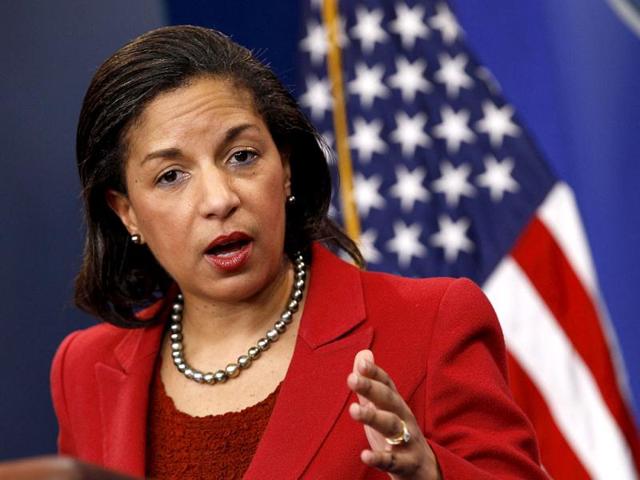
US Ambassador to the United Nations Susan Rice speaks at the White House in Washington, in this file photo. Rice is on a "short list" of possible US candidates to head the World Bank, according to media reports. REUTERS/Jim Young/Files expand-icon View Photos in a new improved layout
Updated on Apr 07, 2012 07:21 pm IST

US Ambassador to the United Nations Susan Rice speaks at the White House in Washington, in this file photo. Rice is on a "short list" of possible US candidates to head the World Bank, according to media reports. REUTERS/Jim Young/Files

4 / 8
Jim Yong Kim, the US nominee for the next World Bank president, leaves the finance ministry after a meeting with Japanese Finance Minister Jun Azumi in Tokyo. Japan will support Kim, Azumi said on Sunday after meeting the candidate who is visiting Tokyo as part of his world tour to seek support for the candidacy. REUTERS/Issei Kato expand-icon View Photos in a new improved layout
Updated on Apr 07, 2012 07:21 pm IST

Jim Yong Kim, the US nominee for the next World Bank president, leaves the finance ministry after a meeting with Japanese Finance Minister Jun Azumi in Tokyo. Japan will support Kim, Azumi said on Sunday after meeting the candidate who is visiting Tokyo as part of his world tour to seek support for the candidacy. REUTERS/Issei Kato

5 / 8
Nigerian finance minister Ngozi Okonjo-Iweala speaks during a media briefing in Pretoria. African powers Angola, Nigeria and South Africa endorsed the nomination of Okonjo-Iweala, a respected economist and diplomat, as a candidate to take over the World Bank. REUTERS/Siphiwe Sibeko expand-icon View Photos in a new improved layout
Updated on Apr 07, 2012 07:21 pm IST

Nigerian finance minister Ngozi Okonjo-Iweala speaks during a media briefing in Pretoria. African powers Angola, Nigeria and South Africa endorsed the nomination of Okonjo-Iweala, a respected economist and diplomat, as a candidate to take over the World Bank. REUTERS/Siphiwe Sibeko

6 / 8
Jose Antonio Ocampo, head of the United Nation's Economic Commission for Latin America and the Caribbean, addresses the audience in Santiago. Ocampo said that economic growth in Latin America and the Caribbean will be cut in half this year as crises in Argentina and Brazil compound the effects of the global slowdown. CD/JP expand-icon View Photos in a new improved layout
Updated on Apr 07, 2012 07:21 pm IST

Jose Antonio Ocampo, head of the United Nation's Economic Commission for Latin America and the Caribbean, addresses the audience in Santiago. Ocampo said that economic growth in Latin America and the Caribbean will be cut in half this year as crises in Argentina and Brazil compound the effects of the global slowdown. CD/JP

7 / 8
Professor Jeffrey D. Sachs of Columbia University speaks about potential geopolitical implications of the financial crisis at a panel discussion hosted by "The Economist" magazine at Pace University in New York. REUTERS/Nicholas Roberts expand-icon View Photos in a new improved layout
Updated on Apr 07, 2012 07:21 pm IST

Professor Jeffrey D. Sachs of Columbia University speaks about potential geopolitical implications of the financial crisis at a panel discussion hosted by "The Economist" magazine at Pace University in New York. REUTERS/Nicholas Roberts

8 / 8
The White House Director of National Economic Council Larry Summers approaches the lectern while looking into the audience after being introduced to deliver the keynote address at the Future of Global Finance conference at Georgetown University's McDonough School of Business in Washington, in this file photo. Blunt, brash, brainy and occasionally self-mocking. Larry Summers, the White House economic adviser, is all of these things. In a career spanning academia, government and finance, he has rubbed some people the wrong way and infuriated others.REUTERS/Hyungwon Kang expand-icon View Photos in a new improved layout
Updated on Apr 07, 2012 07:21 pm IST

The White House Director of National Economic Council Larry Summers approaches the lectern while looking into the audience after being introduced to deliver the keynote address at the Future of Global Finance conference at Georgetown University's McDonough School of Business in Washington, in this file photo. Blunt, brash, brainy and occasionally self-mocking. Larry Summers, the White House economic adviser, is all of these things. In a career spanning academia, government and finance, he has rubbed some people the wrong way and infuriated others.REUTERS/Hyungwon Kang

SHARE
Story Saved
Saved Articles
Following
My Reads
Sign out
Get App
crown-icon
Subscribe Now!