

 E-Paper


Photos: At least 250 killed in 48 hrs outside Damascus, UN issues blank statement
At least 250 civilians have been killed in last 48 hours amid bombings in the Syria's Eastern Ghouta region-- the Syrian Observatory for Human Rights (SOHR) said on Tuesday. Calling the attack a "senseless suffering", the United Nations on Tuesday issued a largely blank statement saying “we no longer have the words to describe children’s suffering."
1 / 11
 View Photos in a new improved layout
Updated on Feb 21, 2018 02:38 pm IST
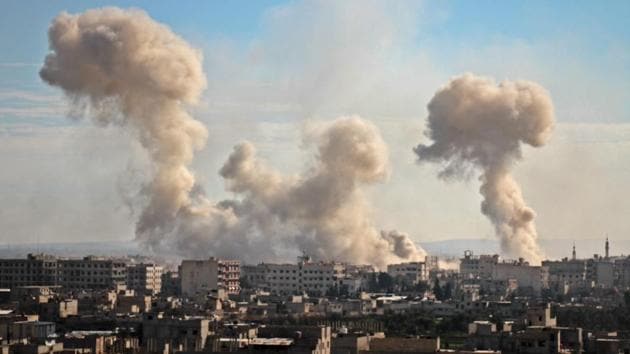
Smoke rises from buildings following bombardment on the village of Mesraba in the rebel-held besieged region of Eastern Ghouta on the outskirts of the capital Damascus. According to the Syrian Observatory for Human Rights (SOHR), at least 250 civilians have been killed by shelling and air strikes in last two days. (Hamza Al-Ajweh / AFP)
2 / 11
 View Photos in a new improved layout
Updated on Feb 21, 2018 02:38 pm IST
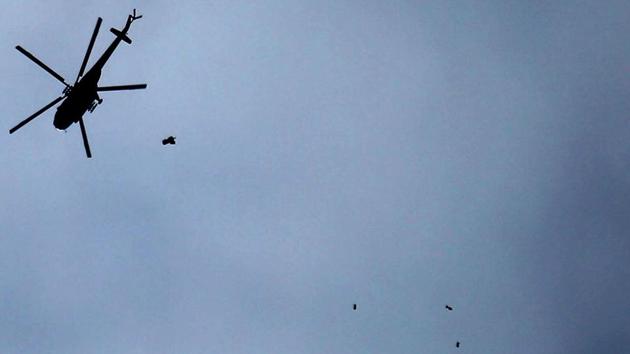
A Russian-made Syrian army helicopter is seen dropping a payload over the rebel-held town of Arbin. With the Islamic State (IS) losing key territories in Iraq and Syria last year, Russian-backed Syrian forces are making a major push to overrun the country’s remaining rebel strongholds. (Amer Almohibany / AFP)
3 / 11
 View Photos in a new improved layout
Updated on Feb 21, 2018 02:38 pm IST
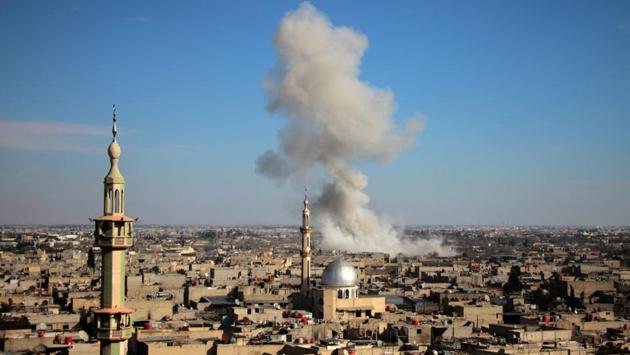
In May last year, Russia, Iran and Turkey signed an agreement to set up de-escalation zones, in order to prevent airstrike-related incidents in some parts of Syria. The de-escalation zones include- Idlib province, some parts of Latakia province, Hama and Aleppo provinces, Homs, Eastern Ghouta, Daraa and al-Quneitra provinces in southern Syria. (Hamza Al-Ajweh / AFP)
4 / 11
 View Photos in a new improved layout
Updated on Feb 21, 2018 02:38 pm IST
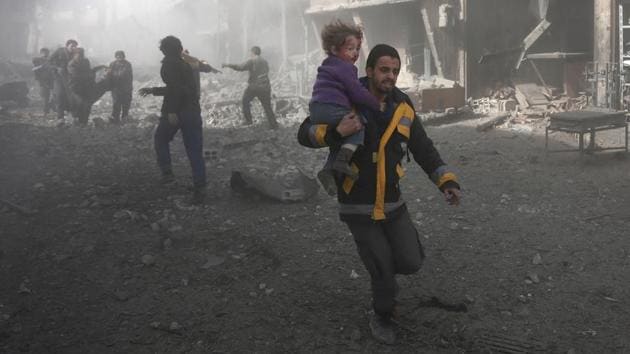
A Syrian man carries a child injured in government bombing in the rebel-held town of Hamouria, Damascus. The UN called for an immediate ceasefire in the area saying the situation was “spiralling out of control.” On Monday alone, 127 civilians, including 39 children, were killed in the bombardment - the single bloodiest day for Eastern Ghouta in four years. (Abdulmonam Eassa / AFP)
5 / 11
 View Photos in a new improved layout
Updated on Feb 21, 2018 02:38 pm IST
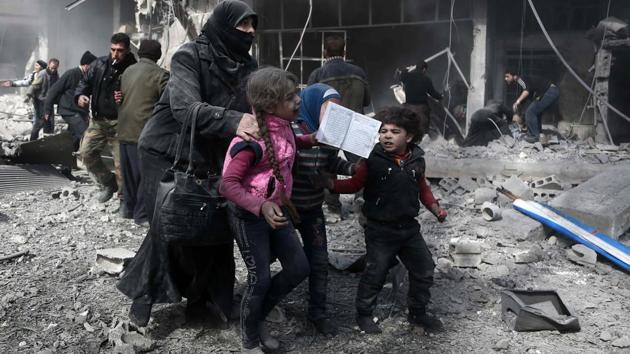
A Syrian woman and children run for cover amid the rubble of buildings following government bombing in Damascus. Eastern Ghouta, which houses around 400,000 residents, has remained under a crippling regime siege for the last five years. (Abdulmonam Eassa / AFP)
6 / 11
 View Photos in a new improved layout
Updated on Feb 21, 2018 02:38 pm IST
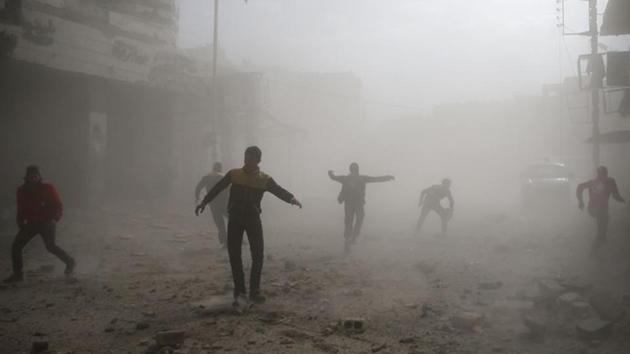
Civil defence members and civilians are seen running after an air raid, outside of Damascus. The bloodshed prompted the UN children’s agency UNICEF to issue a largely blank statement on Tuesday saying “we no longer have the words to describe children’s suffering.” (Bassam Khabieh / REUTERS)
7 / 11
 View Photos in a new improved layout
Updated on Feb 21, 2018 02:38 pm IST
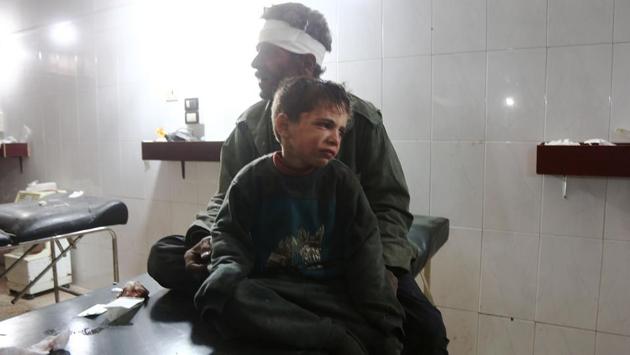
A Syrian child injured in the government bombing cries as he sits with his father at a makeshift hospital in Hamouria, Damascus. Neither the Syrian military nor Russia commented on the renewed bombardment , but they have often said they do not target civilians. (Abdulmonam Eassa / AFP)
8 / 11
 View Photos in a new improved layout
Updated on Feb 21, 2018 02:38 pm IST
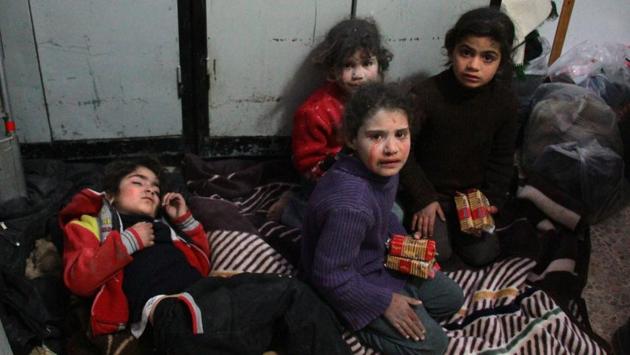
Syrian children seen at a makeshift hospital in Douma following air strikes on the Syrian village of Mesraba. Doctors have been working round the clock to treat hundreds of injured people, even though medical supplies and facilities were in short supply. (Hamza Al-Ajweh / AFP)
9 / 11
 View Photos in a new improved layout
Updated on Feb 21, 2018 02:38 pm IST
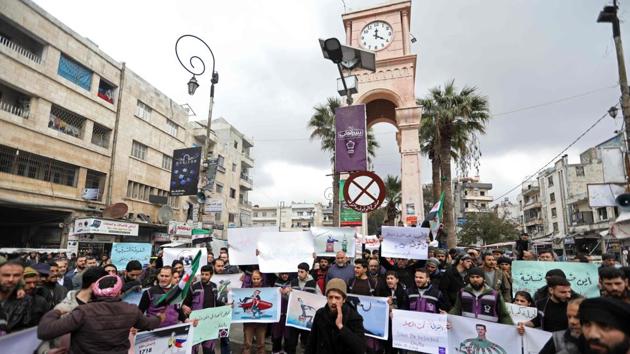
Syrians gather in solidarity in the rebel-held enclave of Eastern Ghouta during a demonstration in Idlib against the government bombardments. As per monitoring group, SOHR-- the death toll was likely to increase and the highest since the alleged chemical attack in the same region in 2013, which activists say claimed around 1,400 lives. (Omar Haj Kadour / AFP)
10 / 11
 View Photos in a new improved layout
Updated on Feb 21, 2018 02:38 pm IST
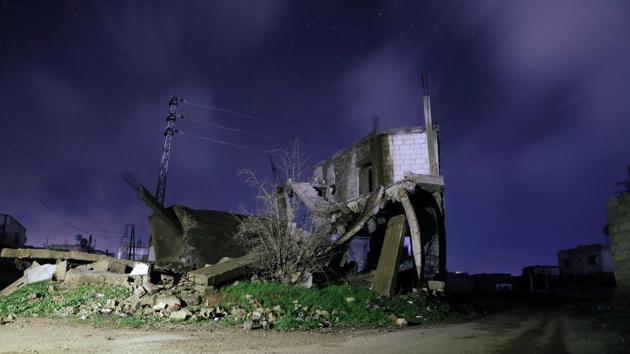
Damaged houses are pictured at night in Daraa, Syria. Held by rebels since 2012, Eastern Ghouta is the last opposition pocket around Damascus and President Bashar al-Assad is keen to retake it with an apparently imminent ground assault. (Alaa Al-Faqir / REUTERS)
11 / 11
 View Photos in a new improved layout
Updated on Feb 21, 2018 02:38 pm IST