

 E-Paper


Photos: Delhi’s last tuskers hold on to their humans
The sight of an elephant marching down Delhi’s roads may well become a thing of the past with the state forest department moving the high court demanding the relocation of all six tuskers in the city to a sanctuary outside the national capital. HT Photographer Arun Sharma explores the deep running bond between these gentle giants and the families that have maintained them for generations.
1 / 7

 View Photos in a new improved layout
Updated on Oct 11, 2017 09:15 am IST
In Sangam Vihar, Wazirabad, some families live with their elephants and every tusker has a dedicated ‘Mahout.’ The struggle for the custody of Delhi’s last elephants is on as we take a look at the intimate relationship between the them and their human families. (Arun Sharma / HT PHOTO)
2 / 7
 View Photos in a new improved layout
Updated on Oct 11, 2017 09:15 am IST
Mukut Yadav, a mahout employed by Yousuf Ali, owner of two elephants in Wazirabad has spent twenty years caring for the tuskers. (Arun Sharma / HT PHOTO)
3 / 7
 View Photos in a new improved layout
Updated on Oct 11, 2017 09:15 am IST
Everyday, Ali’s elephants Lakshmi and Dhanmati walk from Wazirabad to the Yamuna to roll around in its waters before grazing on the wild grass that grows on the riverbed. (Arun Sharma / HT PHOTO)
4 / 7
 View Photos in a new improved layout
Updated on Oct 11, 2017 09:15 am IST
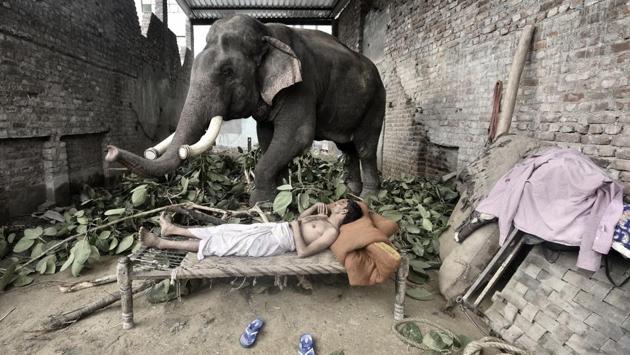
The mahout shares the most intimate relationship with the elephant, as seen in Mukut Yadav’s case. They live in the same space like siblings. (Arun Sharma / HT PHOTO)
5 / 7
 View Photos in a new improved layout
Updated on Oct 11, 2017 09:15 am IST
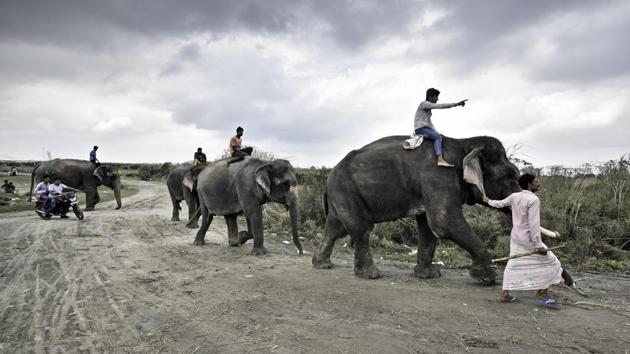
The tuskers of Wazirabad are taken for their daily walk to the Yamuna. During the British rule, elephants were used primarily for ceremonial practices in the royal courts, as well as for carrying logs of wood back from the forests of Assam and Arunachal Pradesh. (Arun Sharma / HT PHOTO)
6 / 7
 View Photos in a new improved layout
Updated on Oct 11, 2017 09:15 am IST
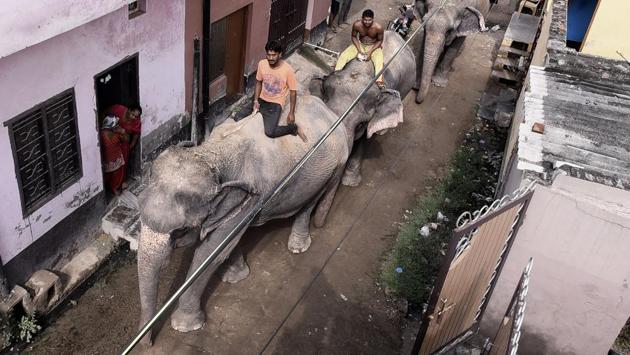
Parading them through ‘Haathi wali Galli’ in Wazirabad is a daily affair and the lane has become a landmark of sorts in Sangam Vihar. (Arun Sharma / HT PHOTO)
7 / 7
 View Photos in a new improved layout
Updated on Oct 11, 2017 09:15 am IST