

 E-Paper


Photos: How Puri prepares for the Juggernaut’s roll
The annual Rath Yatra of the Hindu God Jagannath and his siblings has begun in Puri, Odisha. Thousands of devotees from all over the world descend for this annual spectacle that lasts nine days, but behind the festival is the army of sevaks, whose families have helped keep this temple tradition alive for generations. And while the sevaks labour every year, on the day of the yatra, many who build the raths themselves may have no role to play in celebrations, a fact many don’t mind, hoping their efforts render reward in the hereafter.
1 / 9
 View Photos in a new improved layout
Updated on Jul 16, 2018 04:53 pm IST
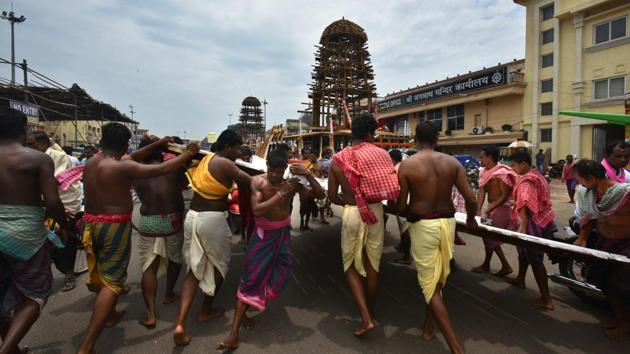
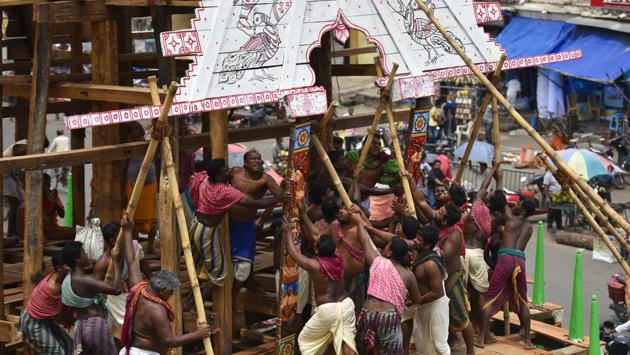
Local artists assemble the chariot ahead of Jagannath Rath Yatra, a popular festival which is celebrated in the month of July in Puri, Odisha. With roughly a fortnight left for the festival, the Grand Road in front of the Jagannath Temple is a site of frenzied activity. The hectic preparation traditionally starts from Basant Panchami with the arrival of the first load of wood to the temple. (Raj K Raj / HT Photo)
2 / 9
 View Photos in a new improved layout
Updated on Jul 16, 2018 04:53 pm IST
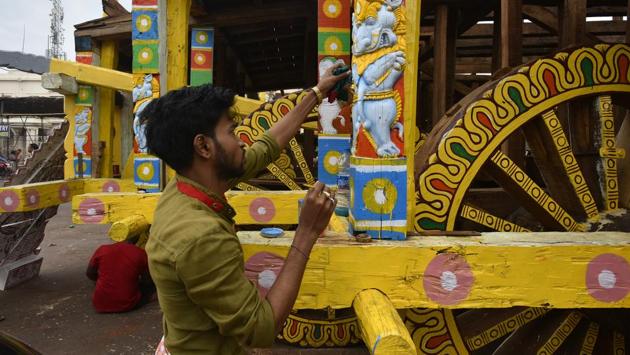
An artist paints a part of the chariot ahead of the Rath Yatra. While new chariots are made every year, the wooden horses and charioteers for each rath and the smaller deities that adorn the chariots, are made once in approximately 12 years, when the wooden idols of Jagannath and his siblings that are worshipped in the temple are replaced. That ritual – referred to as Navakalebara or new-body ceremony – was last celebrated in 2015. (Raj K Raj / HT Photo)
3 / 9
 View Photos in a new improved layout
Updated on Jul 16, 2018 04:53 pm IST
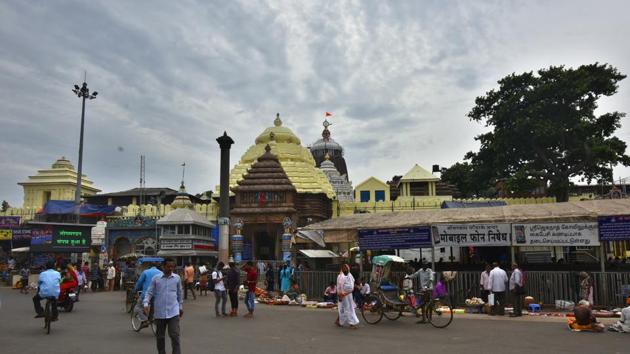
A tablet near the temple entrance states that only “orthodox Hindus” are allowed entry into the temple. People of other faiths can view a replica of the idol of Jagannath placed near the temple’s main entrance. Recently, there were news reports that President Ram Nath Kovind and his wife were allegedly harassed by temple servitors during their visit there but temple authorities denied this vehemently. (Raj K Raj / HT Photo)
4 / 9
 View Photos in a new improved layout
Updated on Jul 16, 2018 04:53 pm IST
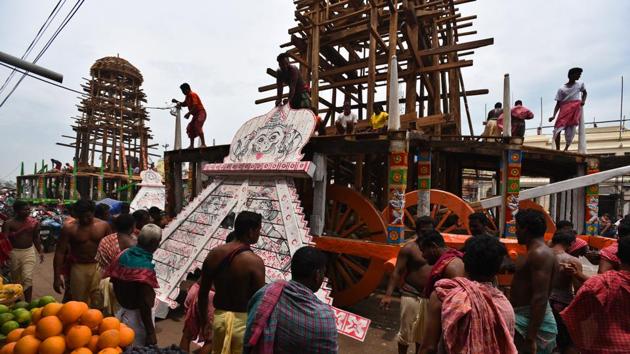
“The preparations begins with the temple administration writing to the state forest department for wood. Then, in April, the first co-ordination meeting is held between the district administration, the police and the temple administration, drawing devotees from across the world,” explained Pradipta Kumar Mohapatra, chief temple administrator and principal secretary, school and mass education, government of Odisha. (Raj K Raj / HT Photo)
5 / 9
 View Photos in a new improved layout
Updated on Jul 16, 2018 04:53 pm IST
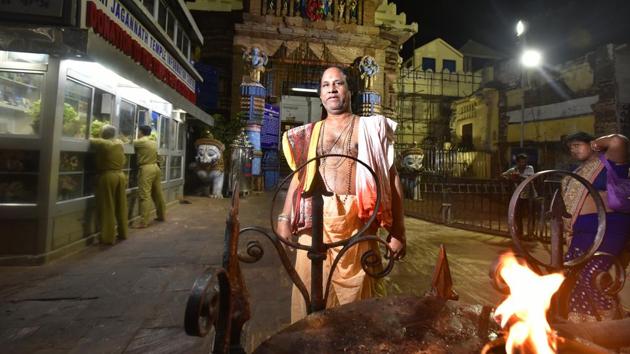
An exception to caste bias are the daitapati sevaks, who are the one allowed to be with Jagannath for a 15-day period preceding the Rath Yatra when the deity is said to be unwell and is kept away public view. During this period, it is the ‘low caste’ daitas, along with one Brahmin sevak, who serve the deity. (Raj K Raj / HT Photo)
6 / 9
 View Photos in a new improved layout
Updated on Jul 16, 2018 04:53 pm IST
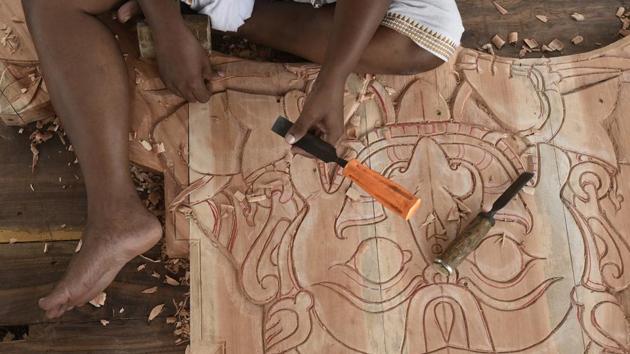
There are seven groups of workers – the viswakarma or those who do the actual construction, the kartias who cut the wood, the bhois who carry the wood, the lohars or ironsmiths, the roopkars who do the artwork on the chariots, the chitrakars who paint them and the tailors. In total they number more than 200. Most of the workers, at least the leaders of each group, have been doing this for generations. (Raj K Raj / HT Photo)
7 / 9
 View Photos in a new improved layout
Updated on Jul 16, 2018 04:53 pm IST
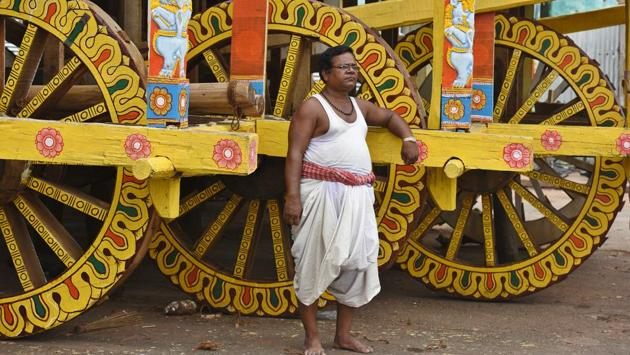
It’s not the money. The daily earnings of the workers vary between ₹350-₹450, with the leaders earning a few rupees more than the others. “We don’t call it wages, it’s khorak, what we need to subsist for the day,” explains a sevak. Also, accidents are common and the temple administration does pay for the treatments but paperwork is often so lengthy that they end up paying for themselves. (Raj K Raj/ HT Photo)
8 / 9
 View Photos in a new improved layout
Updated on Jul 16, 2018 04:53 pm IST
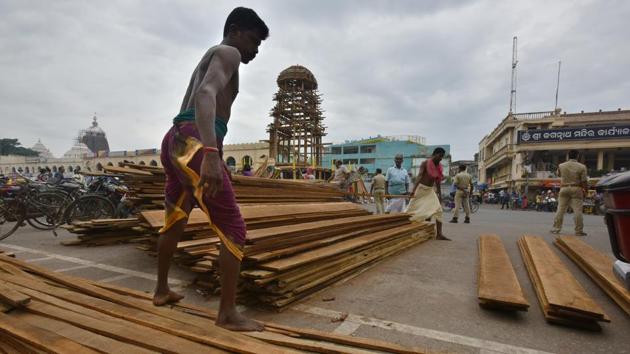
Last year’s budget for the festival was ₹4.85 crore and this year the estimated budget is ₹6 crore. Approximately 865 trees are felled every year for the wood to build the three chariots. For the past few years, the temple administration has been selling the wheels of the raths after the yatra - mainly to corporate houses – for display and worship. Wood from the rest of the rath fuels Jagannath’s bhog. (Raj K Raj / HT Photo)
9 / 9
 View Photos in a new improved layout
Updated on Jul 16, 2018 04:53 pm IST