
 E-Paper



Photos: India’s largest crocodile park faces cash crunch after lockdown
Madras Crocodile Bank, India's largest crocodile park, located in Mahaballipuram near Chennai may have as little as four months before it runs out of funds to feed animals, pay staff and do research, as ticket revenue shrinks after coronavirus lockdowns choked the flow of visitors, park officials have said. Some park staff have taken salary cuts and park activities are now limited to only those deemed critical. The facility has bred more than 5,000 crocodiles during its existence, houses 14 of 23 existing crocodile species
Updated on: Aug 11, 2020 11:04 AM IST


Share via


Copy link

1/7

 View Photos in a new improved layout
Updated on Aug 11, 2020 11:04 AM
Crocodiles rest in their enclosure at the Madras Crocodile Bank, closed due to the outbreak of coronavirus disease (COVID-19), in Mahabalipuram on August 3. Located about 40 km from the city of Chennai, the park has been shut since March 16, with no prospect of reopening in sight. (P. Ravikumar / REUTERS)
2/7
 View Photos in a new improved layout
Updated on Aug 11, 2020 11:04 AM
A crocodile-shaped entrance sign stands by the road near the Madras Crocodile Bank. Annual sales of about 5 million tickets usually make up roughly half the revenue of the park. The lockdowns during the summer vacation season have cost an estimated 14 million rupees as visitors dropped by almost 2.5 million, Allwin Jesudasan, the director of the Madras Crocodile Bank told Reuters. (P. Ravikumar / REUTERS)
3/7
 View Photos in a new improved layout
Updated on Aug 11, 2020 11:04 AM
The deserted entrance for visitors is pictured at the Madras Crocodile Bank. “Our present funding situation will allow us to stay functional for another three or four months,” Jesudasan told Reuters. (P. Ravikumar / REUTERS)
4/7
 View Photos in a new improved layout
Updated on Aug 11, 2020 11:04 AM
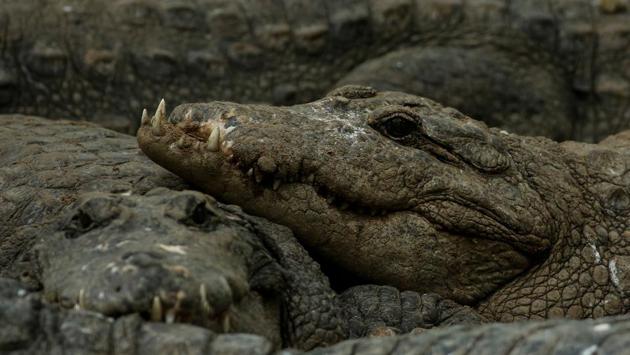
Crocodiles rest in their enclosure at the Madras Crocodile Bank. Started in 1976 by American-born snake expert Romulus Whitaker, who has also won recognition for his conservation work, the park is spread over 8.5 acres (3.44 hectares). (P. Ravikumar / REUTERS)
5/7
 View Photos in a new improved layout
Updated on Aug 11, 2020 11:04 AM
Zoo keepers feed crocodiles in their enclosure at the Madras Crocodile Bank. “Our senior staff have taken a voluntary 10% to 50% pay cut on their salaries and we have cut down our activities to just the critical ones,” the park said in an appeal for funds on its website. (P. Ravikumar / REUTERS)
6/7
 View Photos in a new improved layout
Updated on Aug 11, 2020 11:04 AM
A crocodile face model is covered with a plastic bag at the Madras Crocodile Bank. The park is home to more than 2,000 crocodiles and alligators, as well as reptiles such as turtles, tortoises, lizards and snakes. But the future of its staff and animals is not clear after funds have been exhausted. (P. Ravikumar / REUTERS)
7/7
 View Photos in a new improved layout
Updated on Aug 11, 2020 11:04 AM


