
 E-Paper



Photos: India witnesses celestial sight in ‘Ring of Fire’ eclipse
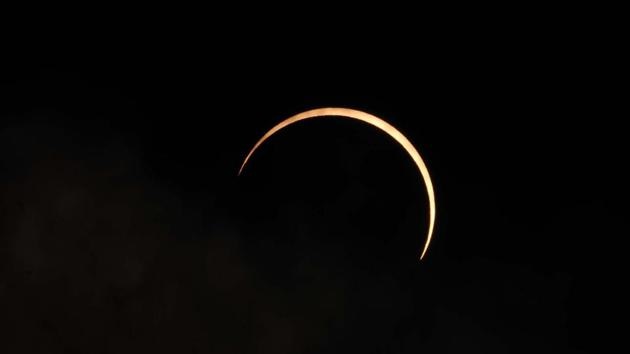
The first solar eclipse of this year taking place on the summer solstice, which is the longest day in the Northern Hemisphere was visible a little after 9 am in India. This solar eclipse is also known as the “ring of fire” as the moon is unable to cover the entire sun, leaving a small surface exposed.
Updated on: Jun 21, 2020 6:19 PM IST


Share via


Copy link

1/10
 View Photos in a new improved layout
Updated on Jun 21, 2020 6:19 PM
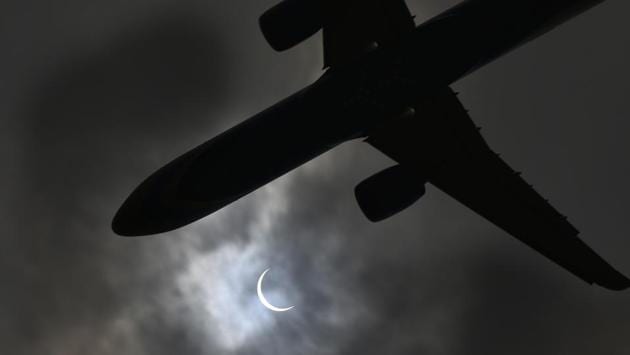
A passenger aircraft flies past the sun during an annular solar eclipse, as seen from NH 48 in New Delhi on June 21. An annular solar eclipse occurs when the moon is unable to cover the entire sun--leaving a small surface exposed which is called the “ring of fire”. (Vipin Kumar / HT Photo)
2/10
 View Photos in a new improved layout
Updated on Jun 21, 2020 6:19 PM
People line up as they watch the solar eclipse at Nehru Planetarium in New Delhi. The solar eclipse on June 21 is the 23rd such celestial event in a decade, according to US space agency NASA’s website on eclipses. (Biplov Bhuyan / HT Photo)
3/10
 View Photos in a new improved layout
Updated on Jun 21, 2020 6:19 PM
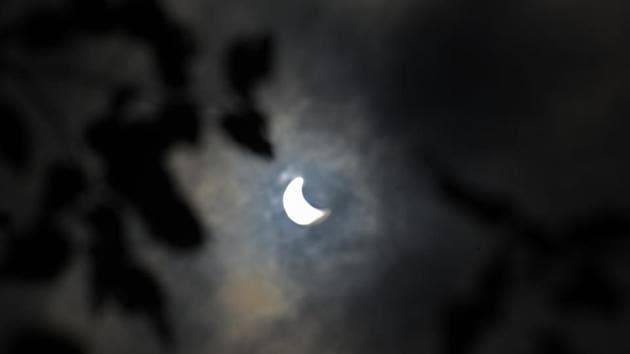
A partial solar eclipse seen from Kolkata on June 21. According to the NASA’s website, there will be 24 solar eclipses between 2011 and 2020. (Samir Jana / HT Photo)
4/10
 View Photos in a new improved layout
Updated on Jun 21, 2020 6:19 PM
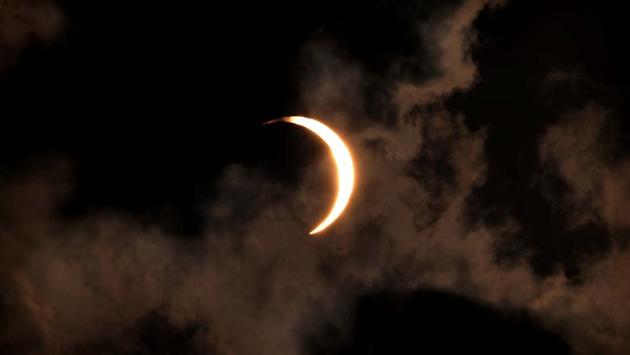
The partial solar eclipse seen from Chandigarh on June 21. The solar eclipse started a little after 9 am in India after the sun, the moon and the earth came in a straight line. (Ravi Kumar / HT Photo)
5/10
 View Photos in a new improved layout
Updated on Jun 21, 2020 6:19 PM
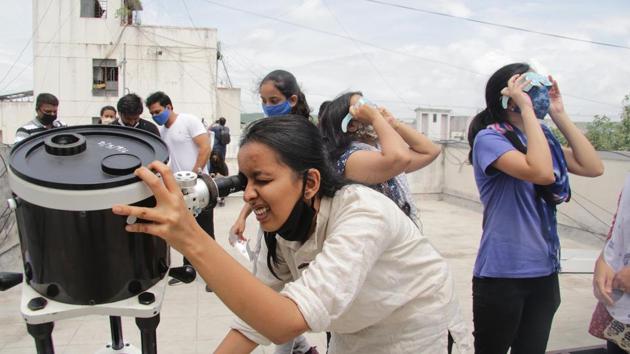
Volunteers of NGO Jyotirvidya Parisanstha watch the annular solar eclipse during a small gathering at Kesariwada in Pune. The coronavirus pandemic has had its impact on the eclipse this year as large gatherings were banned and special events organised at observatories and planetariums were cancelled, reported HT. (Ravindra Joshi / HT Photo )
6/10
 View Photos in a new improved layout
Updated on Jun 21, 2020 6:19 PM
A crescent sun shines in the sky as the moon partially covers the sun during the annular solar eclipse, seen from Chandigarh on June 21. (Ravi Kumar / HT Photo)
7/10
 View Photos in a new improved layout
Updated on Jun 21, 2020 6:19 PM
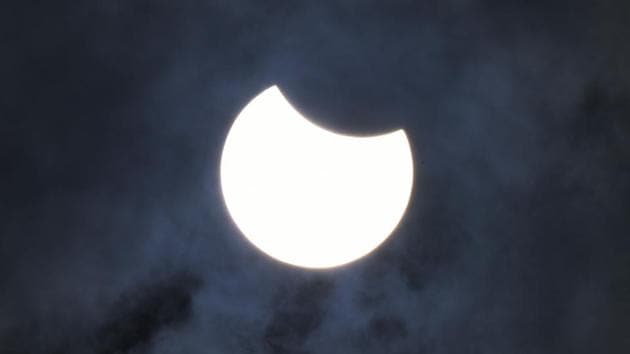
The sun shines amid clouds during the annular solar eclipse, seen from NH48 Airport road in New Delhi. (Vipin Kumar / HT Photo)
8/10
 View Photos in a new improved layout
Updated on Jun 21, 2020 6:19 PM
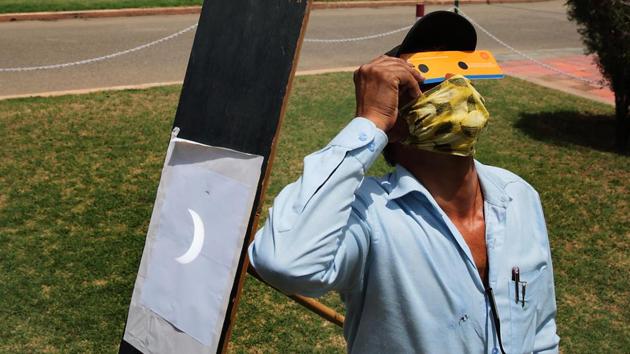
An employee at the Birla Planetarium watches the annular solar eclipse while the Sun’s reflection is caught on a screen next to him, in Jaipur. (Himanshu Vyas / HT Photo)
9/10
 View Photos in a new improved layout
Updated on Jun 21, 2020 6:19 PM
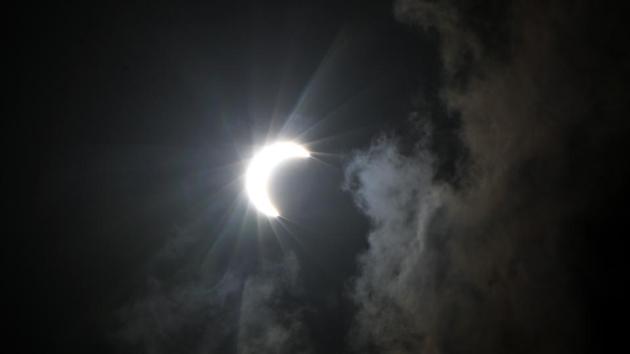
A bright crescent sun shines in the sky during the annular solar eclipse, seen from Bhatinda. (Sanjeev Kumar / HT Photo)
10/10
 View Photos in a new improved layout
Updated on Jun 21, 2020 6:19 PM


