
 E-Paper



Photos: Shaheen Bagh, a year after anti-CAA protests
A year after what was one of the largest and most prominent protests against the Citizenship (Amendment) Act in the country; Shaheen Bagh wears an uneasy calm. Road 13A, where for 101 days local residents and people from all walks of life staged a demonstration against the new law, is today back to being an arterial road connecting Delhi to Noida. Shop owners suggest that the stigma of protests and police presence coupled with the impact of the Covid-19 lockdown have changed the dynamic of the otherwise brisk market that lines the road.
Updated on: Dec 17, 2020 5:58 PM IST


Share via


Copy link

1/11
 View Photos in a new improved layout
Updated on Dec 17, 2020 5:58 PM
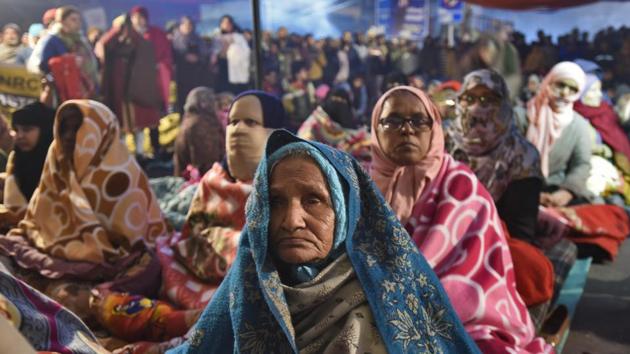
Demonstrators at the Shaheen Bagh anti-CAA and NRC protest site in New Delhi on Deccmber 30, 2019. What started as a sit-in protest on Road Number 13A in Shaheen Bagh, which connects Noida to Delhi, by a group of around 100 residents a year ago, snowballed into one of the largest and most prominent protests against the Citizenship (Amendment) Act in the country. (Burhaan Kinu / HT Archive)
2/11
 View Photos in a new improved layout
Updated on Dec 17, 2020 5:58 PM
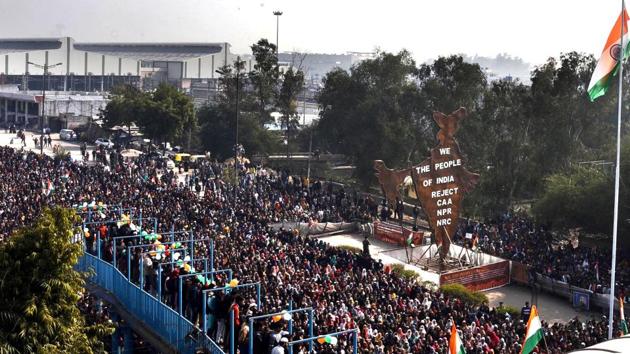
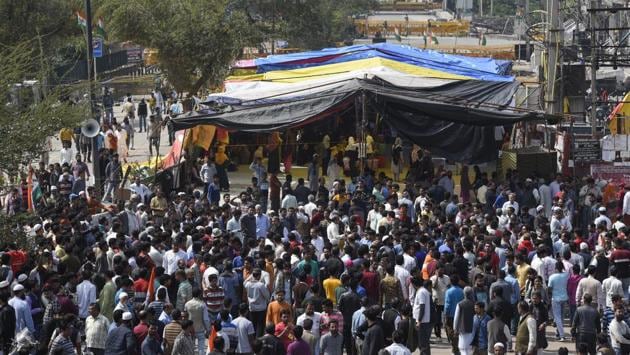
A massive crowd at the Shaheen Bagh sit-in on January 26. For 101 days the road, blocked by anti-CAA protesters, became a symbol of resistance to the government’s new law which replaced the Citizenship Act, 1955, to fast-track the grant of Indian citizenship to members of the Hindu, Sikh, Buddhist, Jain, Parsi and Christian communities from Afghanistan, Bangladesh and Pakistan. (HT Archive)
3/11
 View Photos in a new improved layout
Updated on Dec 17, 2020 5:58 PM
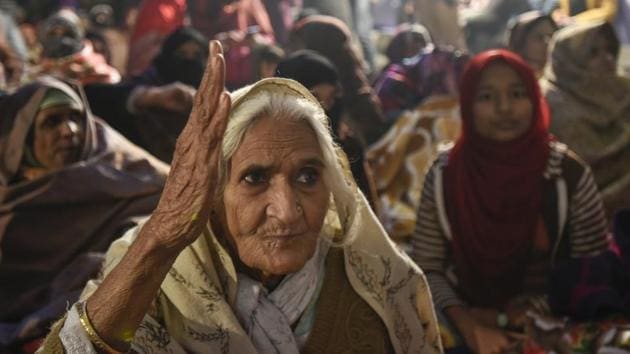
Demonstrators at Shaheen Bagh on December 30, 2019. As the protest grew, people from across the city made their way to Shaheen Bagh. They came to spend time with the grand old women of Shaheen Bagh, the Dadis or grandmothers who stayed put in the biting winter. In September this year, 82-year-old Bilkis, one of the women, was named one of the 100 most influential people of 2020 by Time magazine. (Burhaan Kinu / HT Archive)
4/11
 View Photos in a new improved layout
Updated on Dec 17, 2020 5:58 PM
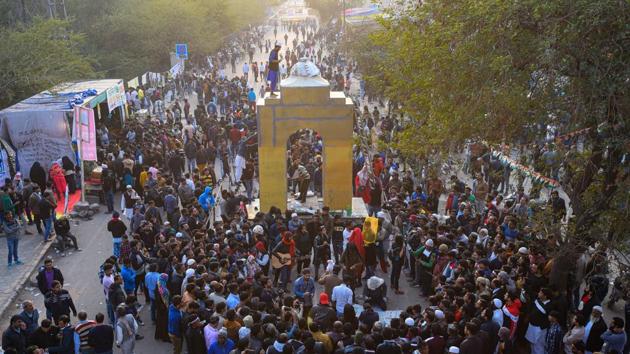
An installation at Shaheen Bagh on February 2. When the protest first started, not many outside the national capital knew of Shaheen Bagh, a small colony in southeast Delhi. Over time people were drawn by the swelling movement, the replicas of the India Gate monument where names of those who died in the anti-CAA protests across the country were etched. They came to hear revolutionary poems being read out by young men and women. (Amal KS / HT Archive)
5/11
 View Photos in a new improved layout
Updated on Dec 17, 2020 5:58 PM
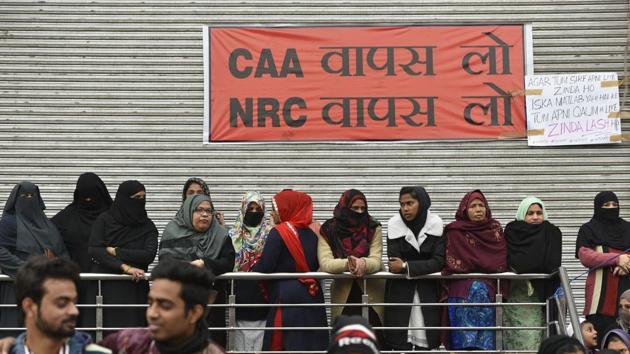
Women gathered under a banner at Shaheen Bagh, on January 6. The 101-day long protest had its share of critics, including thousands of commuters who used road 13A to commute between Delhi and Noida daily. There were massive traffic jams across the city. Police diversions led to serpentine traffic jams during peak hours. Multiple petitions were filed in courts urging police to intervene and ask protesters to vacate the road. (Burhaan Kinu / HT Archive)
6/11
 View Photos in a new improved layout
Updated on Dec 17, 2020 5:58 PM
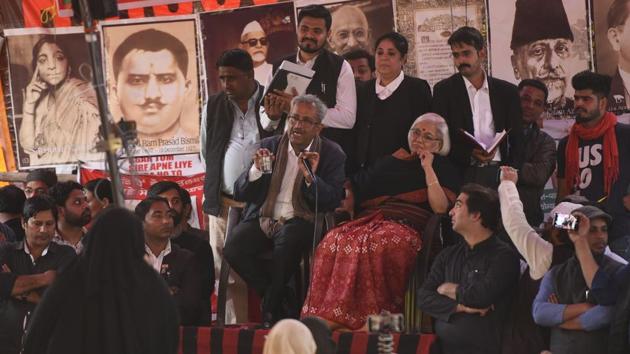
Supreme Court appointed interlocutors Sanjay Hegde and Sadhna Ramachandran speak to Shaheen Bagh protesters days on February 20. The talks to assuage the protestors and the blockade did not make any headway. Much later, in September this year, the Supreme Court observed that the right to protest in public places should be balanced with the right of the general public to move freely without hindrance. (Burhaan Kinu / HT Archive)
7/11
 View Photos in a new improved layout
Updated on Dec 17, 2020 5:58 PM
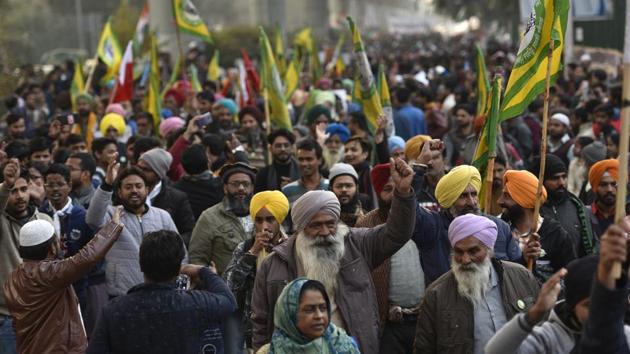
Farmers from Punjab arrive to join the Shaheen Bagh and Jamia University protests on January 15. This year, another protest -- this time over three farm laws that aim to liberalise the farm economy -- continues to rage with thousands of farmers on a similar sit-in protest at several of the Capital’s entry points. (Burhaan Kinu / HT Archive)
8/11
 View Photos in a new improved layout
Updated on Dec 17, 2020 5:58 PM
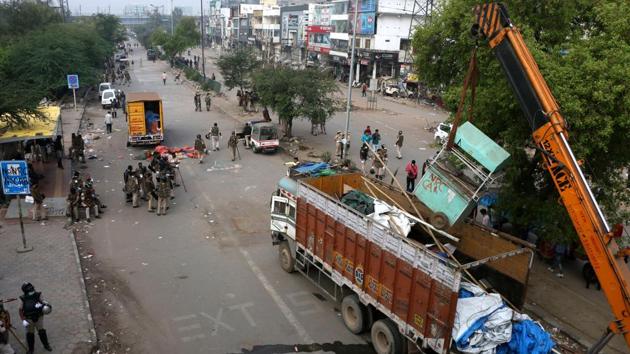
Municipal workers and police clear the Shaheen Bagh protest site after 101 days on sit-in on March 24. The Covid-19 pandemic achieved what the courts or police could not, and the protest site was cleared the day before the national lockdown was imposed to contain the spread of the coronavirus disease. (Salman Ali / HT Archive)
9/11
 View Photos in a new improved layout
Updated on Dec 17, 2020 5:58 PM
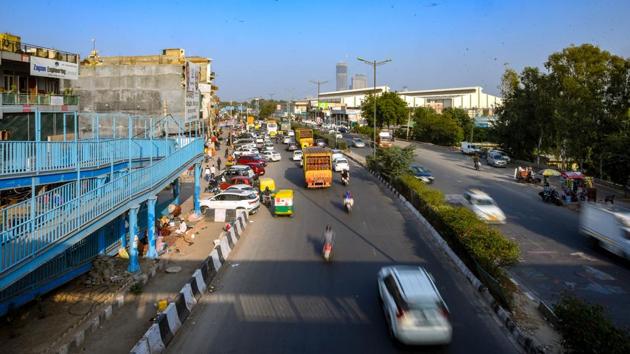
Road 13A, where the Shaheen Bagh protest once was, seen a year later on December 14, 2020. Several residents in the area -- most did not want to be named when speaking to HT-- said they believe Shaheen Bagh was the most successful sit-in protest, particularly because there was no violence right till the end. But traders said the “successful protest” came at a cost. (Amal KS / HT Archive)
10/11
 View Photos in a new improved layout
Updated on Dec 17, 2020 5:58 PM
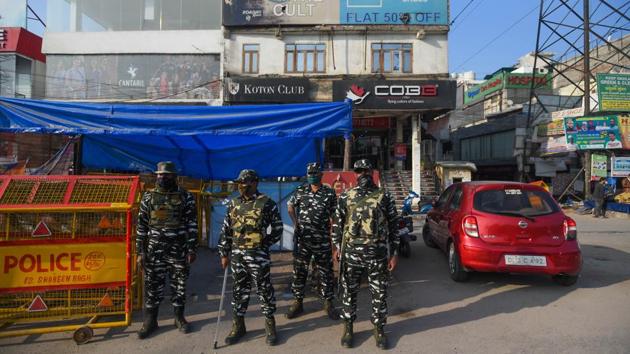
Security personnel at Shaheen Bagh on December 14. At least 15 shops in the roughly 200-shop market have shut permanently in one year -- not just because of Covid-19, but also due to concerns of increased surveillance and police scrutiny, according to locals. When lockdown norms were relaxed in May, one shopkeeper said the fear of the virus had kept the shoppers away. About 60 other shops have not reopened yet. (Amal KS / HT Archive)
11/11
 View Photos in a new improved layout
Updated on Dec 17, 2020 5:58 PM


