
 E-Paper



Photos: A dip into an old Cairo craft at a century old dye-workshop
In Cairo, around 23 historic dye workshops used to service the city but presently only a handful remain. In the centuries-old Darb al-Ahmar district, Salama Mahmoud Salama's traditional dye workshop is a multi-coloured hive of workers busy with all kinds of fabrics. His loyal clients come from all over Egypt, and even from Sudan and the United States. However, competition from foreign products has hurt the homegrown textile industry and the rise in the dye prices globally has also taken a toll on the niche industry.
Updated on: Jan 29, 2020 2:43 PM IST


Share via


Copy link

1/11
 View Photos in a new improved layout
Updated on Jan 29, 2020 2:43 PM
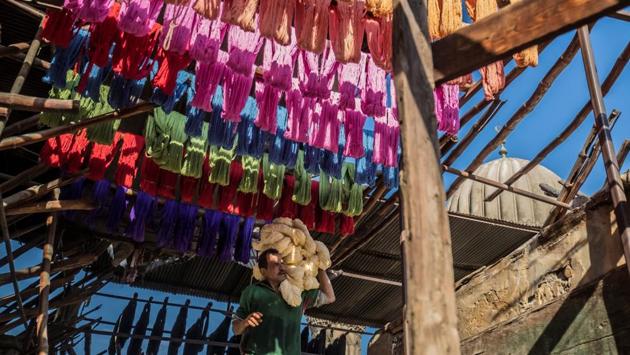
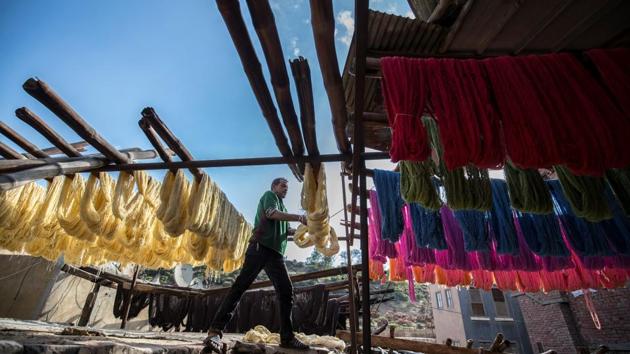
Mohamed Kamal, a 59-year-old dye worker, carries dyed yarns to hang out to dry in the sun at a traditional hand-dying workshop in the Egyptian capital Cairo's centuries-old district of Darb al-Ahmar. The district is a multicoloured den of textiles and busy workers colouring all kinds of fabrics. (Khaled Desouki / AFP)
2/11
 View Photos in a new improved layout
Updated on Jan 29, 2020 2:43 PM
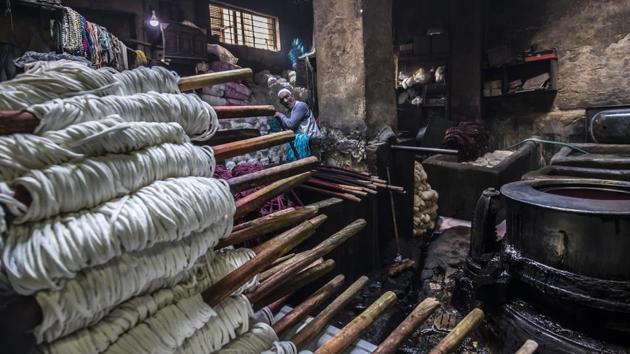
Salama Mahmoud Salama, a workshop owner and operator, at his traditional hand-dying workshop in Darb al-Ahmar. Salama’s workshop in Cairo has been going strong for almost 120 years. (Khaled Desouki / AFP)
3/11
 View Photos in a new improved layout
Updated on Jan 29, 2020 2:43 PM
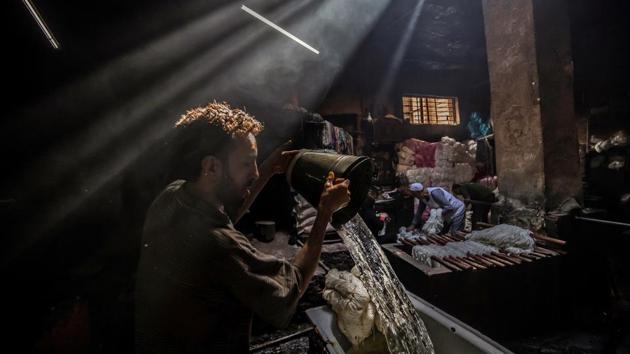
Mohamed Kamel, a 36-year-old worker pours water from a bucket to a vat as he prepares to dye yarns at Salama's workshop. Salama and his relatives lay out the long, flowing threads, which will be used for everything from handmade shoes to rugs and drapes, and dip them in huge, piping hot colour baths. (Khaled Desouki / AFP)
4/11
 View Photos in a new improved layout
Updated on Jan 29, 2020 2:43 PM
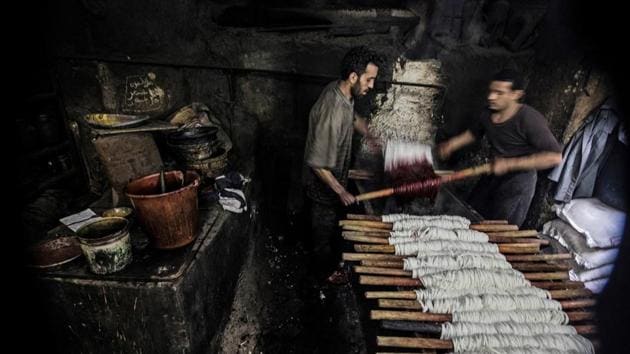
Samir Salama (R), the 40-year-old son of dyer Salama Mahmoud Salama, and his 36-year-old relative Mohamed Kamel dye yarns together. “We start by levelling the cotton out, then immersing it in dye and adding salt to get the colour right,” the 83-year-old Salama told AFP one busy morning. (Khaled Desouki / AFP)
5/11
 View Photos in a new improved layout
Updated on Jan 29, 2020 2:43 PM
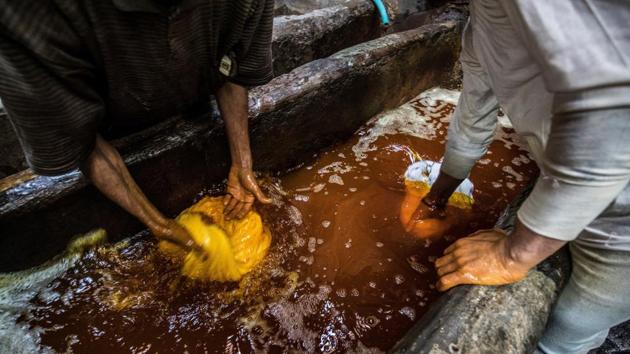
Workers dye yarns in a dyebath. They have no gloves or masks to protect them from the dyes and fumes. (Khaled Desouki / AFP)
6/11
 View Photos in a new improved layout
Updated on Jan 29, 2020 2:43 PM
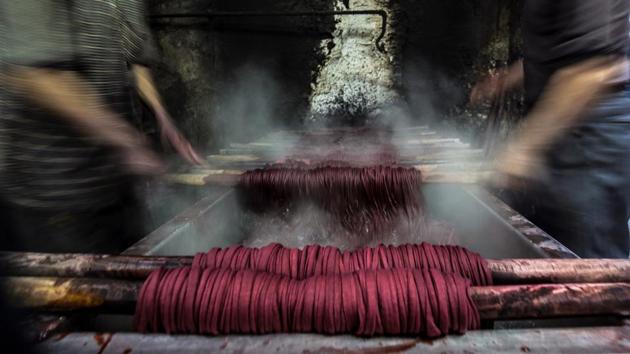
Workers spin dyed yarns from a vat at the Salama workshop. “We rinse the wet threads before flattening them out in an electric presser and then leave them out to dry,” Salama added. (Khaled Desouki / AFP)
7/11
 View Photos in a new improved layout
Updated on Jan 29, 2020 2:43 PM
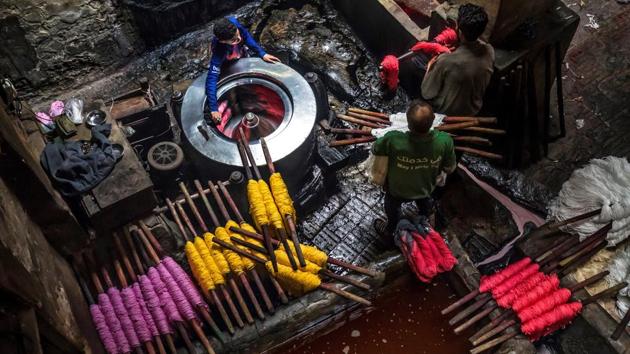
Yarn at various stages of being dyed. Of the 23 historic dye workshops that used to service the city, only a handful remain. (Khaled Desouki / AFP)
8/11
 View Photos in a new improved layout
Updated on Jan 29, 2020 2:43 PM
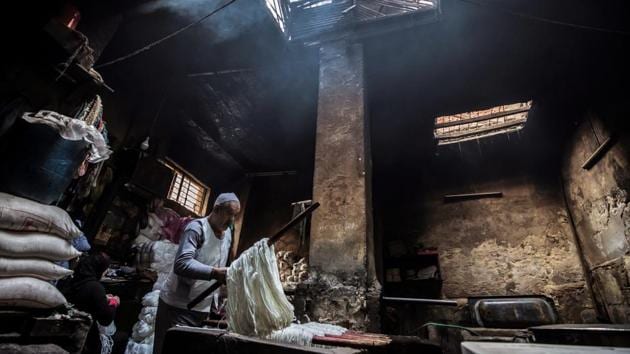
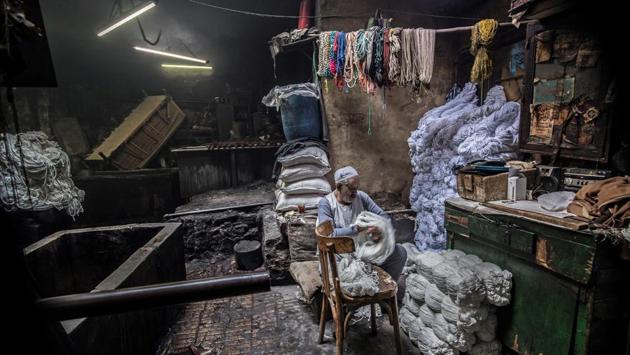
Salama Mahmoud Salama holds undyed yarns at his traditional workshop. While industrial dye factories usually work with at least of a tonne of yarn at a time, Salama says he can colour as little as half a kilogramme. (Khaled Desouki / AFP)
9/11
 View Photos in a new improved layout
Updated on Jan 29, 2020 2:43 PM
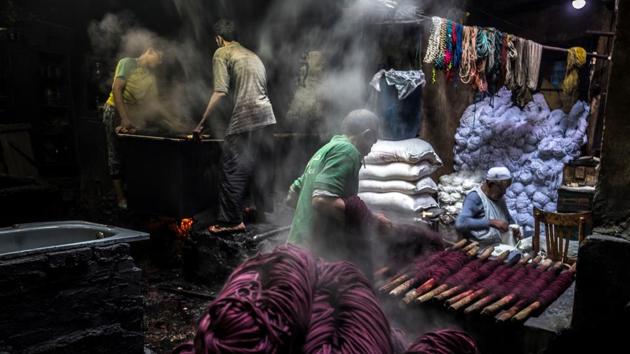
Salama’s loyal clients come from all over Egypt, and even from Sudan and the United States. But he says competition from foreign products has hurt the home-grown textile industry. The rise in the dye prices globally has also taken a toll on the niche industry. (Khaled Desouki / AFP)
10/11
 View Photos in a new improved layout
Updated on Jan 29, 2020 2:43 PM
“In a popular store in Al-Azhar (in the heart of Islamic Cairo) a wool sweater sells for 200 pounds ($12.60), but you can find something similar on the street that’s made in China for 30 pounds ($1.90),” Salama told AFP. To stay competitive, he has started using firewood instead of fuel to heat the baths. (Khaled Desouki / AFP)
11/11
 View Photos in a new improved layout
Updated on Jan 29, 2020 2:43 PM


