

 E-Paper


Photos: Mexico’s prickly pear cactus might solve world’s plastic problem
Mexico's prickly pear cactus, which is emblazoned on the country's flag, could soon play a new and innovative role in the production of biodegradable plastics. A packaging material that is made from the plant has been developed by a Mexican researcher and is offering a promising solution to one of the world's biggest pollution conundrums. Mexican scientist Sandra Pascoe Ortiz developed the biodegradable plastic made with the juice of Nopal (Opuntia cacti) also known as prickly pear cactus.
1 / 8
 View Photos in a new improved layout
Updated on Aug 08, 2019 04:33 pm IST
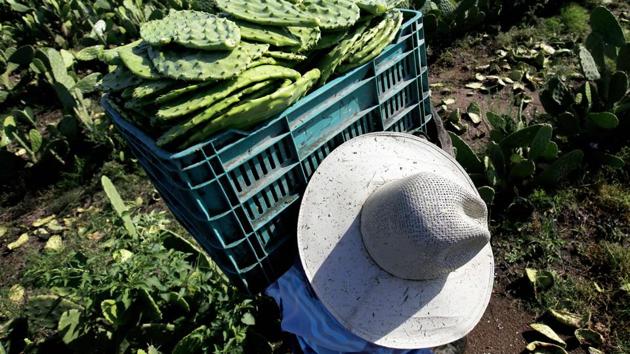
A worker collects white Nopal also known as prickly pear cactus in Zapopan. Mexico’s prickly pear cactus, which is emblazoned on the country’s flag, could soon play a new and innovative role in the production of biodegradable plastics. Mexican scientist Sandra Pascoe Ortiz has developed a biodegradable plastic made with the juice of the plant. (Ulises Ruiz / AFP)
2 / 8
 View Photos in a new improved layout
Updated on Aug 08, 2019 04:33 pm IST
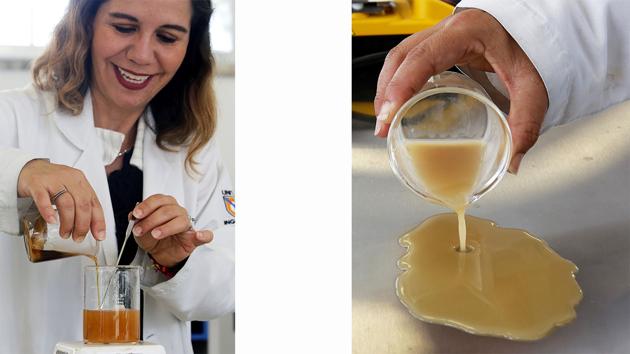
Mexican scientist Sandra Pascoe Ortiz works at a laboratory in Zapopan. “The pulp is strained to obtain a juice that I then use,” said Sandra Pascoe, who developed the product and works at the Atemajac Valley University in the western city of Guadalajara. (Ulises Ruiz / AFP)
3 / 8
 View Photos in a new improved layout
Updated on Aug 08, 2019 04:33 pm IST
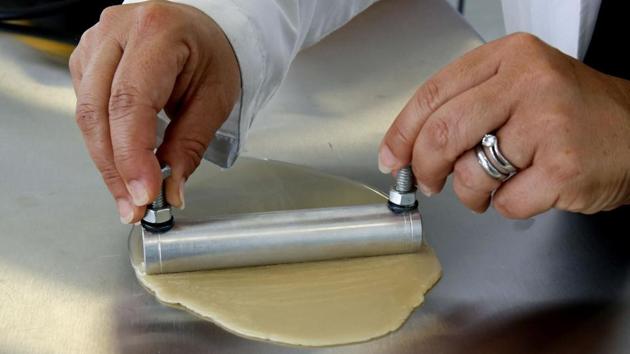
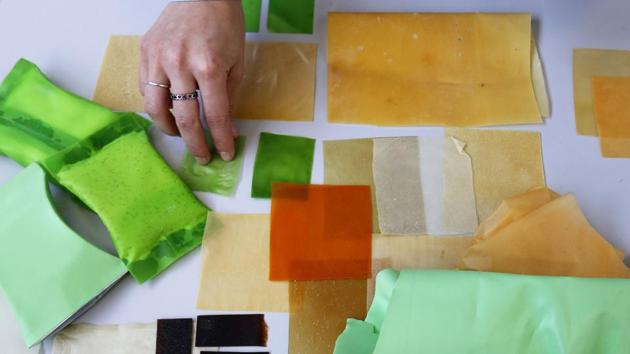
That substance is then mixed with non-toxic additives and stretched to produce sheets which are colored with pigments and folded to form different types of packaging. “What we’re doing is trying to concentrate on objects that don’t have a long life,” she said, particularly “single-use” packaging. (Ulises Ruiz / AFP)
4 / 8
 View Photos in a new improved layout
Updated on Aug 08, 2019 04:33 pm IST
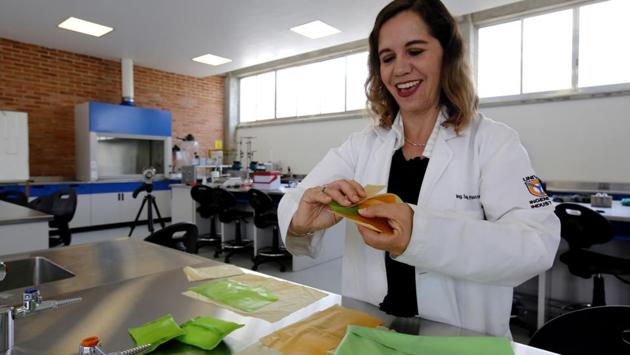
The cacti Pascoe uses for her experiments come from San Esteban, a small town on the outskirts of Guadalajara, where they grow by the hundreds. San Esteban is located in Jalisco state where, starting next year, single-use non-recyclable plastic bags, straws and other disposable items will be banned. (Ulises Ruiz / AFP)
5 / 8
 View Photos in a new improved layout
Updated on Aug 08, 2019 04:33 pm IST
Pascoe is still conducting tests, but hopes to patent her product later this year and look for partners in early 2020, with an eye towards larger-scale production. (Ulises Ruiz / AFP)
6 / 8
 View Photos in a new improved layout
Updated on Aug 08, 2019 04:33 pm IST
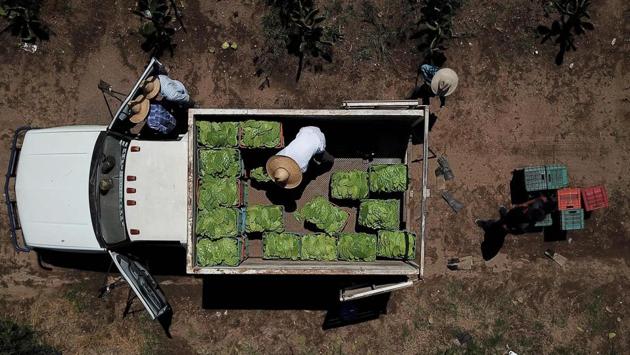
An aerial view of workers collecting white nopal in Zapopan. In May, Mexico City adopted a “historic” ban on plastic bags beginning in 2020. From 2021, straws, plastic plates and cutlery, and balloons will also be banned if they’re made “entirely or partially from plastic,” according to the bill adopted by the local congress. (Ulises Ruiz / AFP)
7 / 8
 View Photos in a new improved layout
Updated on Aug 08, 2019 04:33 pm IST
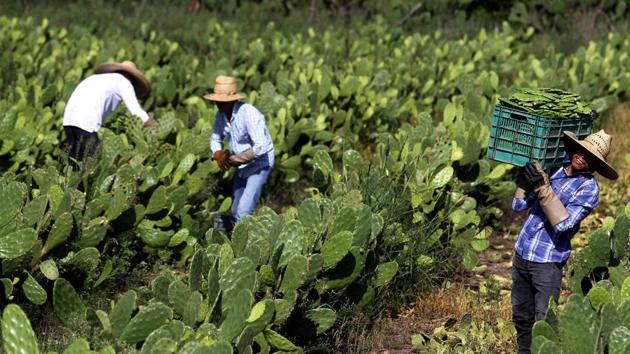
Given the rampant production of industrial plastics and the time it takes to make Pascoe’s material, there would need to be “other recycling strategies” to make any concrete difference, she said. Latin America and the Caribbean account for around 10 percent of worldwide waste, according to United Nations figures. (Ulises Ruiz / AFP)
8 / 8
 View Photos in a new improved layout
Updated on Aug 08, 2019 04:33 pm IST