
 E-Paper



Photos: The state of surfing in Fukushima 9 years after nuclear accident
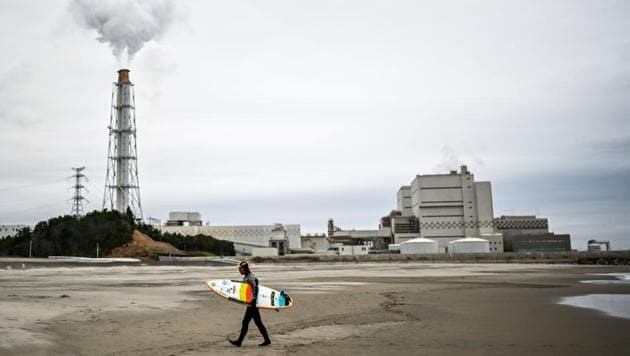
Every morning, come rain or shine, 64-year-old Koji Suzuki grabs his board and checks out the surf crashing onto the Fukushima coastline, some of the best rollers in Japan. Suzuki's local beach, Minamisoma, is around 30 kilometre north of the crippled Fukushima Daiichi nuclear plant and he still has vivid memories of March 11, 2011, when a towering tsunami triggered by a magnitude 9.0 quake surged inland, ravaging the facility. Nine years later, Prime Minister Shinzo Abe is keen to use the upcoming Tokyo Olympics to showcase Fukushima's recovery, planning to start the Japan leg of the torch relay from there.
Updated on: Mar 11, 2020 4:43 PM IST


Share via


Copy link

1/7
 View Photos in a new improved layout
Updated on Mar 11, 2020 4:43 PM
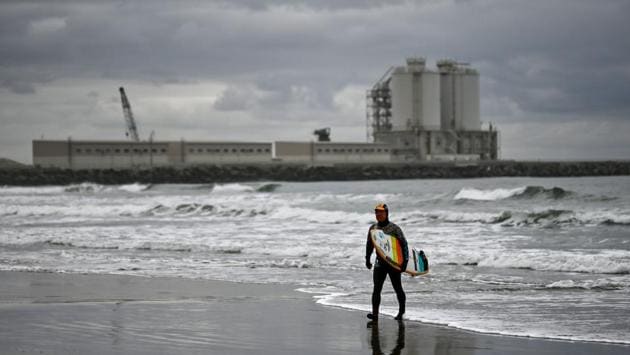
Koji Suzuki, 64, a surfer and a surf shop owner, walks on the beach in front of a thermal power station after a surfing session in Minamisoma, Fukushima prefecture, Japan. Suzuki's local beach, Minamisoma, is around 30 kilometre north of the crippled Fukushima Daiichi nuclear plant and he still has vivid memories of March 11, 2011, when a towering tsunami triggered by a magnitude 9.0 quake surged inland, ravaging the facility. (Charly Triballeau / AFP)
2/7
 View Photos in a new improved layout
Updated on Mar 11, 2020 4:43 PM
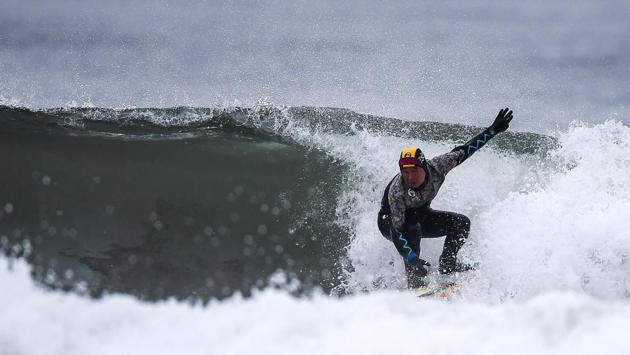
Suzuki rides a wave in Minamisoma, Fukushima prefecture. In 2011, the ruthless waves had also wiped out his entire coastal neighbourhood of some 70-strong households, including his surf shop. He fled, leaving everything behind except two shortboards that happened to be in his getaway car. (Charly Triballeau / AFP)
3/7
 View Photos in a new improved layout
Updated on Mar 11, 2020 4:43 PM
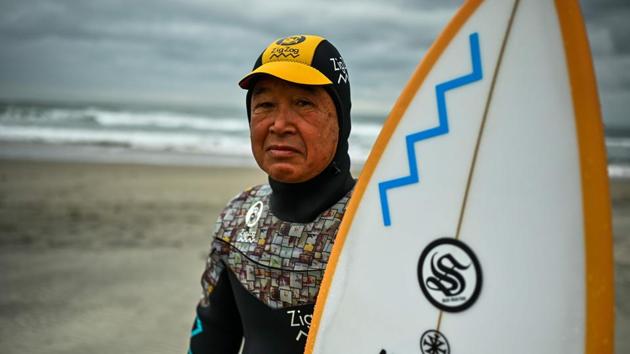
“I surf about 250 days a year,” said the veteran, emerging from the water, board under his arm. “I take a break only on New Year’s Day and the day after. The rest of the year, I come to see the ocean every morning.” Recounting the incident, he told AFP, “I lost my house, my job and my shop. My mother died while evacuated, and my father followed within months. I lost everything. Except my surfing.” (Charly Triballeau / AFP)
4/7
 View Photos in a new improved layout
Updated on Mar 11, 2020 4:43 PM
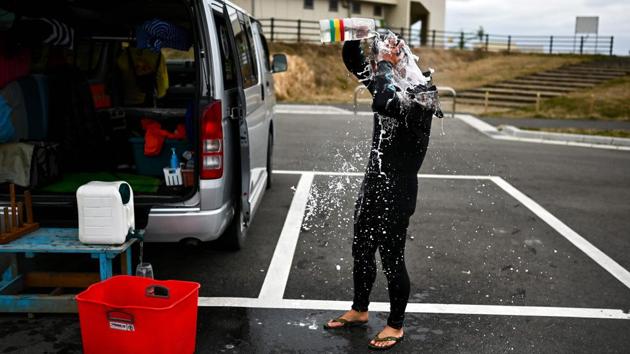
Suzuki washes himself after a surfing session. Nine years later, Prime Minister Shinzo Abe is keen to use the upcoming Tokyo Olympics to showcase Fukushima’s recovery, planning to start the Japan leg of the torch relay from there. Abe’s government also lifted an evacuation order for parts of Futaba, one of two towns hosting the nuclear plant, to allow the torch relay to go through. (Charly Triballeau / AFP)
5/7
 View Photos in a new improved layout
Updated on Mar 11, 2020 4:43 PM
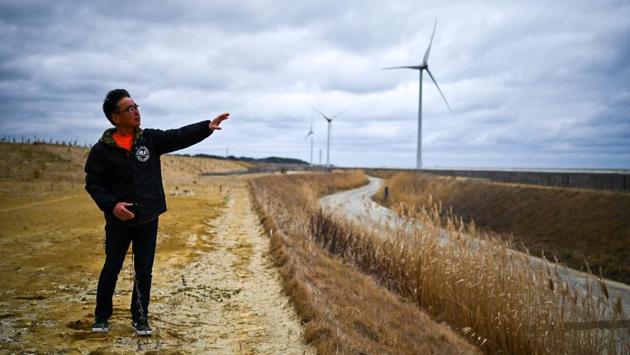
Suzuki stands at the location of his former shop which was washed away during the 2011 tsunami. Suzuki said he appreciates that Fukushima may receive a boost from being portrayed in the media as “safe” but does not believe in the “Recovery Olympics” touted by the government. “Fukushima will never recover,” he said. “I can never go back to the same place where I used to live and run my shop... Fukushima will be stigmatised in history, forever.” (Charly Triballeau / AFP)
6/7
 View Photos in a new improved layout
Updated on Mar 11, 2020 4:43 PM
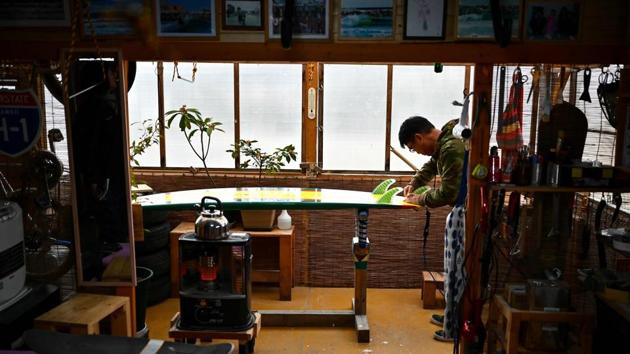
Suzuki inside his workshop. Last summer, the city of Minamisoma officially opened Suzuki’s home beach to visitors for the first time since the accident. “It was a wonderful feeling to see children frolic in the rough water of the shore. They hadn’t even tasted salty seawater until then,” he said. (Charly Triballeau / AFP)
7/7
 View Photos in a new improved layout
Updated on Mar 11, 2020 4:43 PM


