

 E-Paper


Indra Jatra festival
1 / 9

 View Photos in a new improved layout
Updated on Sept 29, 2012 10:57 pm IST
A monkey moves past devotees watching a chariot procession of Nepal's living goddess during the Indra Jatra festival in Katmandu, Nepal. During the week long festival, which marks the end of the monsoon season and celebrated by both Hindus and Buddhists, Nepal's living goddess is taken around the main parts of Katmandu in a wooden chariot pulled by supporters. AP/Binod Joshi
2 / 9
 View Photos in a new improved layout
Updated on Sept 29, 2012 10:57 pm IST
Devotees gather to watch a chariot procession of Nepal’s living goddess during the Indra Jatra festival in Katmandu, Nepal. AP/Binod Joshi
3 / 9
 View Photos in a new improved layout
Updated on Sept 29, 2012 10:57 pm IST
Devotees participate in a chariot procession of Nepal’s living goddess, during the Indra Jatra festival in Katmandu, Nepal. AP/Binod Joshi
4 / 9
 View Photos in a new improved layout
Updated on Sept 29, 2012 10:57 pm IST
Living Goddess Kumari is pictured as devotees pull the chariot during the Indra Jatra festival in Kathmandu. The annual festival, named after Indra, the god of rain and heaven, is celebrated by worshipping, rejoicing, singing, dancing and feasting in Kathmandu Valley to mark the end of monsoon season. Reuters/Navesh Chitrakar
5 / 9
 View Photos in a new improved layout
Updated on Sept 29, 2012 10:57 pm IST
A mask dancer performs a traditional mask dance during the Indra Jatra festival in Kathmandu. Reuters/Navesh Chitrakar
6 / 9
 View Photos in a new improved layout
Updated on Sept 29, 2012 10:57 pm IST
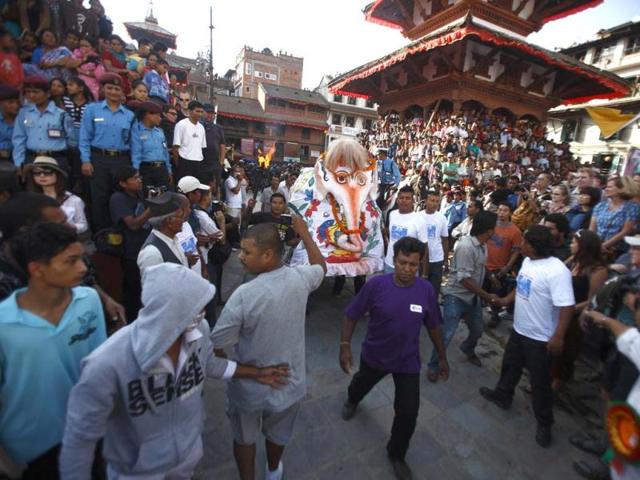
The elephant deity "Pulukishi" is pictured during the Indra Jatra festival in Kathmandu. The festival, during which Indra, the living goddess Kumari and other deities are worshipped, starts after the erecting of a "lingo", a long wooden pole and ends after it is pulled down. Reuters/Navesh Chitrakar
7 / 9
 View Photos in a new improved layout
Updated on Sept 29, 2012 10:57 pm IST
A mask dancer performs a traditional mask dance during the Indra Jatra festival in Kathmandu. Reuters/Navesh Chitrakar
8 / 9
 View Photos in a new improved layout
Updated on Sept 29, 2012 10:57 pm IST
Dancers perform an elephant deity dance on the third day of the week-long Indra Jatra festival in Katmandu, Nepal. Indra Jatra festival, which is celebrated by both Hindus and Buddhists, marks the end of the monsoon season and beginning of autumn. AP/Niranjan Shrestha
9 / 9
 View Photos in a new improved layout
Updated on Sept 29, 2012 10:57 pm IST