
 E-Paper



At Punjab’s first govt-run rehab, 60% addicts have hepatitis-C
Use of infected syringes to inject drugs cause of the disease; currently no test on virus done at state’s outpatient centres.

 Prefer HTon Google


Nearly 60% addicts getting treatment at Punjab’s first government-run de-addiction and rehabilitation centre in Amritsar are suffering from hepatitis C after having used infected syringes while injecting drugs.
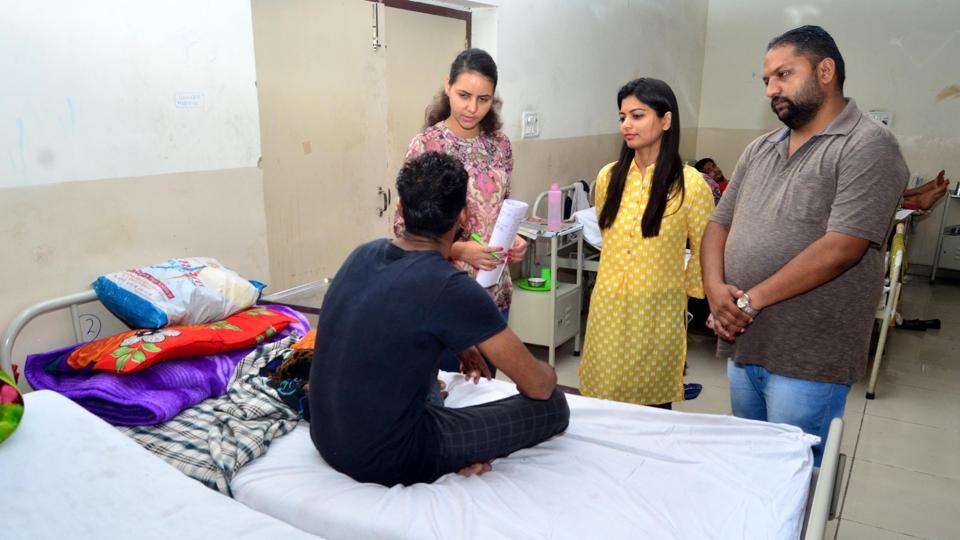
Even as only 35 addicts were admitted to the Swami Vivekananda Drug De-addiction and Rehabilitation Centre at the Government Medical College here in June, the number has mow swollen to more than 100 after a spate of deaths due to drug overdose incidents across the state.
The centre, constructed at a cost of ₹5 crore, was inaugurated by the then Shiromani Akali Dal-Bharatiya Janata Party (SAD-BJP) government in July 2015.
Confirming the figure, Dr PD Garg, in-charge of the centre, said, “When patients come here for treatment, we conduct several tests, including hepatitis C, on them. Intravenous drug abuse with the use of contaminated used needles is the most common cause of transmission of hepatitis C virus. If one does not get regular treatment, hepatitis C can claim their life in 10 years.”
The addicts being treated at the outpatient opioid-assisted treatment (OOAT) centres are not undergoing hepatitis C test, said Dr Garg, a psychiatrist. There are as many as 82 OOAT centres in Punjab and the majority of drug addicts are being treated there.
Harikrishan Arora, a social activist, said, there might be thousands of hepatitis C-affected patients getting treatment at in Punjab OOAT centres. The state government should make it mandatory for rehabilitation centres, be they inpatient or outpatient, to conduct all important tests before starting the treatment of drug addicts, Arora said.
“Nearly 85% of people infected with the disease fail to get rid of the virus and become chronically infected,” said Dr Garg. Nearly 15,500 patients were registered at OOAT centres in the state till July 18.
Dr Jaspreet Singh, in-charge of Bhagupur OOAT centre in Patti (Tarn Taran district), said they were conducting such tests regularly till June but after the number of patients coming to these centres swelled in July, it became difficult for them to do this. “We are likely to get more staff soon. Then we will be able to start conducting these tests,” he said.


