
 E-Paper



Mumbai is the ‘mother of redevelopment models’, CREDAI-NATCON leadership urges other cities to emulate it
Mumbai is the ‘mother of redevelopment,' with other cities having much to learn, CREDAI leadership said at NATCON 2026 in Kolkata

 Prefer HTon Google


Mumbai has led the way in redevelopment and is widely seen as the ‘mother of redevelopment models’ in India. Other cities should emulate the Mumbai model, which offers key lessons as redevelopment becomes not just a real estate issue but a social necessity and an essential part of upgrading urban infrastructure, CREDAI leadership said at the 24th NATCON, being held in Kolkata from October 2 to 4.
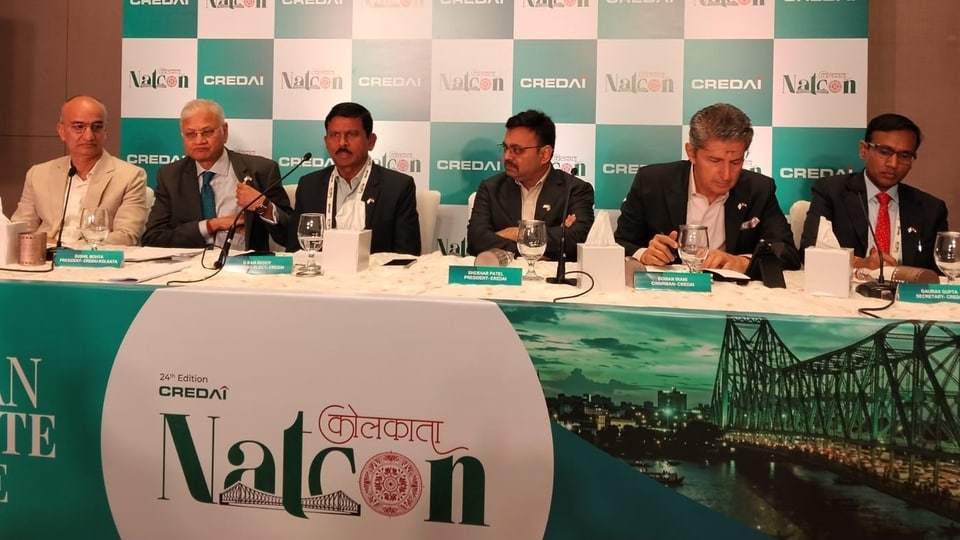
“Mumbai has consistently led the way; it is the mother of redevelopment models, and other cities should learn from the Mumbai model,” Boman Irani, chairman, Credai, told Hindustan Times.
Shekhar Patel, president, Credai, said that with India expected to be about 60% urbanised by 2047, redevelopment will become a necessity.
“Mumbai saw its first redevelopment projects nearly 30 years ago, while several other cities have already begun the process. Ahmedabad, for instance, has more than 50 redevelopment projects underway,” he said.
Every city will eventually need a redevelopment framework. In Chennai, for example, many houses are 50–60 years old, he said.
“Redevelopment is not merely a real estate issue; it is a social requirement and an essential part of upgrading urban infrastructure. Governments should therefore focus on creating clear redevelopment policies for cities across the country,” Patel said.
Maharashtra's new housing society redevelopment rules
Commenting on the recent changes introduced to the redevelopment policy in Maharashtra, Irani said that the changes introduced by the Maharashtra government earlier this week are largely about how developers are selected and ensuring that residents have a greater say in the process.
“A larger section of residents living in a building should be directly informed about and involved in redevelopment decisions. This is a fair approach and could also benefit more organised developers,” Irani said.
He said there is also an issue with the two-year redevelopment provision that we have brought to the government's attention.
Sushil Mohta, president, Credai, West Bengal, said that the Credai chapter in the state has approached the Urban Development Department in Kolkata. There is considerable scope for the redevelopment of old housing societies as well as slum areas in the city.
“Kolkata can learn from Mumbai's experience and identify areas that can be redeveloped,” he said.
Also Read: What is driving the growing interest of large corporates in Mumbai's cluster redevelopment projects?
Earlier this week, the Maharashtra government tightened the redevelopment process for co-operative housing societies, placing greater emphasis on member participation, time-bound documentation and majority approval in the appointment of developers.
Under a Government Resolution (GR) issued by the Co-operation Department on September 30, 2026, a redevelopment decision requires a two-thirds quorum and approval from at least 51% of the society’s total members. The GR also permits virtual participation in specified cases, including for senior citizens and members living abroad. Members living abroad, those who are critically ill, persons with disabilities or those unable to attend for unavoidable reasons can participate through VC/remote systems, the new policy document states.
Further, members voting in favour of redevelopment must provide written consent. The process also requires societies to invite at least three competitive bids from developers, with provisions to extend the deadline if fewer bids are received.
The government has mandated that the Development Agreement (DA) be executed within three months, and that the registered Permanent Alternative Accommodation Agreement (PAAA) be signed within three months of the DA’s registration.


