E-Paper



Dussehra is over elsewhere, but in Himachal's Kullu, the festivities have just begun
Kullu in Himachal Pradesh celebrates Dussehra differently from much of India, with festivities beginning on Vijayadashami.

 Prefer HTon Google


While Dussehra celebrations conclude on Vijayadashami in much of India, a hill town in Himachal Pradesh follows a different tradition. Here, the festival begins on the very day it marks the end of celebrations elsewhere. The centuries-old custom has its roots in the region's royal history and distinctive religious practices.
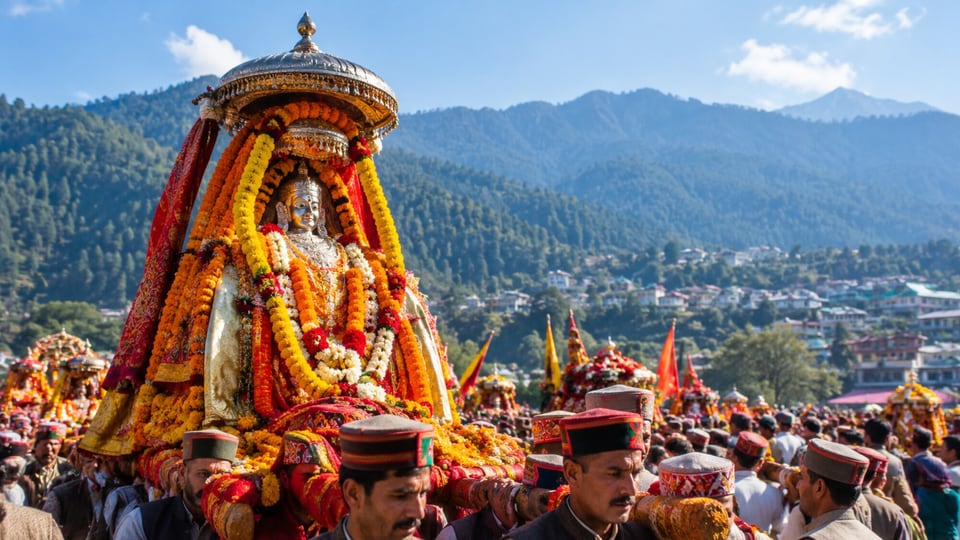
Why Kullu celebrates Dussehra after Vijayadashami
The tradition is linked to Raja Jagat Singh, who ruled Kullu in the 17th century. According to the Ministry of Tourism's Utsav portal, the king installed an idol of Lord Raghunath, a form of Lord Rama, brought from Ayodhya at the palace temple in Kullu.
Lord Raghunath subsequently became the principal deity of the valley, and the festival developed around his worship. Unlike in many parts of India, where Dussehra celebrations culminate on Vijayadashami with the burning of Ravana's effigies, the day marks the beginning of Kullu's week-long festivities.
(Also Read: Costco CEO Ron Vachris went from forklift driver to CEO following his father’s advice to ‘not chase a title’)
The role of Lord Raghunath in Kullu Dussehra
Lord Raghunath remains the central figure of the festival. The celebrations feature a grand Rath Yatra, during which his decorated wooden chariot is pulled by devotees to Dhalpur Maidan. The procession is joined by village deities carried on elaborately decorated palanquins, accompanied by priests, musicians and devotees.
According to the official Kullu district administration website, the gathering reflects the region's deep-rooted religious beliefs and cultural traditions. The deities assemble to pay their respects to Lord Raghunath, bringing together communities from across the valley.
The festival also includes traditional music, folk performances and Nati dances, along with exhibitions and local markets. These activities make Kullu Dussehra a cultural gathering as well as a religious celebration.
How Kullu Dussehra differs from celebrations elsewhere
In many parts of India, Dussehra is associated with Ramlila performances and the burning of effigies of Ravana, symbolising the victory of good over evil. Kullu follows a different tradition, with the arrival and gathering of village deities forming the centrepiece of the celebrations.
(Also Read: Rare egg of extinct giant moa bird to return to New Zealand after 60 years in US collection)
The festival typically continues for seven days after beginning on Vijayadashami. In 2026, the official Kullu district website lists the International Kullu Dussehra celebrations from October 21 to 27.
Over the years, the event has grown into a major cultural attraction, drawing visitors who want to experience Himachal Pradesh's religious traditions, folk arts and local heritage.