
 E-Paper



Can Donald Trump force a ceasefire in Gaza?
As the two leaders meet on July 7th, Mr Trump is hoping to be able to announce an end to the war in Gaza


 Prefer HTon Google


TWO WEEKS after Israel’s dramatic war against Iran, Binyamin Netanyahu is arriving in Washington to bask in glory alongside Donald Trump. But to receive a victor’s reception at the White House, Israel’s prime minister may have to yield to America’s president on another matter.
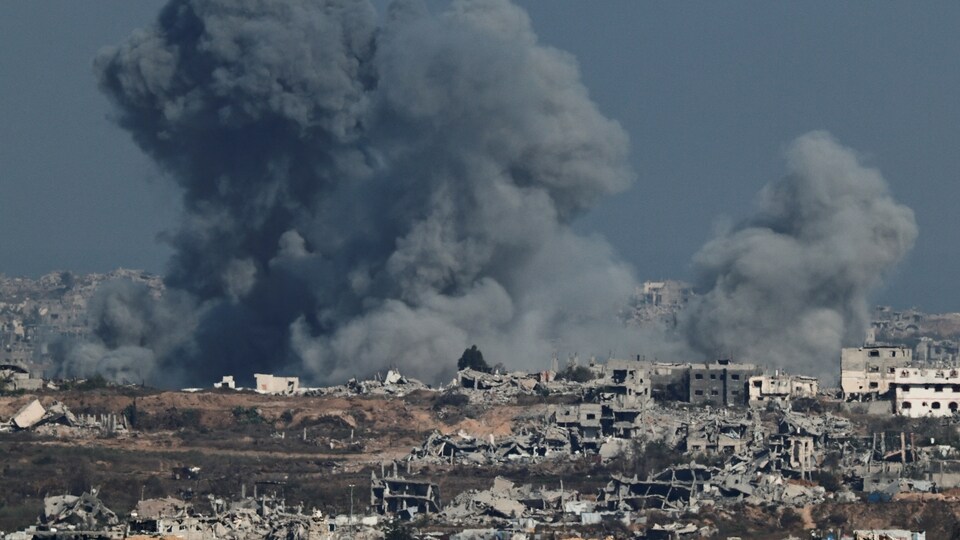
As the two leaders meet on July 7th, Mr Trump is hoping to be able to announce an end to the war in Gaza. Thousands of kilometres from Washington, in Doha, negotiators for Israel and Hamas, the Islamist movement that began the war with its surprise attack and massacre 21 months ago, will be in feverish talks to seal a deal in time for Mr Netanyahu’s visit to America.
The parties have agreed in principle on the framework of an agreement. During an initial 60-day truce, half of the estimated 50 Israeli hostages still held in Gaza, 20 of whom are believed to be alive, will be released in exchange for more than 1,000 Palestinian prisoners. During the same period there will be further talks aimed at a permanent ceasefire. But a number of important details are still in dispute.
Hamas wants Israel to withdraw from most of the areas it currently holds in Gaza and to allow international organisations to distribute aid in the strip, rather than rely on the distribution hubs Israel has set up (hundreds of Palestinians have been killed trying to reach these hubs since they began operating in early June). The group also wants clear guarantees that the 60-day truce will indeed bring an end to the war. A similar ceasefire earlier this year collapsed when Israel resumed military operations and closed Gaza to aid deliveries after the first phase had ended.
Mr Netanyahu has said the group’s demands are “unacceptable”. Before taking off for Washington he told reporters that he is determined that “Hamas will not be [in Gaza]” once the war is over.
Yet there are reasons to be optimistic that this round of talks will indeed end in a deal. Mr Trump, flush from the ceasefire he imposed on Israel and Iran after America’s strikes on Iran’s nuclear programme, likes the idea of himself as an unparalleled peacemaker. He has made it clear that he expects both sides to accept the deal, claiming he will be “very firm” with Mr Netanyahu.
Mr Netanyahu, for his part, wants Mr Trump’s backing for more strikes if Iran tries to revive its nuclear and missile programmes, as Israeli intelligence fears it is trying to do. Mr Trump may not want to be dragged into another round of fighting with Iran, so Mr Netanyahu has more of an incentive to accept a deal in Gaza this time. At the same, the threat from his far-right coalition partners to leave the government should he decide to end the war is becoming less compelling. Israel will have to hold an election by October 2026 at the latest. For Mr Netanyahu, whose public image has been boosted by the strikes against Iran, an earlier one may not seem like a bad bet.
Hamas, too, is under increasing pressure to compromise. With Iran drastically weakened, it has lost one of its main backers in the region. It still has the support of Qatar and Turkey, but both are anxious to remain in Mr Trump’s good books and have made it clear to the Hamas leaders they expect them to play along. Within Gaza, Hamas has lost ground, both to Israel and to local gangs. A ceasefire now could be its best chance to retain some of its power.
Yet even if a deal is reached this week, the reprieve is likely to be temporary. For the 60-day truce to lead to an end of the war, Mr Trump will have to keep up pressure on both sides. And the would-be peacemaker-in-chief is not known for his attention span.


