
 E-Paper



China top lawmakers discussed Hong Kong security law: Report
Chinese President Xi Jinping’s government announced plans in late May to impose the legislation on the former British colony following an unprecedented wave of protests last year.


China’s top legislative body discussed Hong Kong’s security legislation on Sunday, Radio Television Hong Kong reported, signaling Beijing may soon hand down a measure that pro-democracy activists and business groups say could erode the city’s unique freedoms.
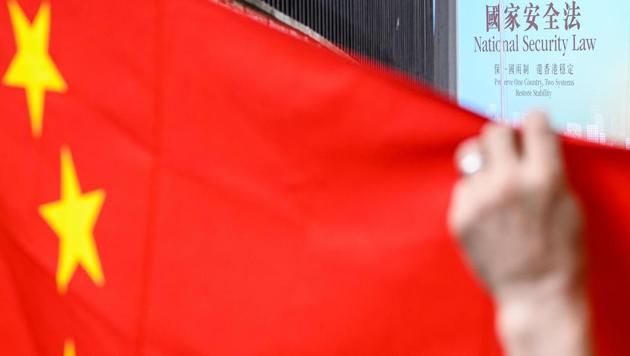
At a three-day meeting that started Sunday, the National People’s Congress Standing Committee considered the legislation to punish acts of secession, subversion, terrorism and collusion with foreign forces, RTHK said, citing Hong Kong non-voting delegate Ip Kwok-him. The NPC has received various opinions about the proposed law and will make “some adjustment,” but the change will not be substantial, he said.
Ip said he believed the proposed law for Hong Kong was included on the voting agenda, but details will not be published before the vote has taken place.
Stanley Ng Chau-pei, another Hong Kong delegate who attended the meeting with no voting rights, told local television TVB that he had seen the latest draft of the legislation, and that the group discussion he sat in formed “consistent opinion” on the bill. He declined to elaborate on the contents of the legislation and wasn’t sure if the three-day meeting would pass the bill.
Chinese President Xi Jinping’s government announced plans in late May to impose the legislation on the former British colony following an unprecedented wave of protests last year. If the proposed law passes during this NPC session, it could come into effect in time for the symbolic July 1 anniversary of the city’s return to Chinese rule in 1997.
Pro-democracy politicians and foreign governments including the U.S. have criticized the proposed law as a blow to the “one country, two systems” principle that keeps Hong Kong’s legal system separate from the mainland. About 56% of residents oppose the legislation, compared with 34% who support it, according to a Reuters/Hong Kong Public Opinion Research Institute poll released Friday.
Hong Kong officials have defended the new law as necessary to maintain social stability after last year’s protests, despite acknowledging they haven’t seen the full proposal. Details released by state media last week showed that Beijing planned to set up a local intelligence bureau, take control of some sensitive cases and remove the court’s ability to select judges on security matters.


