
 E-Paper



China-Japan tiff over Taiwan festers as both sides refuse to back down: How historical dispute continues to snowball
The Japanese PM recently said the country's military could get involved if Beijing takes any armed action on Taiwan

 Prefer HTon Google


China's embassy in Tokyo has again cautioned its citizens against visiting Japan, claiming that there have been reports of Chinese nationals facing "unprovoked insults and beatings" in recent days. The issue, in fact, is more historical and political — centred around China's territorial claim on Taiwan — as the Japanese PM recently said the country's military could get involved if Beijing takes any armed action on Taiwan.
The Chinese embassy has now advised those already in Japan to step up safety precautions, according to a statement released on its social media account. It also referred to data claiming an increase in violent crimes in Japan in recent years.
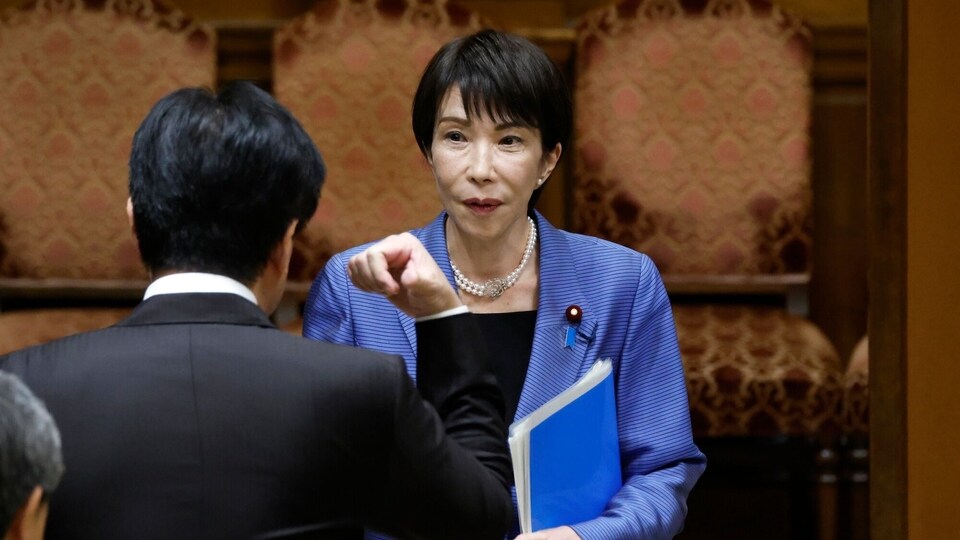
China first cautioned its citizens against visiting Japan on November 14, after PM Sanae Takaichi said a Chinese attack on Taiwan could amount to a "survival-threatening situation" for Japan and trigger a military response. She has refused to back down.
It's not the first time Japan has faced China's economic wrath. In 2012, protesters in China attacked Japanese businesses after a territory dispute over some uninhabited islands. Group tours to Japan were cancelled too.
How much will this dispute cost Japan?
Beijing is predictably using its economic clout to pressure Tokyo. It is similar to its tariffs on Australian wines in 2020, and restrictions on Philippine banana imports in 2012, over diplomatic disputes, news agency AP noted in a report.
Based on the 2012 instance — the dispute over islands — when Chinese visitors fell by one-fourth, economist Takahide Kiuchi has estimated the current travel advisory could cost Japan 1.8 trillion yen ($11.5 billion). This could knock 0.3 percentage points off its already low annual economic growth.
China was on track this year to displace South Korea to take back its pre-pandemic position as the top source of tourists to Japan. More than 8 million Chinese visited in the first 10 months of this year, or 23% of the total, according to the Japan National Tourism Organization.
On the ground, a tearoom run by local businesswoman Rie Takeda in Tokyo is an example of how that's changing. About 3,000 Chinese visit the tearoom in an alley in Tokyo's historic Asakusa district every year. Some 200 have already canceled bookings for her tea ceremony class, as far ahead as January.
“I just hope the Chinese tourists return by Chinese New Year," she said, referring to the major holiday period in February. Past experience suggests it may take longer than that.
How the dispute might sway, experts weigh in
“China’s countermeasures are all kept secret and will be rolled out one by one,” Liu Jiangyong, an international relations professor at Tsinghua University in Beijing, told AP.
“The diplomatic challenge for both sides is that they have their own domestic audiences and so they don’t want to be perceived as backing down," said Sheila A Smith, author of ‘Intimate Rivals’, a book on Japan-China relations.
With other countries, the disputes have died down after leaders changed in those countries. The new leaders have not had to bear the baggage of past statements.
But the pressure appeared to extend beyond tourism too. The Chinese release of two Japanese movies has suddenly been postponed. A comedy festival in China's Shanghai even cancelled shows by a Japanese entertainment company.
It's npw unclear if Beijing will indeed end a two-year-old ban on Japanese seafood. China could also target its export of rare earths, which are vital to car production and other industries. Beijing has lately proved that the minerals were a weak point even for Donald Trump's aggressive American administration.
What Japan PM Sanae Takaichi has said
PM Sanae Takaichi has said she hadn’t planned to get into the topic of Taiwan specifically when she made remarks about Japan possibly using its military against other countries.
“I didn’t intend to mention any specifics,” Takaichi said Wednesday in parliament, when asked about her remarks. “As I was asked about specific cases, I answered sincerely within that context.”
Takaichi added that she continues to aim for a strategic, mutually beneficial relationship with China, as agreed with President Xi Jinping during their first meeting last month.
But China’s foreign ministry spokeswoman Mao Ning, when asked about Takaichi’s latest comments, said “China’s attitude remains clear. We seriously ask Japan to retract the erroneous remarks and act on its political commitment to China.”
'One China' principle at heart of dispute
“China and the international community want to ascertain what Japan means exactly by this ‘consistent position’, and if they still uphold the ‘One China’ principle,” Mao said.
In the two nations’ 1972 joint statement formalising diplomatic relations, Tokyo didn’t specifically agree to the principle. Instead it said it “fully understands and respects” China’s view that Taiwan is an “inalienable part” of its territory.
The latest spat between Asia’s two biggest economies shows no signs of easing so far with the ramifications spreading to the US. President Trump held a call with Xi earlier this week, followed by another call with Takaichi on Tuesday, news agency Bloomberg reported.


