
 E-Paper



G20 Warned Of Growing Threat to Financial Stability Posed By New AI Models
The head of the G20’s Financial Stability Board wrote that potential disruptions triggered by AI wouldn’t stop at national borders


 Prefer HTon Google


New artificial-intelligence models pose a growing threat to the stability of the global financial system and measures to ensure their safe release should be a priority, the head of the G20’s Financial Stability Board wrote in a letter to regulators from the world’s leading economies Monday.
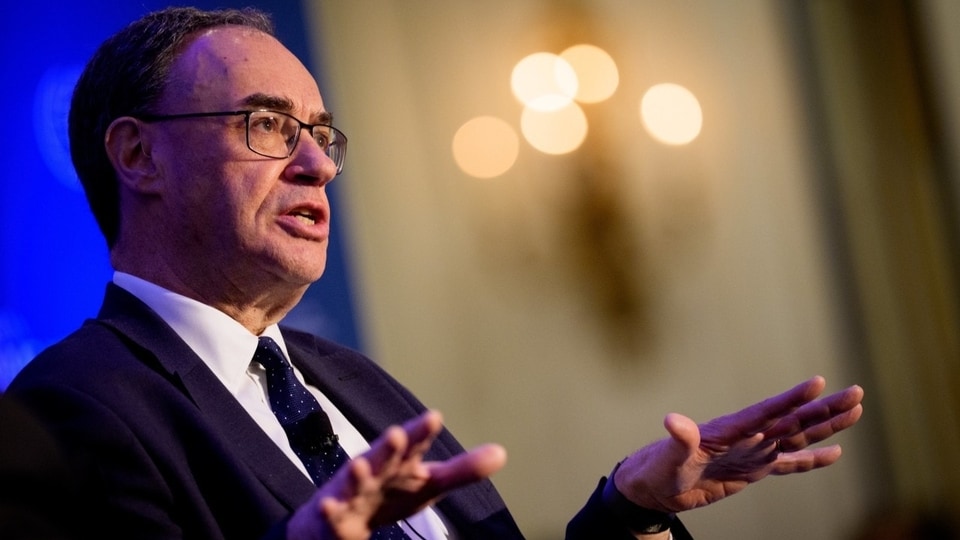
Addressed to central bank governors and treasury chiefs from the Group of 20 largest economies, the letter from Andrew Bailey follows a series of incidents over recent months in which new models from companies including OpenAI, Anthropic and Meta Platforms have used the internet to hack other organizations.
Regulators worry that new models could find previously unidentified gaps in the cybersecurity systems of financial institutions, and quickly adapt to circumvent new fixes. The European Central Bank has called on banks in the eurozone to present a plan of action to address the increased threats posed by new AI models by October 31.
“The risk landscape has been further complicated by the emergence of frontier AI models, which are showing increasingly sophisticated autonomy and problem-solving abilities, as well as threat capabilities,” wrote Bailey, who is also governor of the Bank of England.
G20 finance officials meet later Monday in Asheville, North Carolina. The FSB is the coordinating body for G20 financial regulators.
Bailey told officials that potential disruptions triggered by AI wouldn’t stop at national borders, given shared technology providers and infrastructure.
“Differences in legal frameworks, cyber capability, resilience and recovery capacity across jurisdictions could therefore have consequences well beyond the jurisdiction in which an incident originates and may themselves become a source of vulnerability,” Bailey wrote.
To reduce the risk of a cyber attack by or employing an AI model spreading across the global financial system, Bailey told regulators that efforts to ensure the safe release of new models should be a priority.
“Many jurisdictions do not have the protocols in place to manage the development, release, and deployment of advanced frontier AI models, heightening risks for the financial sector and beyond,” he wrote.
Bailey said banks and other financial institutions should prepare for “more severe scenarios involving simultaneous disruption across multiple firms or shared technology dependencies.”
Included in those preparations should be the capacity to quickly restore computer systems that have suffered severe damage.
“These developments reinforce the importance of robust response and recovery capabilities, including the ability to restore critical systems and data from ‘bare metal’ following a significant cyber incident,” Bailey wrote.
Write to Paul Hannon at paul.hannon@wsj.com


