
 E-Paper



India to benefit as Trump eases US policy on sale of advanced drones
India, a Major Defence Partner of the US, has plans to purchase a large number of armed and surveillance drones from countries such as the US and Israel.


The US has dropped some restrictions on the sales of advanced drones to reinforce the armies of its allies and to promote American exports and jobs, a move that is expected to benefit countries such as India.
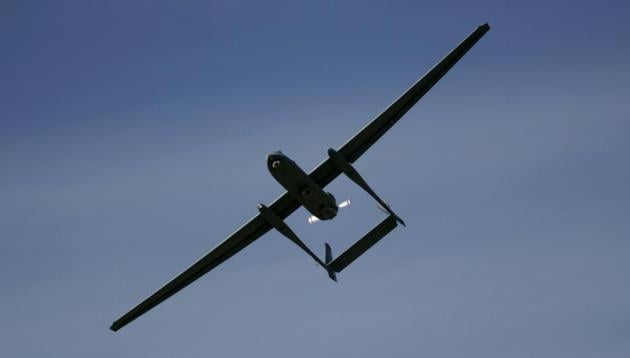
President Donald Trump signed a National Security Presidential Memorandum approving a new Conventional Arms Transfer (CAT) policy, White House spokesperson Sarah Sanders said on Thursday. He also established a new policy for the export of US-made unmanned aerial systems or drones.
India, a Major Defence Partner of the US, has plans to purchase a large number of armed and surveillance drones from countries such as the US and Israel. It uses drones for surveillance of the borders with Pakistan and China and to monitor the movement of ships off its vast coastline.
The new policy on arms transfers will allow American firms to directly make sales to US allies rather than via the US government, said Tina Kaidanow, the principal deputy assistant secretary in the Bureau of Political-Military Affairs.
“That’s a major change. And we will give them additional space for marketing of these systems and for the eventual sale, assuming that they meet all other criteria, the sale meets all the other criteria that we would normally consider,” she added.
The new policy on conventional arms reflects priorities set out in Trump’s National Security Strategy and provides a framework whereby all US agencies will review and evaluate proposed arms transfers and approve commercial sales by American companies, Sanders said.
“These updated policies reflect the president’s commitment to peace through strength by building up our allies and partners, expanding opportunities for American industry, creating American jobs, and advancing the national security interests of the US,” she said.
Peter Navarro, assistant to Trump for trade and manufacturing policy, told reporters that providing US allies and partners with greater access to American weapons will reduce their reliance on Chinese knock-offs and Russian systems, consistent with the Countering America’s Adversaries Through Sanctions Act.
“For too long we have hamstrung ourselves and limited our ability to provide our allies and partners with the defensive capabilities they require, even when in the US interest. President Trump’s new CAT policy, which reforms the myopic 2014 policy of his predecessor, will ensure that American interests are put first in our own decision-making,” he said.
Expanding international sales will force the US industry to invest and innovate and this will keep the country at the forefront of emerging defence technologies and create thousands of jobs. “The US aerospace and defence industries contribute almost a trillion dollars annually to our economy and support about 2.5 million jobs while maintaining a significant global trade surplus,” he said.
Though the US leads the way in drone technology, restrictive policies enacted by the previous administration have led to aggressive marketing by competitors such as china. The international market for drones is forecast to be worth more than $50 billion a year within the next decade.
“Already, we are seeing Chinese replicas of American UAS technology deployed on the runways in the Middle East. In June at the Paris Air Show, China’s Chengdu Aircraft Group featured its Wing Loong II medium-altitude, long-endurance UAS, a clear knockoff of the General Atomics Reaper,” Navarro said.
The US pioneered the use of drones, some of them flown by pilots half-a-world away through satellite links to a ground station, for spotting missions and missile strikes. The drones have been deployed by the US military in support of overt deployments in the war on terror, and by the CIA for covert targeted strikes to kill suspected militants.
Critics of their deployment say that, because they can be used without putting American pilots in harm’s way, they encourage commanders and presidents to resort more easily to lethal force.
US officials defend the technology, arguing its proper use allows commanders to study targets more carefully and to carry out precision strikes, minimising the threat to allies and civilians.


