
 E-Paper



NASA once sent chicken eggs to space with funding from KFC
The project began with a schoolboy's idea to study how chicken embryos develop in microgravity.

 Prefer HTon Google


The 1980s had no shortage of strange ideas, but this one might take the cake… or the chicken.
Long before Kentucky Fried Chicken sent a Zinger sandwich towards the edge of space as a publicity stunt, KFC backed a much more serious space experiment involving something far less crispy: chicken eggs.
In the 1980s, a schoolboy wanted to find out what would happen to chicken embryos in microgravity. NASA eventually worked with him and the project received $50,000 in funding from KFC.
It started with a ninth-grader
The idea came from John Vellinger, a ninth-grader from the US state of Indiana's Lafayette. He was curious about what would happen to a developing chicken embryo when gravity was largely taken out of the equation.
ALSO READ | Why Apple was spending $35 million every year flying engineers to China
On Earth, a hen regularly turns her eggs. Gravity causes the yolk to settle, so turning the egg helps ensure normal development. Vellinger wondered whether an embryo would develop differently if the yolk could float inside the shell.
He took the idea to a NASA-sponsored student science competition and kept working on it through high school. His experiment eventually won the national competition in 1983.
NASA then began looking for a corporate sponsor to help get the experiment into space. The search led to KFC.
By 1985, Vellinger was studying mechanical engineering at Purdue University when NASA arranged for him to present the project to the fast-food company. KFC agreed to put up $50,000 and provided engineer Mark Deuser to help build the equipment.
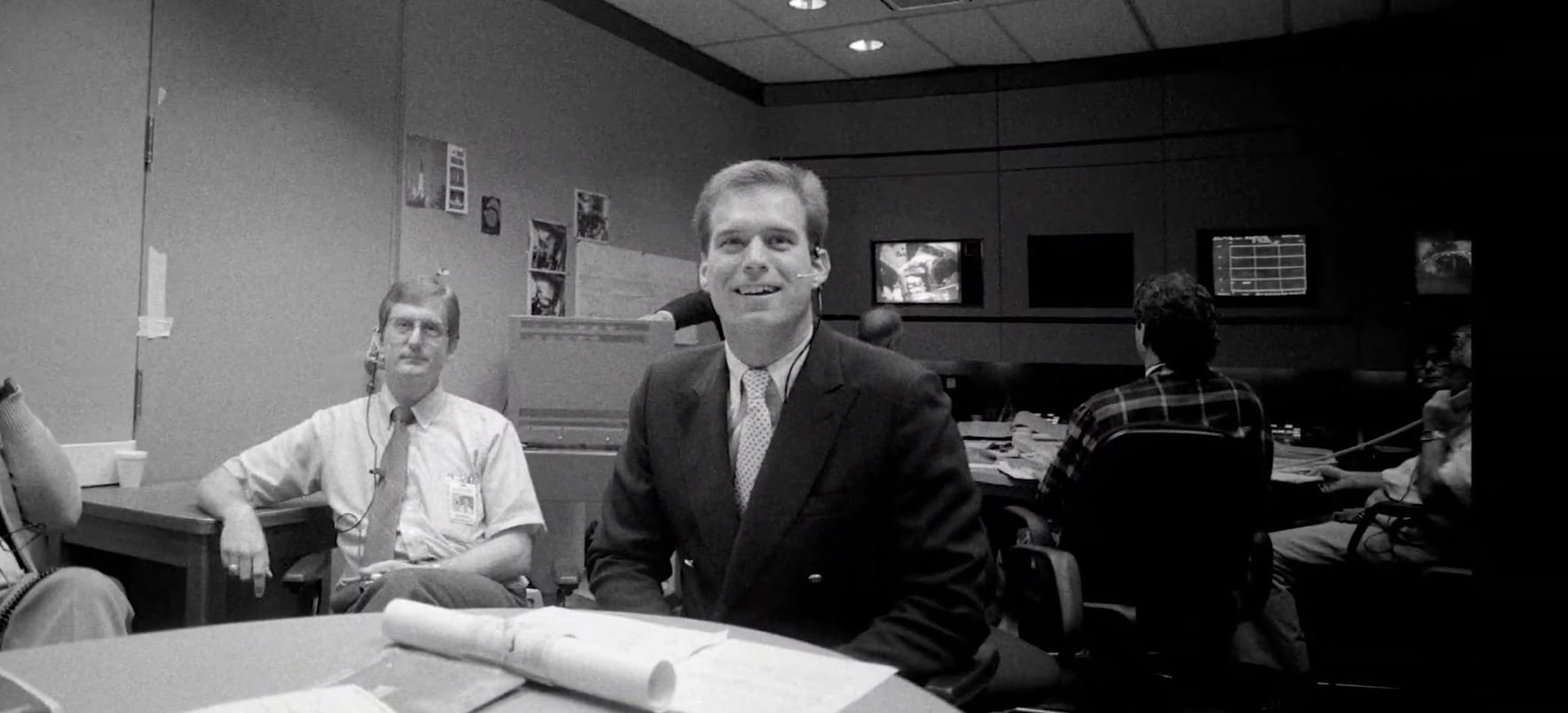
The experiment was officially known as "Student Experiment 83-9 Chicken Embryo Development in Space", but the catchier name was "Chix in Space".
Vellinger, in a KFC press release, explained at the time: “In space, since there's no gravity, the yolk will be suspended inside the egg which may make a difference in the way that the chick develops. My hypothesis is that without gravity dragging the yolk down, the embryo will develop more efficiently, producing a bigger or better developed chicken.”
KFC's unusual NASA partnership
Commercial brands were already experimenting with space-related publicity. In 1985, Coca-Cola and Pepsi were competing to get their drinks aboard the Space Shuttle.
The KFC inspired plan involved fertilised chicken eggs being placed inside a specially designed incubator. The unit had to withstand the vibrations of a rocket launch while maintaining the right temperature and humidity for the embryos.
The first version was designed to carry 32 White Leghorn eggs. Some eggs were at an early stage of development, while others were further along, allowing researchers to compare how embryos at different stages responded to microgravity.
Vellinger hoped the experiment would provide insights not just into chickens, but into a much bigger question.
“We hope this will give us valuable data about embryo development under zero-gravity conditions, toward the goal of determining the feasibility of raising food sources...Longer term, this can help us determine whether humans can reproduce in a weightless environment,” he said in the KFC press release at the time.
The dark outcome
The first ‘Chix in Space’ experiment was scheduled to fly aboard Space Shuttle Challenger on January 28, 1986. Christa McAuliffe, who was set to become the first teacher in space, was assigned to operate the experiment. Vellinger trained McAuliffe and her backup, Barbara Morgan, to use the equipment.
The experiment never made it into orbit. Challenger lifted off on a bitterly cold morning from Florida. Just 73 seconds after launch, the shuttle broke apart, killing all seven crew.
The 32 chicken embryos aboard the shuttle were also lost.
ALSO READ | When the British built a 4,000-km wall of thorns across India to tax a kitchen ingredient
The chickens got a second chance
The story did not end with Challenger. NASA and KFC remained interested in the experiment, and Vellinger and Deuser rebuilt and improved the incubator.
Three years later, on March 13, 1989, the experiment finally made it into space aboard Space Shuttle Discovery on mission STS-29.
This time, 32 fertilised broiler eggs were carried aboard. Some had been incubated for two days before launch, while others had already developed for nine days.
The eggs spent five days aboard Discovery as the shuttle orbited Earth.
The experiment was monitored by the crew, while matching eggs on Earth were used as controls. And then came the result everyone was waiting for.
Meet Kentucky, the space chicken
Less than a week after Discovery returned to Earth, one of the eggs hatched.
The chick was named Kentucky, an appropriately KFC-inspired name. It was the first of eight chicks to hatch from the space-flown eggs.
All eight came from the group that had been incubated for nine days before launch.
The chicks were monitored after birth, and the experiment produced another encouraging result: when the space-grown chickens reached adulthood, one of the females successfully reproduced with a male, producing healthy offspring.
"This project may yield data [to] help scientists understand the loss of bone mass in astronauts, prospects for human reproduction in space — and chicken's potential as a food source in space,' Vellinger said in 1989."
ALSO READ | This Maharashtra island, popular among tourists, appears for just 30 minutes a day
Chicken eggs to the future of space research
The chicken experiment became part of the longer history of studying how animals develop in microgravity.
The Soviet Union had already flown fertilised quail eggs aboard the Salyut 6 space station in 1979. Later, quail experiments aboard the Mir space station produced chicks in orbit, providing further insight into whether birds could develop and survive away from Earth.
Vellinger and Deuser continued working in space research. They later cofounded Techshot, a company developing hardware for biological and other experiments in space.
And the original KFC-backed incubator? It eventually found a home in a museum.


