
 E-Paper



Laos opens $6bn railway line built under China’s BRI
A 1000 km-long high-speed railway linking China and the southeast Asian country of Laos was inaugurated on Friday as part of China’s Belt and Road Initiative (BRI), a global infrastructure project

 Prefer HTon Google


A 1000 km-long high-speed railway linking China and the southeast Asian country of Laos was inaugurated on Friday as part of President Xi Jinping’s signature Belt and Road Initiative (BRI), a global infrastructure project.
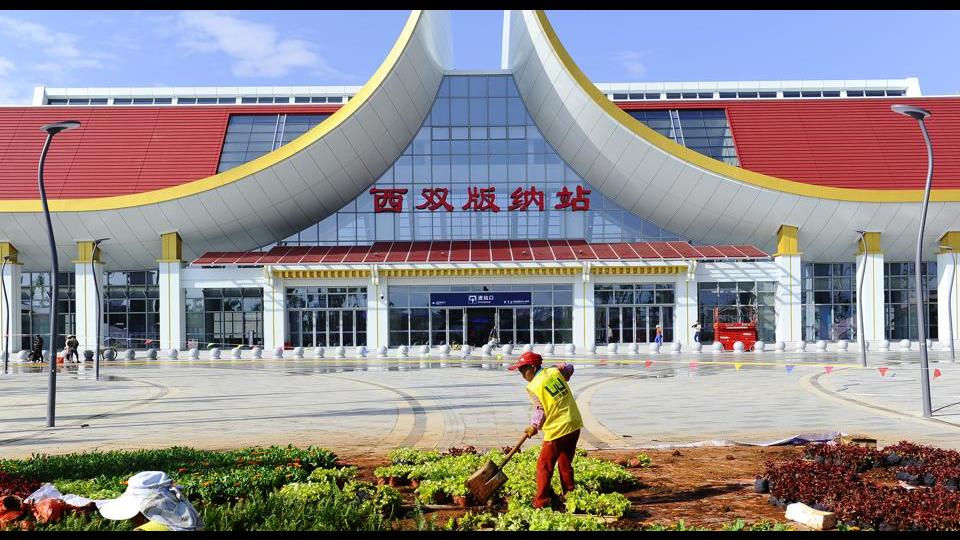
The $6 billion railway, connecting the Chinese city of Kunming with Laotian capital Vientiane was built by a Chinese state-owned company, with China bearing 70% of all construction costs.
While both governments have hailed the project as mutually beneficial and a win-win initiative, economists have warned that it could complicate Laos’ challenges, among the poorer southeast Asian nations, in repaying external debt.
President Xi and his Lao counterpart Thongloun Sisoulith jointly witnessed the opening of the China-Laos railway via video link on Friday.
The construction of the project started in December 2016, and a train departing from Kunming in the morning will arrive in Vientiane in the evening on the same day, according to China State Railway Group.
“With a maximum operating speed of 160 kilometers per hour, trains running on the route will take passengers from Kunming to Vientiane in about 10 hours, including customs clearance time,” a state media report said on Friday.
There are several bridges and tunnels on the route.
“The bridge and tunnel ratio is quite high with that in Chinese section up to 87 percent and Lao section up to 63 percent, including the 1,651-metre Ban Ladhan Mekong Bridge, 1,459-metre Luang Prabang Mekong Bridge, 9,384-metre Ban Sen No. 2 Tunnel, 9,296-metre Ban Nakok Tunnel,” the state-run Xinhua news agency reported.
Laos state news agency KPL on Thursday said the project was part of the government’s strategy to convert Laos “from a landlocked country to a land-linked one”.
The railway will “generate very positive economic returns” for China and possibly other countries, but it is harder to see “exactly what the economic benefits are going to be” for Laos, Scott Morris of the Centre for Global Development in Washington told the Associated Press.
“This is essentially a Chinese public infrastructure project that happens to exist in another country,” he said.
Chinese media, however, said it will benefit both countries.
“The China-Laos railway will bring great convenience to trade and travel between the two countries and become an important part of the north-south artery of the Indo-Chinese Peninsulas in overcoming land transportation difficulties and developing its economy.”


