
 E-Paper


Follow the latest breaking news, major developments and agenda-setting stories from India and around the world with the newsdesk at Hindustan Times. Operating round the clock, the desk brings together experienced editors, reporters and correspondents to deliver fast, accurate and contextual reporting across subjects that influence public policy, governance, business, society and international affairs. The HT News Desk covers politics, elections, government policies, the economy, business and markets, science and technology, the environment, law and order, infrastructure, education, climate issues and geopolitics, while closely tracking developments across states, institutions and global capitals. The team also leads coverage of major breaking news events, policy announcements, court proceedings, natural disasters, public emergencies and significant international developments. Reports published by the newsdesk are based on information gathered from reporters on the ground, official statements, government agencies, court records, regulatory filings, recognised institutions and other authoritative sources. Stories undergo editorial scrutiny and verification processes to ensure accuracy, fairness and relevance, and are updated as events evolve and additional information becomes available. Whether covering a key political decision in New Delhi, an economic policy shift affecting millions, a landmark court ruling or a major global event, the HT News Desk aims to provide readers with reliable, fact-based journalism that delivers not only the latest developments but also the context and analysis needed to understand their wider implications.
 Trending News
Putin, Erdogan discuss Syria, Astana peace process in phone call
In September, Russia, Turkey and Iran agreed to post observers on the edge of a de-escalation zone in Syria’s Idlib region


Russian President Vladimir Putin and Turkish President Tayyip Erdogan discussed an upcoming meeting of the Astana process on the Syrian conflict in the Kazakh capital in late October, the Kremlin said on Saturday.
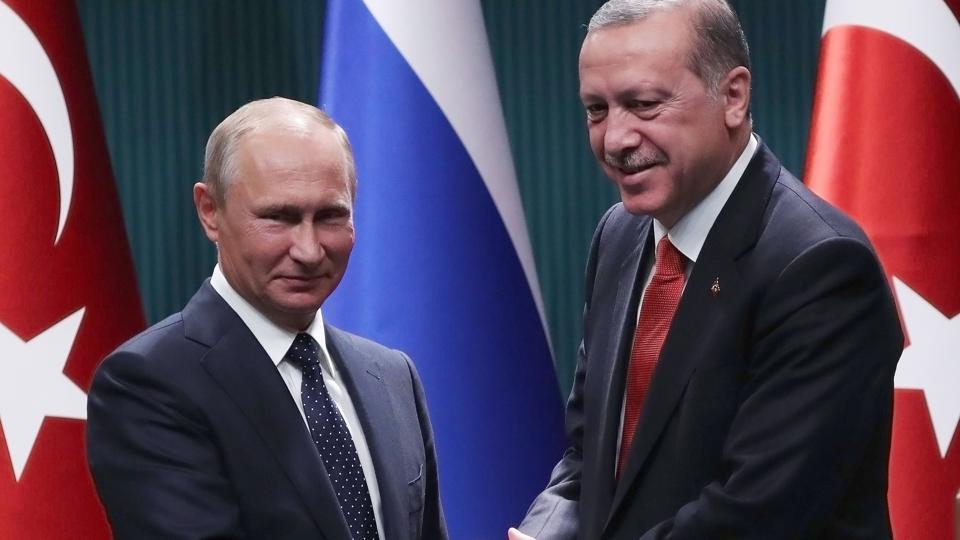
During their phone conversation, Putin and Erdogan talked about joint efforts within the Astana process, including the creation of “de-escalation zones” in Syria, and further coordination towards resolving the Syria situation, the Kremlin said in a statement.
The Astana talks are brokered by Russia, Turkey and Iran. In mid-September, the three countries agreed to post observers on the edge of a de-escalation zone in northern Syria’s Idlib region largely controlled by Islamist militants.
Putin and Erdogan also said the agreements reached between Russia and Turkey in Ankara in late September were being successfully implemented, particularly in trade and economic relations.
“Overall, the conversation was business-like and constructive, directed at strengthening bilateral cooperation and interaction on the regional agenda,” the Kremlin said.
The Russian-Turkish trade relationship has been affected by their dispute over supplies of Turkish tomatoes to Russia which Moscow is yet to fully restore. This dispute has been adding risks to Russian grain trade with Turkey.
Russia, once the largest market for Turkish tomato producers, said this week it will allow purchases of 50,000 tonnes of Turkish tomatoes from only four Turkish producers from Dec. 1.
The announcement came several days after Turkey, the second largest buyer of Russian wheat, said it had imposed a requirement for additional approval of Russian agriculture supplies by the Turkish authorities.


