E-Paper



Trump advisor criticises India over Russian oil, says tariff to hit where it hurts
WH trade advisor Peter Navarro termed India’s oil trade with Russia “opportunistic” and “corrosive” to global efforts being made to isolate the Russian economy.

 Prefer HTon Google


WASHINGTON: White House trade advisor Peter Navarro sharply criticised India for purchasing Russian energy and defence equipment, pledging to “hit India where it hurts” in order to change New Delhi’s policy. In an opinion piece for the Financial Times, Navarro termed India’s oil trade with Russia “opportunistic” and “corrosive” to global efforts being made to isolate the Russian economy.
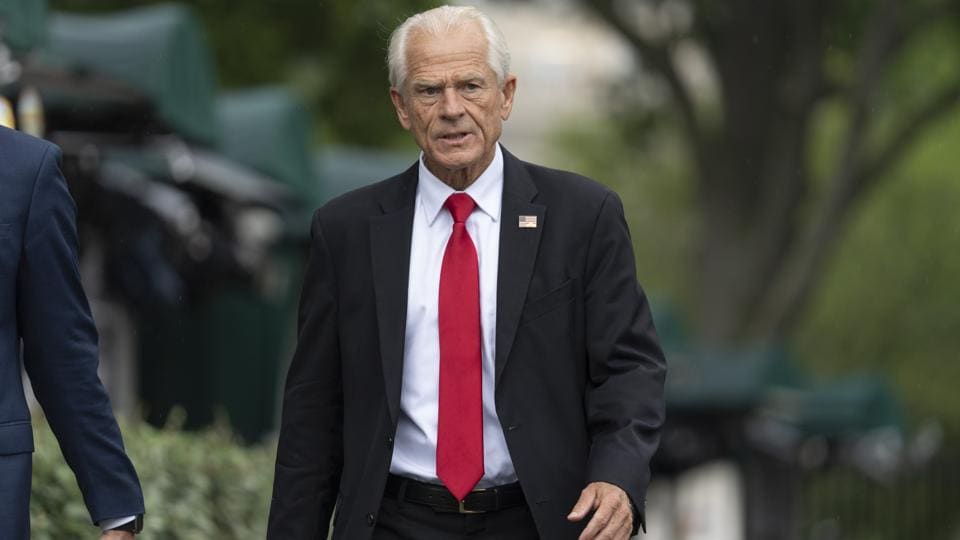
A former economics professor who emerged as a major trade adviser to US President Donald Trump in his first administration, Navarro is seen as a major force behind the US’s retaliatory tariffs on trading partners. In his article, Navarro sought to link what he termed as India’s “high” trade tariffs and “financial support” for Russia’s war in Ukraine.
“As Russia continues to hammer Ukraine, helped by India’s financial support, American (and European) taxpayers are then forced to spend tens of billions more to help Ukraine’s defence. Meanwhile, India keeps slamming the door on American exports through high tariffs and trade barriers. More than 300,000 soldiers and civilians have been killed, while Nato’s eastern flank grows more exposed and the west foots the bill for India’s oil laundering,” wrote Navarro.
In negotiations with the US for a Free Trade Agreement, India has refused to budge on protections for its agriculture, dairy and micro, small and medium enterprises (MSME) sectors from unfettered American imports.
Trump on July 30 announced punitive tariffs of 25% on Indian goods shipped to America. He subsequently added another 25% levy, which is scheduled to come into effect next week, for purchasing Russian oil. India’s foreign ministry has termed the tariffs as “unreasonable” and “extremely unfortunate”.
Navarro also attacked Indian refiners for “profiteering” by purchasing Russian discounted oil and exporting the processed petroleum products to Europe, Africa and Asia, stating that the surge in crude oil imports from Russia after 2022 was not for meeting domestic consumption.
“The Biden administration largely looked the other way at this strategic and geopolitical madness. The Trump administration is confronting it,” Navarro said of Trump’s tariffs on India that have left the country’s exports to the US at a significant disadvantage with those from competing nations.
“This two-pronged policy will hit India where it hurts — its access to US markets — even as it seeks to cut off the financial lifeline it has extended to Russia’s war effort,” Navarro said. “If India wants to be treated as a strategic partner of the US, it needs to start acting like one.”
Navarro’s criticism marks the latest recrimination of India’s ties with Russia from a senior member of the Trump administration. Secretary of State Marco Rubio, Treasury Secretary Scott Bessent and White House Deputy Chief of Staff Stephen Miller have also taken issue with New Delhi’s relationship with Moscow.
Navarro also added to earlier criticisms of India in a new direction, by taking aim at defence technology transfers from US firms to India. In his view, building factories in India and transferring sensitive technologies does not help improve Washington’s trade balance with New Delhi. Navarro also charged India with “cozying up to both Russia and China”.
Former US officials have questioned Navarro’s assertions about the India-Russia relationship.
“The larger issue is that the secretary of State and other principals authorized this piece. So those who know better and are supposed to balance American interests either agree with it, don’t agree with it but authorized it anyway, or just don’t care,” says Evan Feigenbaum, a former diplomat who served as deputy assistant secretary of state for South Asia under George W Bush.
“This completes a strange narrative arc from Washington and has finally shifted U.S. policy from a trade war and strategic friction with China to a trade war and strategic friction with India instead. I’ll say it flatly: that is just strategic malpractice,” adds Feigenbaum, who helped negotiate the India-US civilian nuclear deal during the mid-2000s.