
 E-Paper



Why Bangladesh is seeing a shortage of condoms, other contraceptives
Now, because of funding constraints and staff shortages, condom stocks are expected to be exhausted in 38 days in Bangladesh.

 Prefer HTon Google


Bangladesh is dealing with another major problem, aside from the chaos and violence in the country after the death of student leader Sharif Osman Hadi. A new report says Bangladesh may be unable to supply condoms, the most commonly used contraceptive, for at least a month early next year due to a shortage.
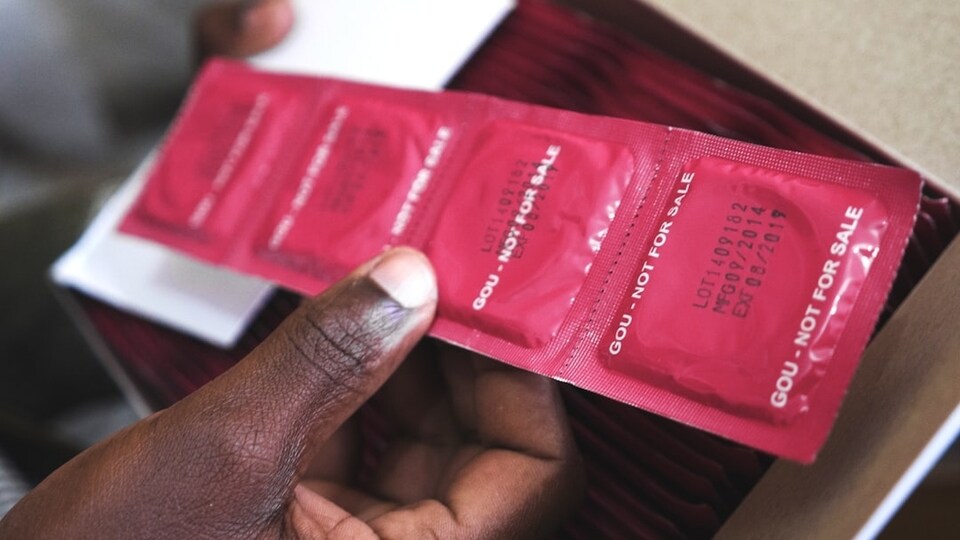
Over the past few years, contraceptive supplies have steadily declined. Now, because of funding constraints and staff shortages, condom stocks are expected to be exhausted in 38 days, The Daily Star reported, quoting officials.
ALSO READ | Why China is imposing 13% tax on condoms after years of exemption | Explained
Bangladesh’s contraceptive shortage
The report says Bangladesh’s family planning programme has taken a hit, as the directorate general of family planning (DGFP) may be unable to distribute condoms for about a month early next year.
Notably, the DGFP provides five types of contraceptives free of cost through its field-level workers across the country. These include condoms, oral pills, intrauterine devices (IUDs), injectables and implants.
According to the national contraceptive summary report, the supply of condoms has fallen by 57 per cent over the past six years.
The other four contraceptive items have also recorded consistent declines since 2019. Oral pills dropped by 63 per cent, IUDs by 64 per cent, injectables by 41 per cent and implants by 37 per cent.
As of December 11 in 2025, the agency had condom stocks for 39 days, implants for 33 days, IUDs for 45 days, oral pills for five months and 18 days, and injectables for six months and 15 days, the Bangladeshi outlet reported.
Abdur Razzaque, director of the DGFP’s logistics and supply unit, told The Daily Star, “These contraceptive items could be restocked soon, provided that an ongoing legal issue over the purchase is resolved.”
However, he said condoms are likely to run out, leaving people without supplies for at least a month.
Meanwhile, a shortage of field-level workers has added to the problem, DGFP director general Ashrafi Ahmad said, adding that recruitment for some posts was stopped due to legal issues. These field-level workers are responsible not just for supplying contraceptives but also for guiding and counselling those who seek the services.
A rise in total fertility rate
The shortage of condoms comes at a time when the country has recorded an increase in the total fertility rate (TFR) for the first time in 50 years. Officials and experts have warned that the TFR could rise further because of the lack of contraceptives.
A recent national survey reportedly found that both contraceptive use and access to modern contraception have declined, pointing to a direct link between the increase in TFR and the shortage of supplies.
Aminul Islam, a professor of Population Sciences at Dhaka University, told the outlet that in recent years, many couples have become less inclined towards family planning, with some choosing to have more than two children.
According to the Multiple Indicator Cluster Survey 2025, released last month, the TFR climbed to 2.4, up from 2.3 last year.


