
 E-Paper



Why is Iran airspace crucial for airlines? High costs and a past deadly mistake are involved
Iran airspace closure, which was only for commercial flights, came as tensions remained high with the US over Tehran's bloody crackdown on nationwide protests.

 Prefer HTon Google


Unrest-hit Iran airspace opened on Thursday after a five-hour long closure that the Iranian authorities clamped without explanation, forcing airlines across the globe to reroute their flights.
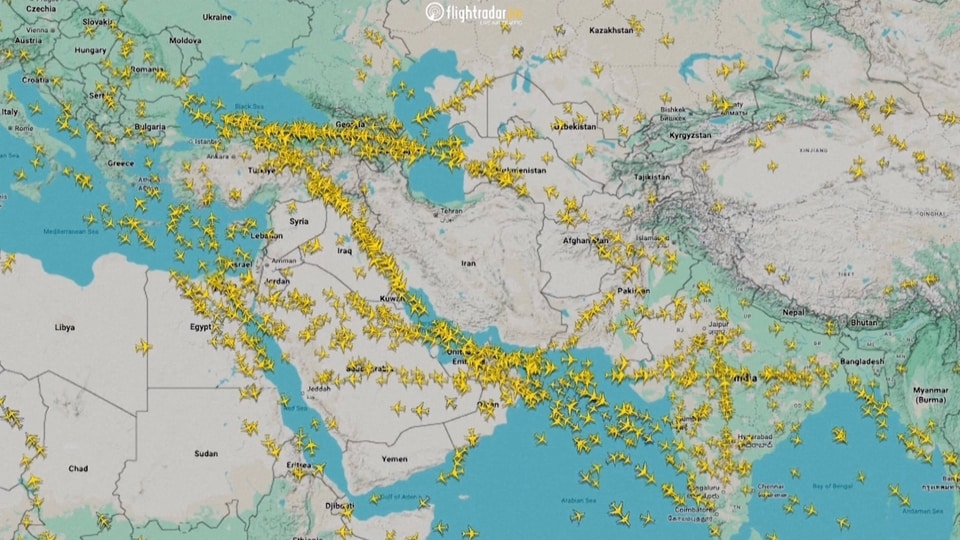
The airspace closure, which was only for commercial flights, came as tensions remained high with the United States over Tehran's bloody crackdown on nationwide protests and Washington's repeated warnings of military intervention that some officials cited in reports said were “imminent”. Track latest in Iran protests here
Why is Iran airspace crucial?
The Iran airspace allows a shorter routes between continents as the country lies on a key East-West route for airlines. The key East–West airline route is the Europe-Asia air corridor across the Middle East, with Iranian airspace as a central link.
It’s the most direct great-circle route between Europe and South Asia, Southeast Asia, and East Asia, allowing airlines to save time and fuel. Rerouting around Iran adds hours and extra cost for airlines.
International carriers diverted north and south around Iran, but after one extension, the closure appeared to have expired and several domestic flights were in the air just after 7 am (local time).
Indian airlines were also impacted, IndiGo said some of its international flights would be affected by Iran's sudden airspace closure. Air India said its flights were using alternative routes that could result in delays or cancellations.
Both airlines carry out scores of flights on the above-mentioned key East-West route for aviation sector and any further airspace closure move by Iran is expected to hit their international operations.
Earlier on Wednesday, Germany issued a new directive cautioning the country's airlines from entering Iranian airspace, shortly after Lufthansa rejigged its flight operations across the Middle East amid escalating tensions in the region.
The United States already prohibits all US commercial flights from overflying Iran and there are no direct flights between the countries. Airline operators like flydubai and Turkish Airlines have canceled multiple flights to Iran in the past week.
Iran's deadly airline identification mistake
In June last year, Iran closed its airspace during the 12-day war against Israel, an episode that saw Tehran exchanging fire with Tel Aviv over the Israel-Hamas war.
Iran in the past misidentified a commercial aircraft as a hostile target, a deadly mistake that killed over 170 people. In 2020, Iranian air defense shot down Ukraine International Airlines Flight PS752 with two surface-to-air missiles, killing all 176 people on board. Iran denied allegations of shooting the plane as Western propaganda for days before finally acknowledging it.
The airspace closure came as some personnel at a key US military base in Qatar were reportedly advised to evacuate amid repeated warnings of intervention by Trump. The US Embassy in Kuwait also ordered its personnel to “temporary halt” going to the multiple military bases in the small Gulf Arab country.
US President Donald Trump, however, on Wednesday signaled that any plan of military intervention might be on pause for now, making a series of vague statements.
In comments to reporters from White House, Trump said he had been told that plans for executions in Iran have stopped, without providing many details. The shift comes a day after Trump told protesters in Iran that “help is on the way” and that his administration would “act accordingly” to respond to the Islamic Republic's deadly crackdown.
"They've said the killing has stopped and the executions won't take place -- there were supposed to be a lot of executions today and that the executions won't take place -- and we're going to find out," AFP news agency quoted Trump.
Asked by a reporter in the Oval Office if US military action was now off the table, Trump replied: "We're going to watch it and see what the process is."


