
 E-Paper



New Zealand – India: People’s politicians in one, protected politicians in the other
Political and social protocols in both countries differ. Here is how

 Prefer HTon Google


A recent news item described an interesting anecdote about New Zealand’s popular Prime Minister, Jacinda Ardern. Ardern accompanied by her companion had walked into their local cafe for some brunch. However, due to the strict lockdown laws imposed by her own government, the cafe management refused her entry and turned her away. They had exceeded the number of guests allowed inside at one time in accordance with social distancing norms. Fortunately, the situation was quickly saved when a customer finished his meal and left. Ardern and her companion were recalled and served their brunch.
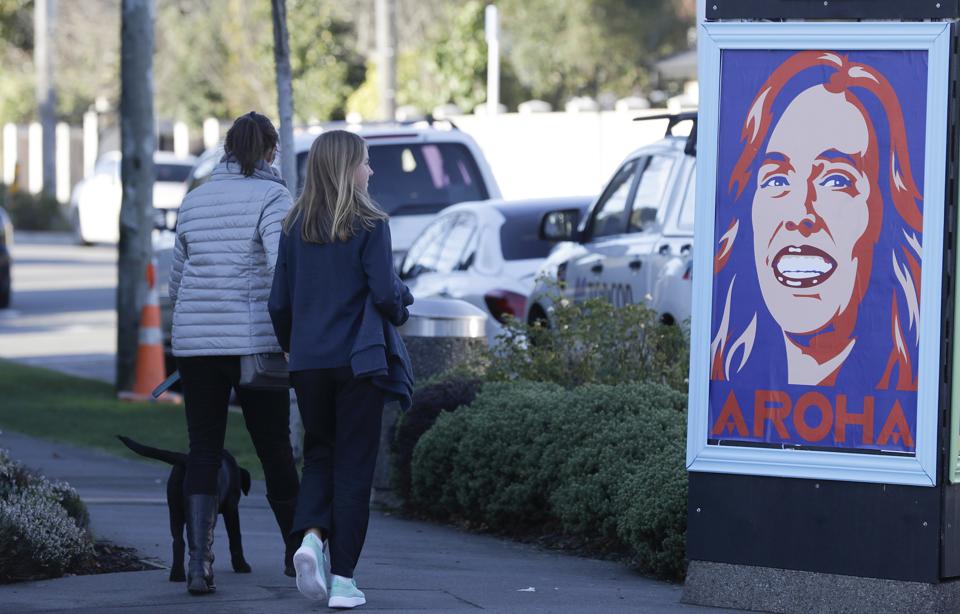
This episode reminded me of my own memories of New Zealand when I had a similar experience of that country’s political and social culture many years ago. In 1975, I had just finished my studies at the Post-Graduate school of Journalism at University of Canterbury in Christchurch and moved to Wellington. I began work at the New Zealand Broadcasting Corporation (NZBC). Like elsewhere in the world, there was a local pub called the Lambton Nook, which was a popular watering hole for journalists. It was located at Lambton Quay, just across the road from the Parliament, popularly known as the Beehive as its circular shape resembled a hive.
One fine evening, my friend and senior journalist colleague, Vernon Wright and I were on our way to the pub. As we crossed the Beehive, we encountered a gentleman in a black suit, carrying a black briefcase, stepping out. There were three or four similarly attired people walking behind him. As we neared this gentleman, we got into the typical “sidewalk dance”, where we move left and the other guy moves left, and then we move right, which he also mirrors. After a couple of these manoeuvres, my friend Vernon put a hand firmly on the man’s shoulder and commanded in a typical Kiwi manner: “Why don’t you bloody stand still, mate”, which he did.
As we walked past him, I said to Vernon, “This person seemed familiar, I have seen him somewhere”. Vernon replied, “Well, you should have, because his photograph appears in the papers every day.” It was New Zealand’s Prime Minister, Bill Rowlings!
I returned to India in January 1977 to start my career as a journalist, became the editor of a tabloid newspaper and had drifted into politics by 1980. I was elected the UP Legislative Council in 1986, to the Lok Sabha from Agra in 1989, and later inducted in the Union Council of Ministers as deputy minister for railways.
As a new minister, I received a confidential “for your eyes only” kind of note from the cabinet secretary advising me on the protocols to be followed while dealing with confidential matters and files. It ended with the line “While leaving his residence or office, the Minister must be accompanied by his personal security officer (PSO)”.Being young and a little brash, I wrote back that I did not believe in this “gun culture” and being a Gandhian would not have an armed gentleman following me around.
A few days later, then Prime Minister VP Singh spotted me in the corridor as he was walking to his office in Parliament and called me over. “What is all this about the PSO?”, he asked. I said I don’t need one. Aware of his fondness for me, I had a relationship with him where I could pompously philosophise. “The most protected person in the world was felled by a bullet, President John F Kennedy, and the one person nobody ever thought would be killed by a bullet was Mahatma Gandhi. So if the bullet has your name on it, it would find you! I don’t need security”, I told the Prime Minister of India. He began laughing and said: ”George ke sache chelo ho. But stop this childishness, you are no longer merely Ajay Singh, you are a member of the Council of Ministers, there is a responsibility that goes with it.” That very afternoon, a personal security officer was assigned to me.
VP Singh was referring to George Fernandes, who had been my close friend and senior ministerial colleague. His official residence was an open house with people walking in and out. From Burmese pro-democracy students, Tibetan exiles to political workers from Bihar, people were all over his house, some staying over for days. He didn’t believe in “”security” either.
In the post-Indira Gandhi assassination scenario, security became a serious issue for politicians. This soon degenerated into a status symbol for politicians. Various categories of security, levels of “threat perception”, and types of security from the elite black cat commandos to the lowly PSOs began to proliferate. Security is demanded and provided to the lowest of elected representatives in the political order.
A close political aide of mine was elected to the UP Legislative Council. His very first move was to secure a PSO named Yadav. There certainly was no security involved; Yadav’s job was to follow him around, a status symbol publicly announcing the MLC’s new VIP status. In those days I found it amusing to observe Yadav on duty, helping the MLC’s wife’s vegetable shopping or going out late at night to fetch cigarettes for us.
I was, however, surprised during a visit to my ancestral village, some 30 kms from Agra, off the highway to Fatehpur Sikri. The village hosts an ancient Dauji Temple where for centuries a big mela takes place on the day after Holi. On this particular occasion, local body elections just had taken place and new village pradhans elected. As I settled down among the elders, I noticed the pradhan from a neighbouring village. I knew him, a dissolute young fellow from an influential family, well known for his intense relationship with Lord Bacchus and the poppy flower. I notice a uniformed UP policeman with a rifle slung casually on his shoulders, standing behind him. He was busy rubbing his left palm with his right thumb preparing his wad of chewing tobacco.
Pointing to him, I asked the young pradhan, “Who is this?” Pulling himself up, he replied; “It’s for security, Bhaiyaji.” My response amused the gathering immensely: “You must be joking. Who would want to kill you, a job you are doing well enough yourself. But then I suppose you need security from your own village as I hear rumours about you.”
I was reminded of this incident the other day when I came across a joke doing the rounds on social media. A man asks his friend: “Prime ministers, royalty and senior leaders in foreign countries are contracting Covid-19, how is it that no prominent Indian politician has been infected so far?” His friend replies: “Because Indian netas have been practising social distancing for many years and are well protected from the people.” I thought it was very apt!
Ajay Singh was a journalist and politician. He served as minister of state for railways in the VP Singh government. He wrote this piece nine days before he passed away on June 9


